Packing a hospital bag is one of those third-trimester tasks that makes everything suddenly feel very, very real. It's more than just checking items off a list; it’s a tangible way to prepare, a little ritual that helps turn nervous energy into excitement. Getting this done is the first step toward a calmer, more focused birth experience.
The Joyful Countdown: When to Pack Your Baby Hospital Bag
The last few weeks of pregnancy are a whirlwind of anticipation. Packing a baby hospital bag is a grounding, almost celebratory act that signals the home stretch is here. While it's a practical task, it’s also one of the first things a family does to actively get ready to meet their baby.
The secret to a less stressful arrival isn't just knowing what to pack, but when to do it. This isn't about piling on more pressure; it’s about giving yourselves the peace of mind that comes with being prepared. When the time comes, everyone can focus on what matters most, not on scrambling to find a toothbrush.
The 36-Week Sweet Spot
So, what’s the magic number? Most seasoned parents and birthing experts recommend aiming for the 36-week mark. Think of it as the official "go-bag" deadline.
Why so early? Because babies operate on their own schedules. With about 10-12% of births happening before 37 weeks in countries like the US and UK, having a bag ready by week 36 means being prepared for an early surprise. Authoritative sources like The Bump also suggest this timeline. Having it done and dusted just lets everyone breathe a little easier.
More Than Just a Bag: It's a Celebration
This task can be seen as a small act of kindness to one's future self. Each item chosen is meant to bring comfort and familiarity to an unfamiliar environment.
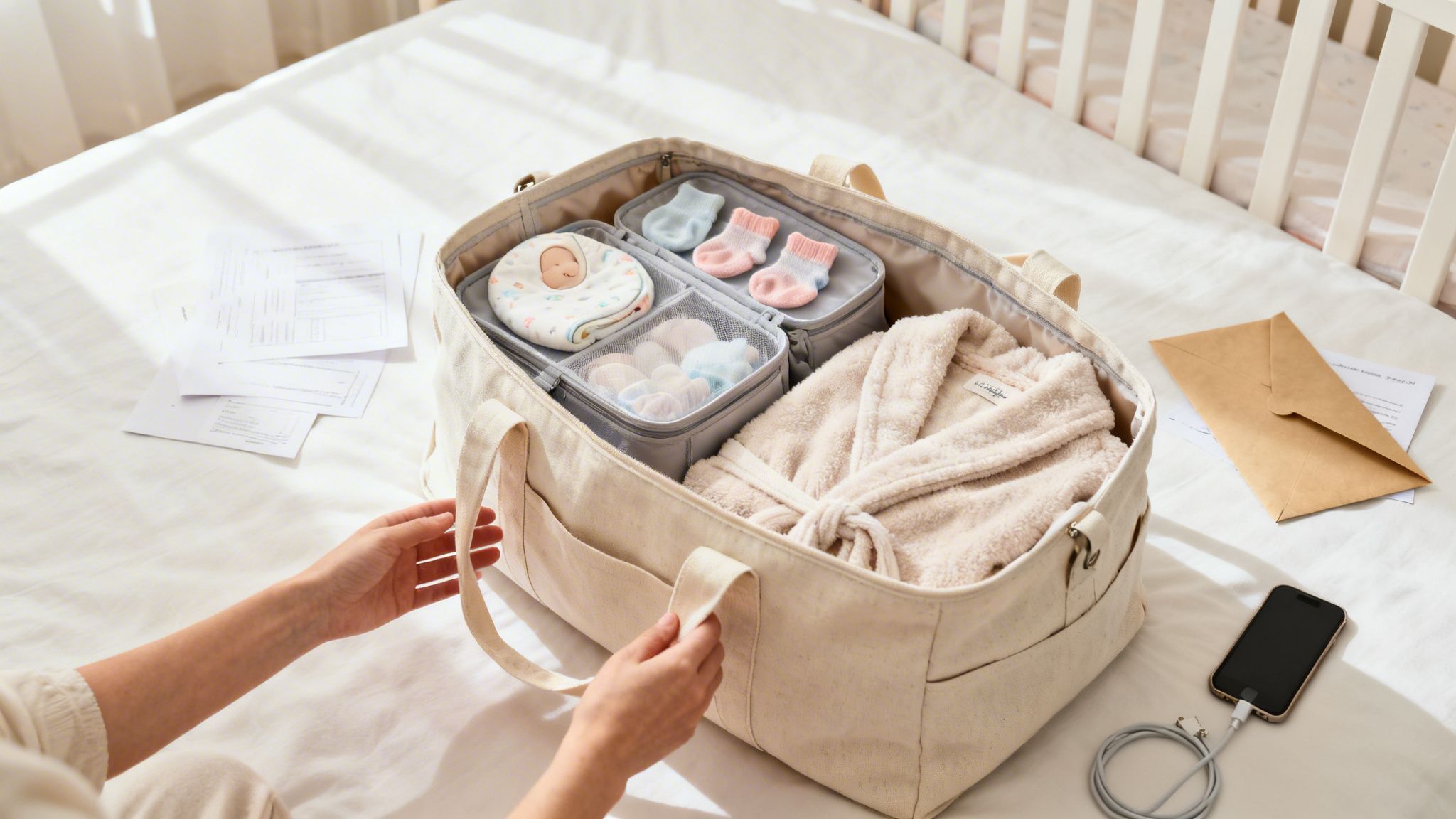
As that first tiny onesie is folded or a favorite cozy robe is tucked in, it’s not just about packing a bag—it's about curating a little bubble of comfort for one of life's biggest moments.
Imagine the feeling of:
- Slipping into your own soft robe instead of a hospital gown.
- Having the familiar scent of your own shampoo and lotion.
- Seeing your baby in that adorable first outfit you picked out just for them.
This process helps set a positive and prepared tone. For those bigger comfort items parents have been dreaming of, friends and family can be pointed to a Zelo registry, where they can help them get set for their new chapter. By thoughtfully gathering what the parents and baby will need, they are creating a calm space for their family to welcome its newest member.
Nurturing Mom: A Checklist for Labor and Recovery
While everyone’s attention is on the baby, this part of the packing list is all about the mother—the one doing the incredible work. Packing a bag for herself isn't just a task; it's one of the first acts of postpartum self-care. It's about setting herself up to feel as comfortable and human as possible from that first contraction through recovery.
Before the cozy stuff, let’s talk logistics. Get a folder ready with an ID, insurance card, and any hospital paperwork that has been filled out. It’s also smart to bring a few copies of a birth plan—one for the chart and a couple more for the nurses on shift.
Comforts for Labor and Delivery
A sterile hospital room can feel pretty intimidating. Bringing a few key things from home can completely change that vibe, surrounding new parents with a bit of warmth and familiarity when they need it most.
Here are a few things expecting parents are always advised to pack for the labor experience:
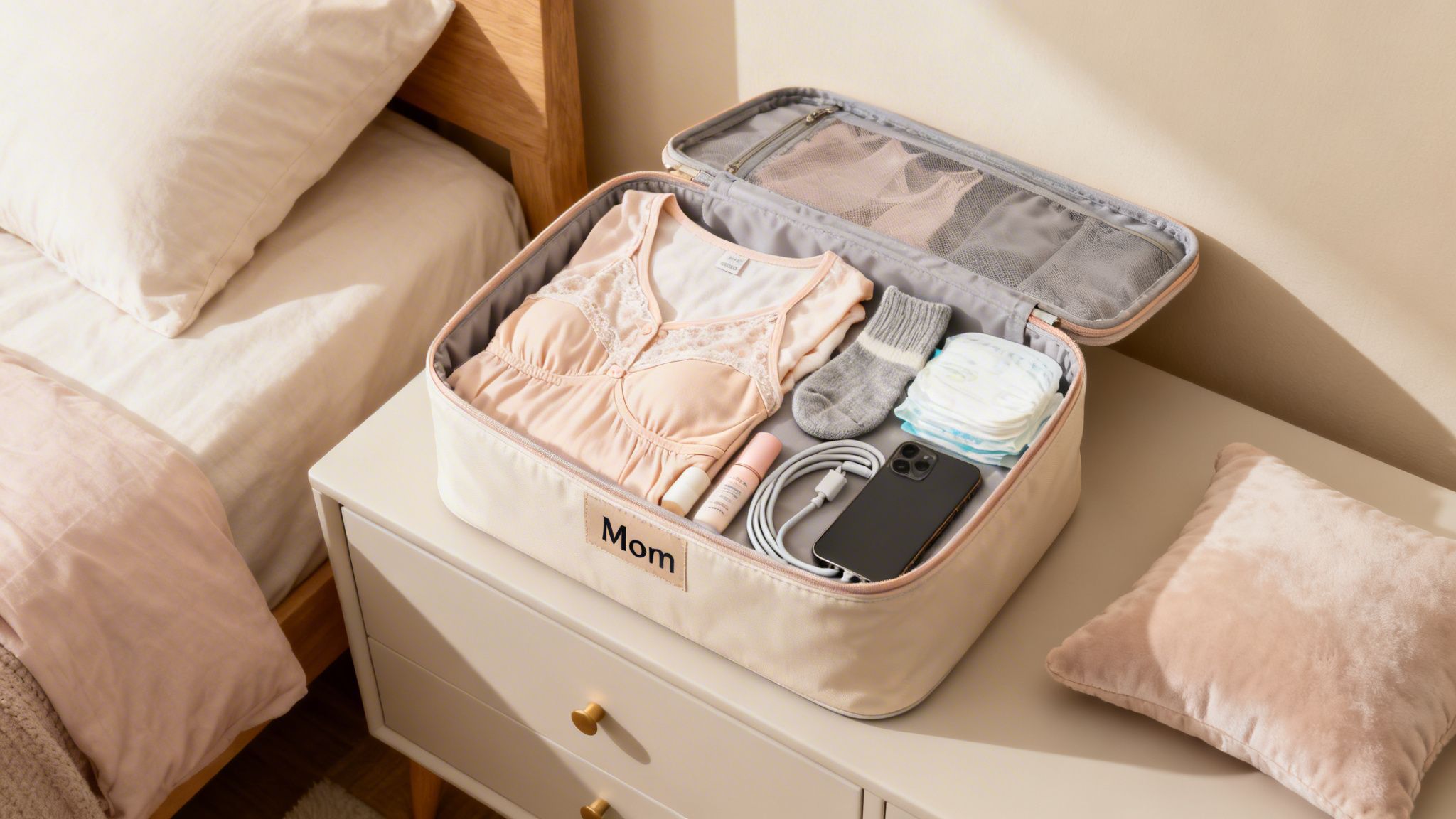
- An Extra-Long Phone Charger: This is a must. Hospital outlets in places like Australia and Europe are almost always in the most inconvenient spots. A 10-foot (3-meter) cable is a lifesaver for keeping family updated or just having a distraction.
- Your Own Pillow: There’s nothing quite like your own pillow. Hospital pillows are usually thin and covered in crinkly plastic, and a little bit of comfort goes a long way when trying to rest between contractions.
- A Cozy Robe: A soft, comfortable robe is so much nicer than a standard-issue hospital gown. It’s perfect for walking the halls to help labor progress and for feeling a little more put-together after delivery.
- Non-Slip Socks or Slippers: Hospital floors are surprisingly slick and cold. A good pair of grippy socks or slippers that can be easily slid into is a must for both warmth and safety.
Bringing a touch of home isn’t just about comfort; it's a strategy. As the experts at Brides point out, having your own items can help you manage the marathon of labor with a greater sense of calm and control.
Essentials for Postpartum Recovery
Once the baby is here, the body begins the incredible work of healing. While the hospital will supply the basics (think mesh underwear and giant pads), many new moms feel worlds better having their own trusted supplies on hand.
For that tender postpartum period, she’ll be glad she packed these:
- Nursing-Friendly PJs: If she plans on breastfeeding, a soft nightgown or pajama set with easy, button-front access is a game-changer for those frequent middle-of-the-night feedings.
- High-Waisted Underwear: Bring a few pairs of dark-colored, soft, high-waisted underwear. They’re comfortable, offer gentle support for the belly, and are perfect for holding the large pads needed.
- Personal Toiletries: A travel-sized bottle of a favorite face wash or body lotion can feel like the ultimate luxury. Don't forget shampoo, deodorant, and especially lip balm—hospital air is incredibly dry.
- A Supportive Nursing Pillow: This isn't just for breastfeeding; it's for giving tired arms a break. A good pillow helps position the baby comfortably and takes the strain off the back and shoulders. For more ideas, check out our guide on the must-haves for new moms.
Some of the best recovery items, like a high-quality nursing pillow or a premium postpartum care kit, can be bigger-ticket purchases. When you create your gift registry on Zelo, friends and family can easily contribute to these essential items that will genuinely support the healing journey.
Welcoming Your Newborn: What to Pack for Baby
Now for the fun part—packing for the tiny guest of honor! It's easy to go overboard here, but the key is to pack smart, not heavy. Many are surprised by how much the hospital provides, which really takes the pressure off.
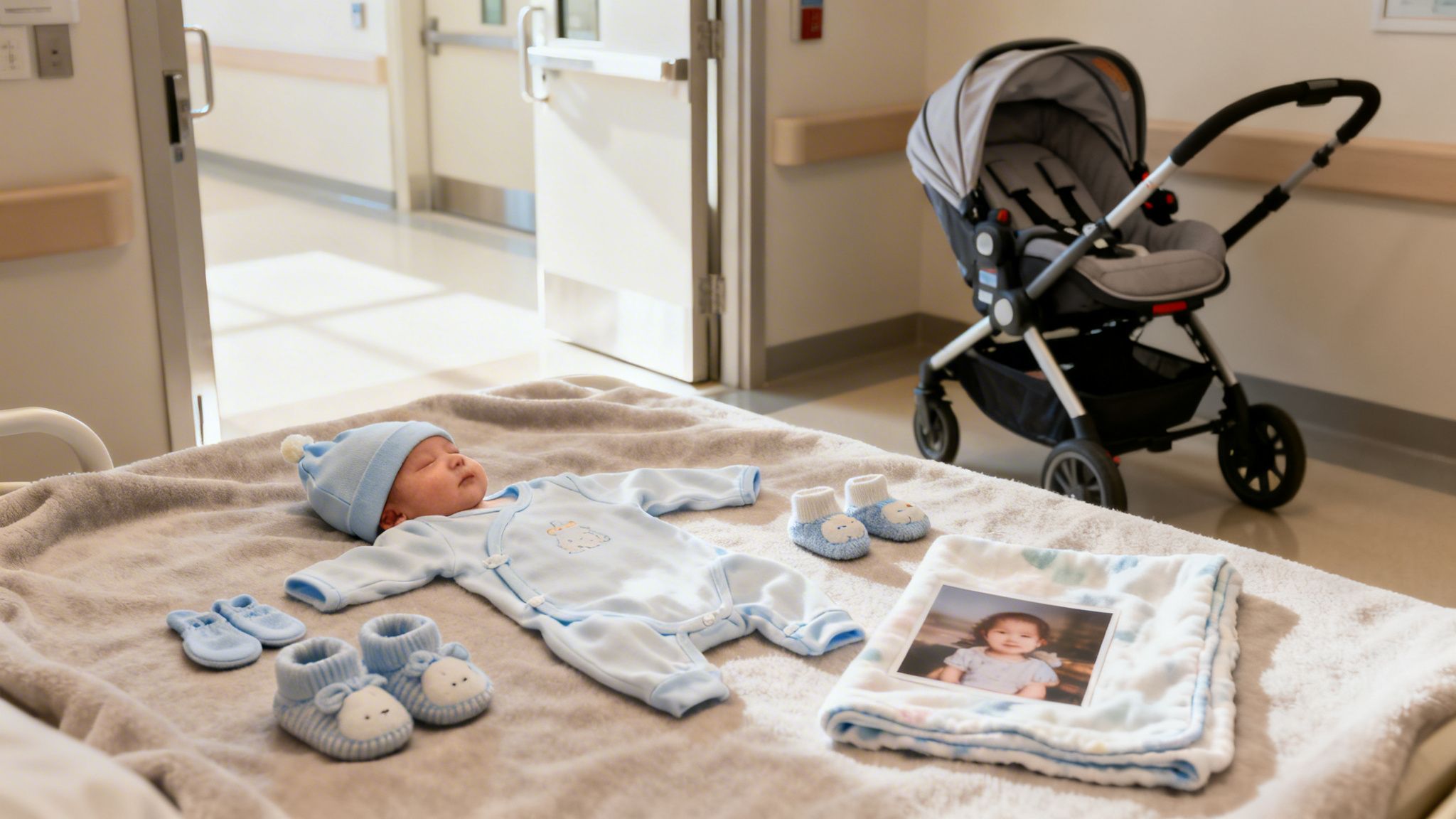
Since the hospital handles most of the basics, parents can focus on the special, personal touches. This is their chance to thoughtfully pick out the baby's very first outfit, the blanket for their first photos, and the car seat for that unforgettable first ride home.
What the Hospital Usually Provides
It’s reassuring to know that hospitals are well-stocked and typically supply 70-80% of a baby’s immediate needs. They have the practical stuff covered.
Parents can almost always count on the hospital to provide diapers (and they'll need them—newborns can go through 8-12 a day!), wipes, basic swaddle blankets, and those classic little striped beanies. This generosity means families can pack lighter and focus more on bonding and recovery.
What to Pack for Your Little One
With the essentials taken care of by the hospital staff, parents get to pack the items that feel meaningful and special. Think of this as curating the baby’s debut look and a few keepsakes for those first few days.
Here are the absolute must-haves for the baby’s side of the hospital bag:
- Going-Home Outfits: This is a big one! It's always recommended to pack two different sizes: one in newborn and one in 0-3 months. You never quite know how big the little one will be, and this ensures there's something that fits just right for those milestone photos.
- A Properly Installed Car Seat: This is non-negotiable. You literally cannot leave the hospital without one. Make sure it's installed correctly in the car weeks before the due date—no one wants to be fumbling with it in the hospital parking lot.
- Soft Hat and Booties: Even in a warm climate like Brazil or Australia, a newborn’s ability to regulate their body temperature is still developing. A soft hat and some little booties or socks are a must.
- Baby Mittens: Those tiny fingernails look harmless, but they are surprisingly sharp! A pair of no-scratch mittens will protect the baby's delicate face.
- A Special Blanket or Swaddle: While the hospital will have plenty of standard-issue blankets, bringing one of your own is so nice for photos and can become a treasured keepsake. For a deeper look at what to have on hand, check out our newborn diaper bag checklist.
One of the most joyful ways for friends and family to share in the excitement is by helping prepare. When you start your Zelo page, loved ones can joyfully contribute to these first precious items, from the going-home outfit to a group gift for the all-important car seat.
Supporting the Support Person: A Checklist for Your Partner
Let's be honest—the birth partner has a tough job. They’re the head coach, chief cheerleader, and emotional rock, all while running on adrenaline and very little sleep. Labor can be a marathon, and for them to be at their best, they need their own go-bag.
This isn't just about having a change of clothes. A well-rested, well-fed partner is a much more helpful and present partner. Thinking ahead and packing a dedicated bag ensures they can focus entirely on the new mom and the incredible moments to come, instead of their own rumbling stomach or the freezing hospital room.
The Partner’s Endurance Kit
Hospital cafeterias are notorious for their odd hours and less-than-inspiring options. The last thing anyone wants is a hangry support person in the room when things get intense. Packing a stash of high-energy, easy-to-grab snacks is one of the smartest moves to make.
Toss these into their bag:
- Granola bars or protein bars
- Trail mix, nuts, or jerky
- Dried fruit and crackers
- A big reusable water bottle to refill constantly
- A few energy drinks or their favorite bottled coffee for that 2 a.m. boost
Comfort is also a huge factor. Those hospital chairs are built for durability, not for napping. A familiar pillow and a cozy blanket from home can be a total game-changer during a long labor or overnight stay. It might be the difference between getting an hour of decent rest and getting none at all.
Practical Comforts and Capturing Memories
Beyond snacks, a few practical items will make their stay infinitely more comfortable. A complete change of clothes is a non-negotiable, including something comfy to sleep in like sweats and a hoodie. Don't forget basic toiletries—a toothbrush, deodorant, and any personal medications are absolute must-haves.
A partner’s job is one of support and presence, but as BabyCenter advises, they also need the tools to stay comfortable and engaged. A fully charged phone is their link to the outside world for sending those joyful first updates to family and friends.
Finally, put the partner on photo duty. Make sure their bag has a phone and its charger (or a dedicated camera) ready to capture those first few precious, unforgettable moments. And speaking of being ready, remember that friends and family will want to help. To avoid getting five of the same baby blanket and get what is actually needed, explore Zelo to set up a flexible and modern gift registry for this new chapter.
Packing Smarter for a Stress-Free Stay
Now that the basic list is down, let’s talk about the pro-level strategies that seasoned parents swear by. Smart packing isn't just about what to bring; it's about how it's organized. It’s the difference between a frantic, bag-dumping search at 3 a.m. and calmly finding exactly what is needed in the middle of a contraction.
This is where a little bit of foresight can turn potential chaos into a feeling of calm control. After all, the focus should be on the mother and baby, not on finding a phone charger.
The Art of a Divided Bag
Here’s one of the best tips: use packing cubes. Instead of tossing everything into one giant bag, create three distinct "mini-kits"—one for labor, one for postpartum recovery, and one just for the baby. When something is needed, a parent or partner can just grab the right cube without destroying the carefully packed bag.
Another game-changer is the "leave-in-the-car" bag. This is for all the non-urgent items that might be needed later, like extra snacks, a change of clothes for the partner, or the going-home outfit. It keeps the delivery room clear and uncluttered.
And a favorite trick? Pack an empty, foldable duffel bag. You’ll be surprised by how much stuff the hospital sends home—diapers, pads, and all sorts of recovery goodies. Having an extra bag makes it easy to collect all those freebies, plus any gifts from visitors.
Planning for the Unexpected
Birth is nothing if not unpredictable, and packing should reflect that. For example, if a planned C-section is on the calendar, it's wise to pack for a slightly longer stay.
A typical hospital stay for a vaginal delivery is around 48 hours, but that can easily jump to 96 hours for a C-section. That means the baby hospital bag needs to have enough supplies for up to four or five days. You can find more practical advice on this and a complete list of items in this guide to the 40 must-haves for any hospital bag. For a closer look at what the little one will need, our newborn clothing checklist is a great resource.
While the partner's bag has been covered in detail, this visual is a great quick-reference for the absolute essentials.
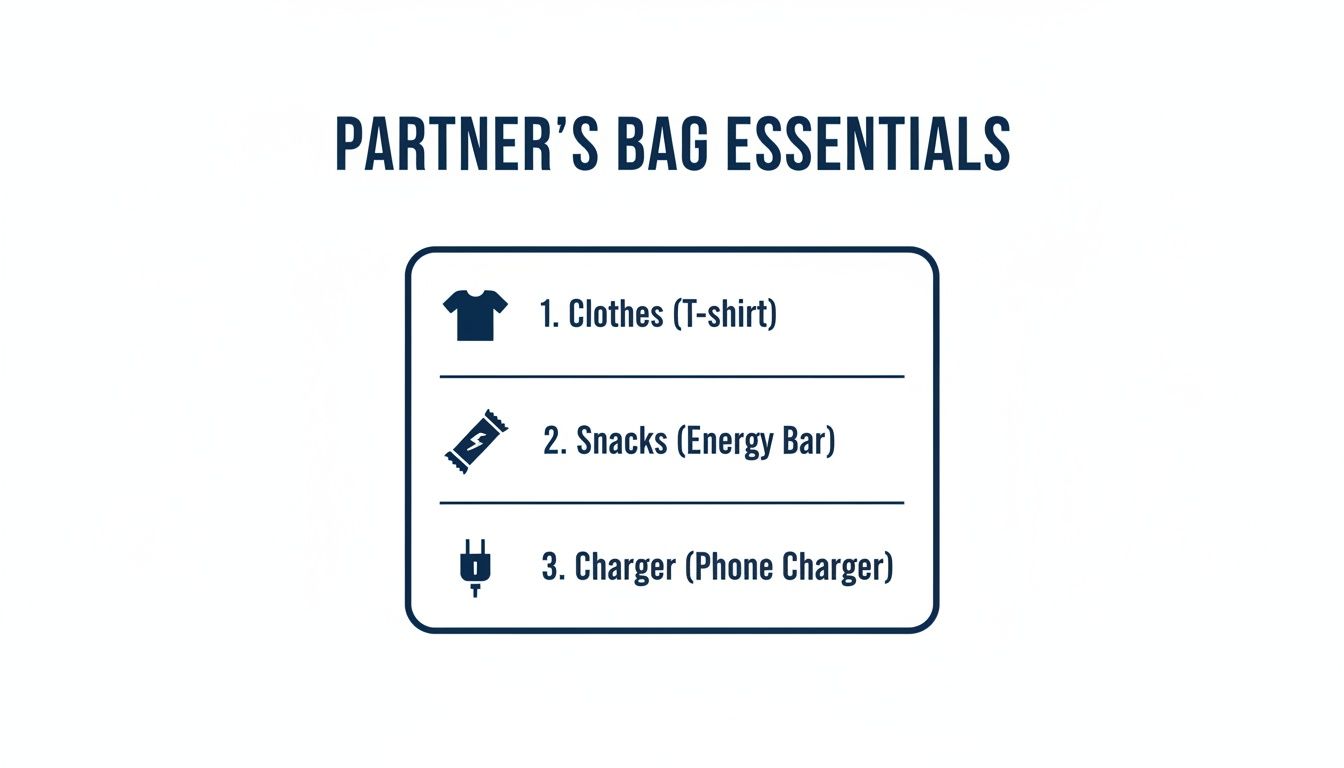
Keeping the support person comfortable and charged up means they can focus all their energy on the mother and the baby.
Hospital-Provided vs. Parent-Packed Items
Knowing what the hospital typically gives out can save a ton of space in the bag. This quick reference table helps decide what to bring and what to leave at home.
| Item | Usually Provided by Hospital | Recommended to Pack |
|---|---|---|
| Newborn Diapers | Yes (often a starter pack) | A few of a preferred brand, just in case |
| Wipes | Yes (usually dry cloths and water) | A small pack of personal wipes |
| Swaddle Blankets | Yes (flannel receiving blankets) | An own swaddle or sleep sack for practice |
| Baby Formula | Yes (if needed/requested) | A preferred brand if there is one |
| Postpartum Pads | Yes (large, hospital-grade) | An own preferred brand for more comfort |
| Mesh Underwear | Yes (several pairs) | An own high-waisted, dark underwear |
| Perineal Bottle | Yes | Optional: an angled "peri bottle" for ease of use |
| Baby Soap/Shampoo | Yes | Optional: an own gentle, baby-specific wash |
While the hospital provides the basics, bringing a few personal comfort items can make a world of difference during recovery and the baby's first few days.
The ultimate smart-packing tool? A cash gift registry. It provides the flexibility to handle all of life’s most wonderful surprises.
For true adaptability, you can start your Zelo page. This lets friends and family contribute to a cash fund, so parents can buy exactly what they realize they need after the baby arrives. Whether it’s a different kind of bottle, more recovery supplies, or hiring a lactation consultant, a cash fund ensures they’re ready for anything.
Your Hospital Bag Questions Answered
Even with the best checklist in hand, it’s totally normal to have a few last-minute questions swirling around when packing a baby hospital bag. Let's tackle some of the most common ones heard from expecting parents. The goal is to help swap that nagging "am I forgetting something?" feeling for a calm, confident "we're ready."
Answering these final questions helps everyone relax, so they can focus on the incredible experience that's just around the corner.
When Is the Absolute Latest I Should Pack My Bag?
The standard advice is to aim for the 36-week mark, but life happens. If a bit behind schedule, try to have the hospital bag packed by 38 weeks at the very latest. This gives a comfortable cushion, since most full-term babies arrive somewhere between 39 and 41 weeks.
This isn't about being pessimistic; it’s about being prepared. The peace of mind that comes from seeing that bag packed and waiting by the door is worth its weight in gold. No one wants to be scrambling during contractions.
How Many Bags Should I Pack?
To keep from feeling like you're moving into the hospital, the three-bag system is a brilliant way to stay organized. Pack one small bag for labor essentials, a second larger one for postpartum and baby items, and a third for the partner.
The labor bag can come right into the delivery room. The other two can stay in the car until everyone is settled in a recovery room. This simple trick keeps the small hospital space from feeling cluttered and overwhelming right after delivery.
Can a Gift Registry Help with My Hospital Bag?
Absolutely! This is a fantastic and modern way to use a registry. Instead of getting a dozen swaddles, a cash fund can be used for bigger-ticket items that will make a huge difference in comfort, both at the hospital and at home.
It allows friends and family to contribute to things that really move the needle, like:
- A top-rated car seat, expertly installed for that first trip home.
- A seriously comfortable nursing pillow that will save your back.
- A premium postpartum recovery kit packed with all the soothing essentials everyone will be so grateful for.
It's a practical way for loved ones to show their support. When you create your gift registry, you're giving them a clear path to help prepare in a meaningful way.
What Are the Most Commonly Forgotten Items?
You'd be surprised, but the items left behind most often are for the parents! With so much focus on the new baby, it’s easy to forget personal needs.
The biggest culprits are an extra-long phone charger (hospital outlets are always in the most awkward places), comfy slippers for walking the halls, and plenty of snacks for the partner. These small comforts truly make a world of difference for the new parents.
While the baby is the main event, the new parents are the ones running the marathon. Packing for their own comfort is just as crucial as packing that first tiny outfit.
At Zelo, our goal is to make every part of a celebration—especially welcoming a new family member—as joyful and easy as possible. With a flexible cash gift registry, families can prepare perfectly not just for the hospital stay, but for all the beautiful chaos that follows. Ready to get started? Explore Zelo today and build a registry that truly supports this new life.
Enjoyed the article? Share it!