A Guide to Graceful Gifting: Navigating Your Baby Registry
Announcing a new arrival is one of life’s happiest transitions, but it often brings one awkward question right behind the excitement: how should the registry be handled? Most expectant parents want to make gift giving easier, not make anyone feel cornered. That’s where modern baby registry etiquette matters most.
Today’s reality is more digital, more flexible, and more guest-friendly than older advice often suggests. Over 86% of expecting parents now create baby registries, which makes a registry feel less like a special request and more like a practical planning tool. The challenge isn’t whether to make one. It’s how to do it with warmth, clarity, and good judgment.
This guide keeps the focus where it belongs: helping loved ones celebrate a growing family without confusion, duplication, or unnecessary pressure. It covers traditional essentials, but it also deals with the questions many parents have now, including cash gifts, group gifting, privacy, and how to share a registry link gracefully in a digital-first world.
The best registries feel easy. Guests can quickly understand what’s helpful, pick something within their budget, and feel good about contributing. Parents get support they’ll use. Everyone stays centered on the baby, not the logistics.
Photorealistic metaphor for a featured image: a beautifully designed digital registry displayed on a tablet, with soft celebratory confetti floating around it, symbolizing modern, joyful gifting.
1. Create a Registry Early and Share Thoughtfully
Waiting too long creates friction for everyone. Guests want time to browse, compare options, and choose something that feels personal. Parents need time to notice what’s missing, adjust preferences, and prevent a last-minute rush of duplicate items.
Modern baby registry etiquette now supports earlier setup and simpler sharing. Registry details on invitations used to feel too forward, but post-pandemic etiquette has shifted and registry info is now widely expected on invites, especially when digital links or QR codes make access easy.
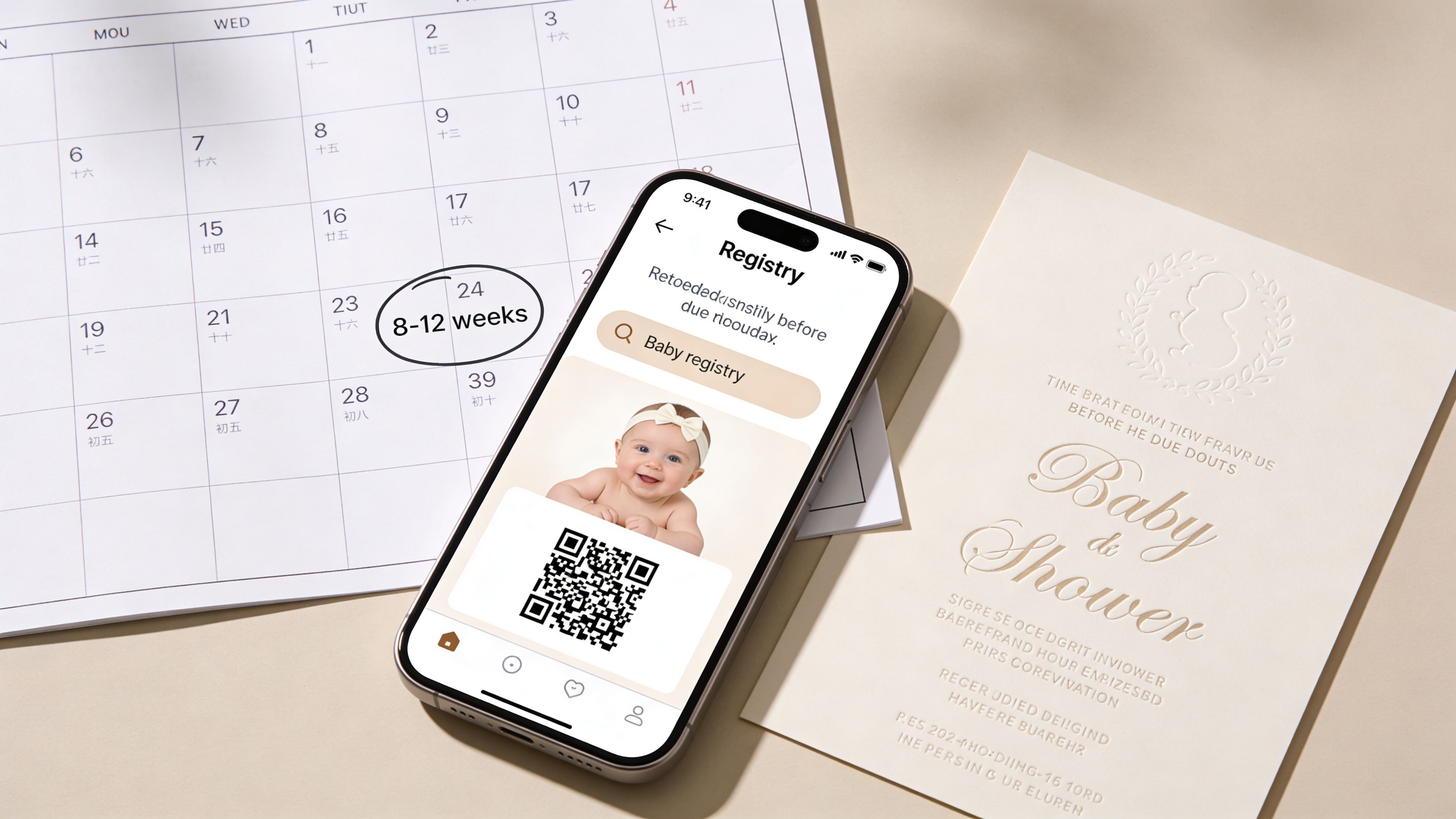
A good approach is simple. Put the registry where guests naturally look for event details, not where it feels like a public announcement. A shower invitation, a private family email, or a host’s message works better than repeated posts asking people to shop.
Share in places guests already check
A digital invitation can include a direct link. A printed invite can use a separate insert card or QR code. If a host is organizing the shower, the host can include the link in a way that feels informational, not transactional.
For parents who want one clear, mobile-friendly destination, this baby shower gift registry complete guide is a useful example of how to organize sharing without making guests hunt for details.
Practical rule: Share once clearly, then let the registry do the work.
Real life usually looks like this: a couple sends shower invitations with a registry link at the bottom, the host answers questions from relatives who prefer text, and a grandparent passes the link along to extended family. That’s thoughtful. Sending repeated reminders to “buy before it’s gone” isn’t.
A few habits make this smoother:
- Use one primary link: Guests get confused when they see several separate lists with no explanation.
- Keep wording light: “Registry available if helpful” lands better than language that sounds obligatory.
- Check inventory regularly: If an item is purchased or no longer needed, update it quickly.
2. Include a Range of Price Points and Item Types
A registry works best when an aunt who wants to send washcloths and a group of coworkers who want to chip in for a stroller can both find something appropriate. That mix helps guests give comfortably, and it gives parents support across the items they will use every day.
A shorter, better-edited list usually serves everyone better than a long scroll of duplicates, novelty products, and impulse adds. As noted earlier, a curated registry tends to feel easier to shop and more practical to fulfill. The goal is coverage, not clutter.

The strongest registries include a few different kinds of giving, not just a few different prices. Physical basics matter. So do service-oriented gifts, shared contributions, and flexible funds for expenses that are hard to size in advance.
For example, low-cost items such as burp cloths, bibs, bottles, diaper cream, and crib sheets give casual guests easy choices. Mid-range picks like a baby carrier, sound machine, or changing pad often appeal to close friends. Bigger needs, including a car seat, glider, bassinet, or postpartum meal fund, are often best set up for shared gifting.
Modern cash gifting and collaborative contributions are a natural fit for these larger items. A clear note helps: “Contributions toward our everyday stroller” feels specific and useful. “Cash fund” on its own can feel vague. If you plan to include pooled gifts, this group gift etiquette guide on how much to give is a helpful reference for setting them up in a way that feels considerate to guests.
Useful variety often includes:
- Low-cost essentials: Pacifiers, washcloths, burp cloths, diapers, and bibs.
- Mid-range practical items: Feeding gear, carriers, changing supplies, and nursery tools you will use weekly.
- Group or flexible gifts: Travel gear, nursery furniture, postpartum support, or a cash fund tied to a clear purpose.
One practical rule I recommend: if an expensive item goes on the registry, add enough lower-cost items that no guest feels pushed upward. A balanced list feels welcoming. It also reflects real life, where some people want to give a sweet small gift and others prefer to contribute to one big need.
3. Never Pressure Guests or Mention Gifts Directly
This is the line that matters most in baby registry etiquette. A registry should guide. It should never push.
Even when parents have real needs, the tone has to stay light. Guests should feel invited to celebrate, not assigned a shopping task. That means no repeated messages about what hasn’t been purchased, no direct appeals for expensive items, and no public commentary about who has or hasn’t contributed.
A warm sentence does the job. “We’ve put together a registry if it’s helpful” sounds gracious. “Please use our registry” sounds controlling. That difference may seem small in wording, but it changes the whole emotional temperature.
Better wording keeps everyone comfortable
If a host is sending invitations, the host can include the registry link in the event details. If parents are sharing it themselves, a private text or email is more polished than a string of public reminders. The goal is to remove effort, not apply pressure.
Registry information should feel like hospitality, not a sales pitch.
This matters even more with group gifts. Parents can absolutely make larger needs available, but they shouldn’t chase participation or hint that a certain item “still needs funding.” If guests choose to contribute, wonderful. If they choose a different gift or no gift at all, that decision deserves the same respect.
For anyone using pooled gifting, this guide to group gift etiquette and how much to give is a helpful reference point because it keeps the guest perspective in view too.
What works well:
- Neutral language: “If you’d like gift ideas, our registry is here.”
- Third-party sharing: A host, sibling, or close friend can answer registry questions gracefully.
- No follow-up pressure: One clear share is enough unless someone asks for the link again.
What doesn’t work is emotional framing like “We still really need people to help with the stroller.” Even if the need is real, that kind of message puts guests on the spot.
4. Send Thank You Notes Within Two Weeks of Receipt
Gratitude covers a lot of awkwardness. It also turns the registry from a transaction back into what it should be: a relationship.
A good thank you note doesn’t need to be long or overly polished. It needs to be prompt, personal, and specific. Mention the gift. Mention the giver. Mention how it will help or why it made the parents smile.

For a stroller contribution, a note might say that the gift will make daily walks and appointments easier. For a set of crib sheets, it might mention how often they’ll be used in those first months. For a cash gift, thank the person for helping the family prepare in a practical way.
Specific beats formal every time
A handwritten note is still the gold standard for baby gifts, especially from family, close friends, and older relatives. A digital thank you can work as a quick acknowledgment when a gift arrives, but it shouldn’t replace a proper note if the relationship calls for one.
Parents usually stay on top of this when they keep a running list from day one. Track the gift, track the sender, and jot down one sentence about what to mention later. If both parents want to contribute, one can draft while the other addresses envelopes and keeps the list current.
A late thank you note is better than no thank you note at all.
This is especially important with group contributions, where multiple guests may have joined one gift. These thank-you message templates for gifts can help parents phrase appreciation in a way that feels personal rather than generic.
A few examples that work well:
- For a practical item: “Thank you for the diaper caddy. It’ll live in our living room and we know we’ll reach for it every day.”
- For a shared gift: “Thank you for contributing to the stroller. We’re so grateful for your part in helping us get something we’ll use constantly.”
- For cash support: “Thank you for your generous gift. It’s helping us prepare in exactly the way we need right now.”
5. Manage Registry Across Platforms, Privacy, and Tracking Responsibly
A common modern registry problem looks like this. A few gifts are marked on Target, a stroller fund lives on another platform, a grandparent buys the bassinet in-store, and two friends message to ask whether cash support would be more helpful. If parents do not have one clear system, guests end up guessing.
Good registry etiquette happens behind the scenes. Guests should not have to piece together which list is current, whether a big-ticket item is already covered, or whether their contribution will be shared publicly.
Privacy deserves the same attention as organization. Registry links are meant to help invited guests, not to turn family giving into a public feed. Sharing selectively, tracking carefully, and keeping donor information private prevents awkward moments for everyone.
Choose one home base
Set up one primary registry or landing page first, then connect any secondary store lists to it in a way that is obvious. Parents who want to combine store items, cash funds, and shared gifts usually do best with one private link they can text or email directly. That keeps the process simple for guests and gives parents one place to monitor what has been handled.
For a practical example, this complete guide to a collaborative gift registry explains how to organize group gifts under one shared system without creating duplicate purchases or confusing side lists.
A platform like Zelo is especially useful here because it lets parents share a single registry link with invited guests, collect contributions for group gifts or cash funds in one place, and avoid making the registry publicly discoverable. That setup solves two problems at once. Guests get a clear path to follow, and parents keep more control over privacy.
A few habits make the system work:
- Share privately: Send the registry by text, email, shower invite, or direct message rather than posting it on a public profile.
- Protect contribution details: Keep gift amounts private, especially for cash funds and pooled gifts.
- Record offline purchases: If a relative buys the crib at a local store, mark that need as covered in the main registry right away.
- Use one tracker: Keep notes on who contributed to a group gift so thank-you notes stay accurate later.
As noted in an etiquette overview from Huggies, many families still run into gray areas around digital sharing, cash contributions, and group gifting because older registry advice focused more on physical store lists and word-of-mouth sharing. This gap highlights the need for careful privacy planning. The polite approach is simple. Make the registry easy for invited guests to use, and keep everyone else out of the transaction.
6. Update Registry Regularly and Remove Purchased Items Promptly
A registry isn’t a one-time task. It’s a living list.
Parents often build the first version quickly, then realize a few weeks later that some items no longer fit their plans. Maybe a sibling already bought the baby carrier. Maybe the nursery is smaller than expected. Maybe postpartum recovery items suddenly feel more relevant than decorative extras.
That’s normal. What matters is keeping the list current enough that guests don’t waste time choosing from stale options.
Maintenance is part of the etiquette
Guests feel cared for when a registry is accurate. They feel frustrated when they buy something that was already promised by a grandparent or when they click through to a list full of unavailable or unnecessary items.
A simple weekly check is usually enough. Review what’s been purchased, remove duplicate needs, and add anything newly useful. If someone buys off-registry but fulfills a real need, mark the equivalent item as covered right away.
A good rhythm looks like this:
- Check after each purchase notification: If the platform updates automatically, confirm it’s reflected properly.
- Coordinate with close family: Ask relatives to mention major purchases before they surprise everyone at the shower.
- Adjust with honesty: If a trendy item no longer seems necessary, remove it. If diapers or bottle supplies become a bigger need, add them.
Digital registries offer an advantage as parents can update in real time instead of relying on static paper inserts or word-of-mouth corrections. It’s also a good reason to keep one primary list rather than scattering needs across too many places.
The registry should reflect actual preparation, not an old draft of it.
7. Accept Gifts Gracefully Regardless of Registry Status
You open a gift at the shower and realize it is the third newborn blanket, while the bottle set you still need is sitting untouched on Zelo. That moment can feel awkward, especially if you spent time building a practical, well-organized registry. The polite response is still simple. Receive the gift warmly and save the problem-solving for later.
This is one of the harder parts of registry etiquette because digital tools make needs more visible. Guests can see what is listed, what has been purchased, and what still matters most. Even so, some people will buy from the registry, some will contribute to a cash fund or group gift, and some will choose something personal on their own. All three are normal.
As cited by Alpha Mom’s baby registry etiquette discussion, a 2025 BabyCenter poll found that many parents received luxury items instead of essentials. That frustration is real. It just does not belong in your face, tone, or thank you on the day.
Gratitude first, decisions later
A gracious response does two things well. It acknowledges the giver’s effort, and it protects the relationship.
If the item is a duplicate, off-registry, or not quite your style, thank them anyway. Then decide privately whether to keep it, exchange it, donate it, or fold it into another use. Digital registries help with planning and tracking, but they do not change the social part of gift giving.
A good rule is to respond to the intention in front of you, not the mismatch you noticed.
Useful responses sound like this:
- For a duplicate: “Thank you so much. We really appreciate you thinking of us.”
- For something off-registry but sweet: “This is so thoughtful. Thank you for celebrating with us.”
- For an expensive surprise: “You’re so generous. Thank you for your kindness.”
- For a gift that misses the practical need: “Thank you. It means a lot that you wanted to spoil the baby.”
I usually tell parents to separate etiquette from inventory. Etiquette happens with the giver. Inventory happens later, at home, with receipts, gift tracking, and a clear head. That mindset helps a lot, especially when your registry includes cash funds, group gifting, or tightly planned essentials and a guest goes in a different direction.
The goal is not to control every gift. The goal is to make people feel appreciated while still preparing your home in a way that works for your family.
8. Communicate Special Circumstances or Restrictions Respectfully
A registry sometimes needs a little context.
That is common if you live in a small apartment, already have hand-me-down clothes, need only a few safety-specific items, or would rather put support toward postpartum help or one larger purchase. Guests usually respond well when they understand the reason behind a preference.
This matters even more for second or later babies. Huggies' own material points out that registries for subsequent babies are now widely accepted when they reflect present needs instead of rebuilding from zero. A short explanation helps guests see what is useful for this season of family life.
Explain the reason, then keep the wording light
The best registry notes are brief, specific, and easy to read. One or two sentences is enough. State the situation, name the preference, and leave room for people to give in the way that feels comfortable to them.
Digital registries make this easier because you can set expectations without putting anyone on the spot. If you are using a platform like Zelo, use the note field, cash fund labels, and group gift descriptions to clarify what each option covers and why it helps. That works especially well for shared purchases, meal support, postpartum recovery funds, or replacing a single big-ticket item with several smaller contributions.
Some wording that works:
- For limited space: “We’re keeping our registry edited to the items we can comfortably fit in our home.”
- For essentials first: “We already have plenty of clothes, so practical basics would help us most.”
- For safety preferences: “We’re prioritizing new or safety-checked gear for a few key items.”
- For group gifts or funds: “If you’d like, you’re welcome to contribute toward a larger need we expect to use every day.”
I usually recommend avoiding a long list of “please do not buy” instructions. A warmer approach is to focus on what would be most helpful. Guests can work with that.
Parents can also look at broader celebration planning advice from The Knot or Brides for wording ideas around digital registries and event communication, especially if they are already familiar with wedding-style registry etiquette.
Privacy matters here too. If a cash fund is for medical leave, postpartum support, or another personal need, keep the label general unless you want to share the details. “Postpartum support,” “meal fund,” or “baby essentials fund” gives guests enough context without oversharing. Clear, respectful wording keeps the registry useful and keeps your boundaries intact.
8-Point Baby Registry Etiquette Comparison
| Item | Implementation complexity | Resource requirements | Expected outcomes | Ideal use cases | Key advantages |
|---|---|---|---|---|---|
| Create a Registry Early and Share Thoughtfully | Low–Medium, set up and schedule sharing | Moderate time, digital platform access, multi-channel links/QRs | Guests have time to choose; fewer duplicates; smoother planning | Long timelines, large or remote guest lists, formal showers | Better timing, convenience, improved inventory visibility |
| Include a Range of Price Points and Item Types | Medium, curate items across tiers | Research time, platform support for group gifting, varied listings | Higher participation across budgets; increased registry completion | Diverse guest budgets, large social circles, group gifts | Inclusivity, flexibility, higher likelihood of useful gifts |
| Never Pressure Guests or Mention Gifts Directly | Low, indirect wording and host coordination | Minimal time; careful invitation language; host involvement | Preserves voluntary giving; reduces obligation and awkwardness | Etiquette-conscious events, sensitive relationships | Maintains goodwill, avoids perceived entitlement |
| Send Thank You Notes Within Two Weeks of Receipt | Medium–High, tracking and personalization required | Time for writing, stationery, gift-tracking system | Stronger relationships; demonstrates genuine appreciation | Small–medium registries, family-focused contributors | Personal gratitude, relationship strengthening, keepsakes |
| Manage Registry Across Platforms, Privacy, and Tracking Responsibly | High, consolidate platforms and privacy settings | Significant time, tracking tools, privacy controls, possibly Zelo hub | Protected privacy, clearer guest guidance, reduced confusion if managed | Multi-platform registries, privacy-sensitive families, large networks | Centralization, privacy protection, synchronized tracking |
| Update Registry Regularly and Remove Purchased Items Promptly | Medium, ongoing monitoring and updates | Recurring time, notifications monitoring, record-keeping | Fewer duplicate gifts; accurate availability; better guest experience | Active registries, approaching shower/due dates, frequent purchases | Current inventory, reduced errors, respectful to contributors |
| Accept Gifts Gracefully Regardless of Registry Status | Low, attitude and immediate responses | Emotional effort, tact, prompt verbal thanks and notes | Preserves relationships; avoids hurt feelings; maintains goodwill | Mixed-gift scenarios, traditional families, unexpected presents | Flexibility, relationship preservation, gracious etiquette |
| Communicate Special Circumstances or Restrictions Respectfully | Medium, craft diplomatic, informative notes | Time to explain, platform note fields, possible host help | Fewer inappropriate or unsafe gifts; informed givers; fewer returns | Allergies, limited space, cultural/religious preferences, safety concerns | Protects safety, clarifies preferences, reduces mismatches |
Celebrate with Confidence and Joy
Baby registry etiquette isn’t really about perfect wording or flawless logistics. It’s about helping people show up for a growing family in a way that feels good on both sides. When the registry is thoughtful, the sharing is gentle, and the gratitude is sincere, the whole experience becomes easier for everyone involved.
The strongest registries aren’t the biggest ones. They’re the clearest ones. They reflect real needs, give guests options at different price points, and make room for different styles of giving. Some guests love buying a physical item they can wrap. Others would rather contribute toward a stroller, nursery setup, or other practical need. Modern etiquette can hold all of that comfortably.
That flexibility matters because families are planning in more varied ways now. Some are hosting traditional showers. Some are celebrating with a sprinkle, a small gathering, or a digital event. Some are preparing for a first baby. Others already have the basics and only need a few targeted essentials. Good baby registry etiquette doesn’t force every family into the same script. It helps them communicate clearly and kindly within their own circumstances.
It also helps to remember that a registry is there to reduce stress, not create more of it. If an aunt buys something sentimental that wasn’t listed, gratitude still leads. If a friend contributes to a group gift instead of choosing a product, that still counts as thoughtful support. If parents need privacy, fewer public links and one organized digital hub can make the process feel calmer and more respectful.
Digital-first tools have made some parts of registry etiquette much easier. Cash gifts, shared contributions, and private link sharing no longer need to feel awkward or improvised. They can be handled elegantly when the setup is simple and the wording is warm. That’s where a platform like Zelo can feel especially current. It supports the way many families and friend groups already give now, especially in the US, UK, Europe, Brazil, and Australia, where digital, mobile-friendly gifting is part of everyday life.
The goal isn’t to manage every guest decision. The goal is to make generosity easy to offer and easy to receive.
Ready to build a registry that reflects your style and needs? You can start your Zelo page today and discover how simple and elegant modern gifting can be.
If you want a baby registry that feels polished, flexible, and easy for guests to use, create your gift registry with Zelo. It’s a smart fit for baby showers, weddings, birthdays, graduations, and group gifts that work better with modern digital sharing.
Enjoyed the article? Share it!