You’ve built the registry. You’ve picked the stroller, the swaddles, the diaper caddy, and the boring-but-necessary basics nobody posts on Instagram. Then you hit the little welcome box and freeze.
That tiny baby registry message does a lot of work. It sets the tone, tells guests how to use the registry, and answers the question many people won’t ask out loud: “What do they want me to do here?” A good message makes the page feel warm and personal. A weak one makes the registry feel unfinished, or worse, transactional.
That matters because registries are now a standard part of preparing for a baby. Over 86% of expecting parents create baby registries, according to PatPat’s roundup of baby registry facts. In practice, that means most guests already expect a registry. They don’t need a hard sell. They need clarity, warmth, and a little guidance.
The strongest messages do three things at once. They thank people. They explain what kind of help is most useful. They make gifting easy, whether someone wants to send a pack of burp cloths or contribute toward a bigger item with friends. That’s especially true on digital-first platforms where guests may be opening your link from a text, an invite, or a group chat while standing in line for coffee.
Below are seven baby registry message examples that work for real life, not just for screenshots. Some are soft and sentimental. Some are practical and direct. Some are built for group gifting and cash contributions on modern platforms like Zelo. Each one includes why it works, where it works best, and what to avoid if you want your registry to feel gracious, useful, and easy to shop.
1. The Personal Touch Baby Registry Announcement
A personal baby registry message works best when the parents want guests to feel invited into the moment, not just pointed toward a shopping list.
For first-time parents, this is often the easiest tone to get right. There’s already excitement in the air. The message just needs to sound like a real person wrote it.
A message that feels warm without feeling gushy
Welcome to our registry, and thank you for celebrating with us. We’re so excited to meet our little one and so grateful for all the love already surrounding this baby. We’ve added the things we think will help most in those first months, from everyday essentials to a few bigger nursery needs. Thank you for being part of this season with us.
Why this works is simple. It leads with gratitude, then gives context, then gently points guests toward the list. It doesn’t over-explain. It doesn’t apologize for having a registry. It also avoids the stiff tone that makes many registry pages sound copied and pasted.
A good personal message often includes one specific detail. That might be the baby’s nickname, the nursery colors, or a short line about what the parents are most excited about. The personalized greeting option matters because platforms like Amazon let parents place a greeting at the top of the page, with space for a short welcome message that can include thanks, event details, and excitement, as described in The Organized Mom Life’s guide to baby registry greetings.
Where it works best
This style fits naturally in a few places:
- Email announcements that share registry details with family and close friends
- Shower invitations that include a short registry note inside the broader celebration wording
- Social posts paired with an ultrasound photo or simple pregnancy update
- Registry welcome fields on major platforms
A real-world example. A couple sends a baby shower email that opens with a short note about how excited they were to hear the heartbeat for the first time. At the end, they add: “If you’d like to browse our registry, we’ve put together the items we think we’ll use most.” That feels human. It also gives guests an easy next step.
What usually doesn’t work
Messages fall flat when they try too hard to be poetic or too hard to be efficient.
- Too vague: “Welcome to our registry” says almost nothing.
- Too detailed: A whole paragraph on birth plans, paint samples, and stroller research is too much.
- Too salesy: “Shop our favorites now” sounds like a product page, not a family milestone.
A better baby registry message sounds like something the parents would text a friend. Warm, brief, and grounded in real life.
2. The Transparent Group Gifting Message
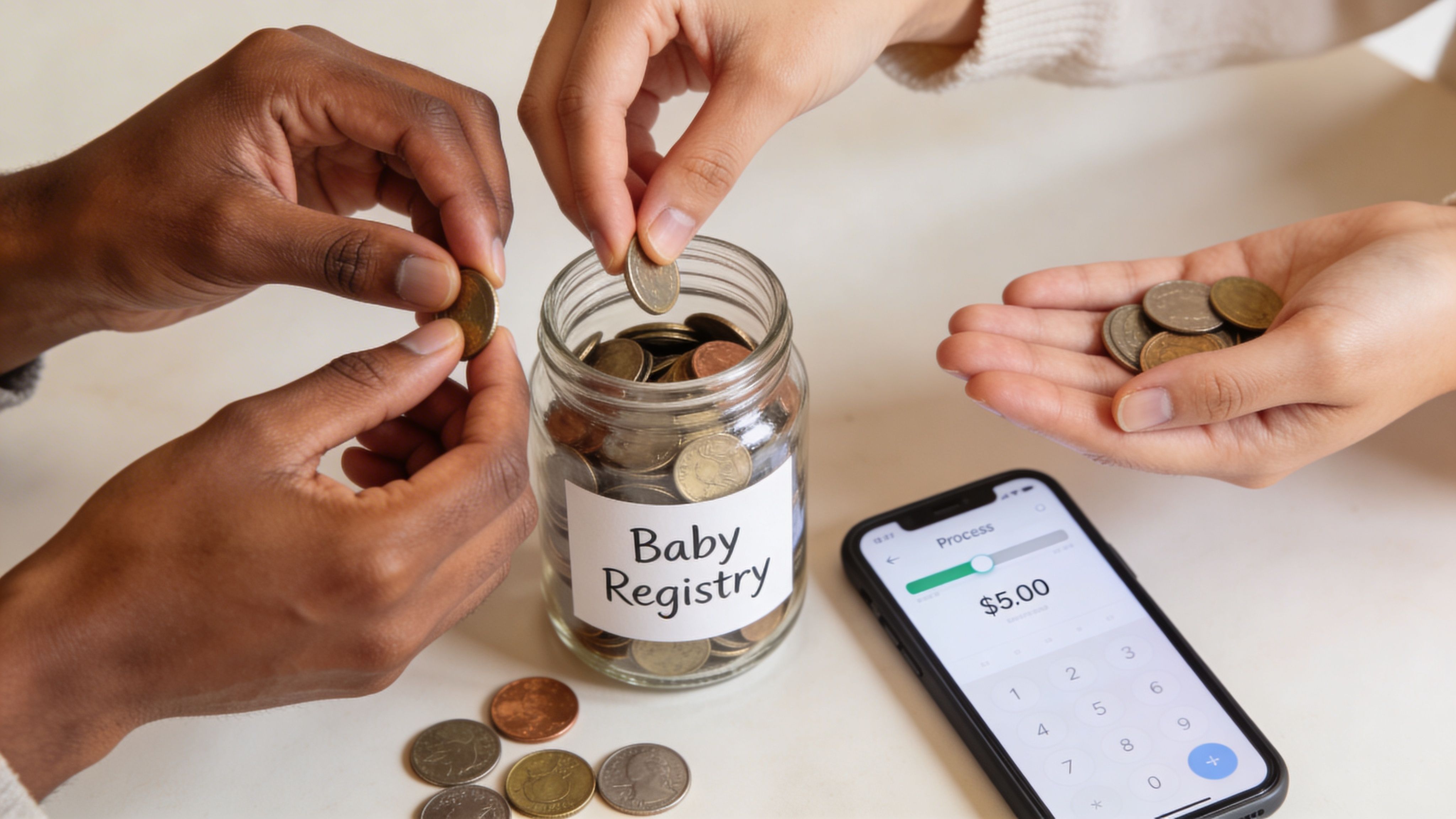
Some guests understand group gifting instantly. Others need one sentence of explanation before they feel comfortable contributing. That’s why a transparent message works so well.
This format is especially helpful when the registry includes higher-cost essentials such as a crib, stroller, glider, or car seat. People want to know whether they’re covering a full item, joining other guests, or sending flexible funds toward a category.
A clear example for Zelo-style registries
We’ve put together a registry with a mix of baby basics and a few bigger items we’ll use every day. Some gifts can be contributed to as a group, so you’re welcome to chip in at whatever amount feels right. Everything is organized on our registry page, and contributions are handled securely. Thank you for helping us get ready for baby.
That message works because it answers the awkward question before guests have to ask it. It also lowers the pressure. Nobody has to wonder if a large item is “taken” or if contributing a smaller amount is acceptable.
Practical rule: If the registry includes shared contributions, say so plainly. Guests are much more comfortable when the process is obvious.
Poppylist’s published case study describes how messaging that explicitly explains staged shipping and shared contributions influenced guest behavior, including changes in duplicate gifts and average contribution patterns in its user base, as outlined in Poppylist’s welcome message examples. The precise takeaway for parents is less about copying any one platform’s wording and more about clarity. People give more confidently when they understand the system.
A format guests can skim in seconds
For a shower insert card or WhatsApp message, short steps help:
- Browse the list: See what we need most for baby’s first months.
- Choose any gift or contribution: Bigger items can be supported together.
- Check out securely: The registry handles the details in one place.
Zelo shines for modern celebrations. A parent can learn how collaborative registries work and then mirror that same simplicity in the message itself.
Common mistake
The mistake is trying to make group gifting sound fancy. It doesn’t need jargon. It needs straightforward wording.
“Guests may participate in a collective contribution mechanism” is technically understandable, but nobody talks that way. “You can chip in toward bigger gifts if you’d like” is better. It’s warmer, faster, and much easier to act on.
3. The Convenient Digital-First Message
A digital-first baby registry message is short by design. It’s written for phones, small screens, and distracted guests.
That changes the writing. Long introductions get skipped. Dense paragraphs make the link feel like work. The best version reads clearly in a text, DM, or digital invite preview.
A mobile-friendly example
Hi friends. We’re getting so excited for baby’s arrival. If you’d like to see our registry, everything is in one place here. We added practical essentials, a few group gifts, and easy ways to celebrate with us. Thank you so much for being part of this.
That’s enough for a text message. It opens warmly, explains the link, and ends with thanks.
A good digital-first message also respects how people share registry links now. QR codes, text threads, and direct messages have become normal ways to pass along celebration details. Babylist’s guidance on sharing registry QR codes through invites, texts, and digital messages reflects how common that behavior has become, and parents can see similar invitation etiquette ideas from BabyCenter’s baby shower planning advice.
The details that improve response
Short doesn’t mean careless. A few practical choices make a big difference.
- Lead with context: Say this is the baby registry before dropping the link.
- Keep one ask: Don’t add event details, meal trains, and nursery updates in the same message.
- Write for the preview pane: Put the important words in the first sentence or two.
- Add a light thank-you: Even a simple “thanks for celebrating with us” softens the message.
For workplace chats, the wording can be even more concise:
We’re so grateful for everyone celebrating with us. If you’d like to contribute, our baby registry is here, with essentials and shared gift options all in one place.
What to leave out on mobile
This style fails when parents try to compress an entire announcement into one text.
Skip the long preamble. Skip multiple links. Skip the paragraph explaining every category. The point of a digital-first message is easy access.
If the parents are choosing between paper enclosure cards and digital sharing, it helps to think about guest behavior. Many guests will still end up opening the registry on their phone. That’s one reason digital formats keep winning for convenience. For a useful breakdown of that trade-off, parents can compare digital and paper invitations before deciding how to share their page.
A baby registry message written for mobile should feel light. It should take seconds to read and even fewer seconds to use.
4. The Inclusive All Budgets Welcome Message
A guest opens your registry, sees a few bigger-ticket items, and immediately wonders whether a small gift will look cheap.
That hesitation is common. Good wording fixes it fast.
The wording that lowers pressure
We’re so thankful for your love and support as we get ready for baby. We’ve included gifts at different price points, and some larger items can be given as group gifts. If you’d like to contribute, any amount is appreciated.
This baby registry message works because it answers the question many guests will not ask out loud. Is a modest gift still welcome? Yes. Can several people go in together on a larger item? Also yes.
It also keeps the tone balanced. The message does not apologize for having a registry, and it does not sound like a fundraising pitch. It gives guests a clear read on the setup, which matters even more for modern registries that mix traditional items, cash funds, and shared contributions. If parents are still building that structure, this baby shower gift registry guide for choosing categories, price ranges, and contribution options helps create a page that matches the message.
Why this wording works better than vague politeness
Guests are usually not offended by a registry. They get uncomfortable when the wording and the registry page send different signals.
If the note says “anything helps,” but the registry opens with high-cost items and no explanation, guests feel pushed toward spending more than they planned. If the note clearly mentions lower-priced gifts and group gifting, the same registry feels considerate.
This represents the primary trade-off here. Parents want to include what they need, including expensive gear, without making the list feel exclusive. The fix is not removing every larger item. The fix is explaining how guests can participate at any budget.
Good examples in real life
A baby shower host might add this to a digital invite:
The registry includes everyday basics, a few lower-priced picks, and some group gift options for anyone who wants to contribute with others. We’re grateful for every kind of support.
A parent posting on Instagram might write:
We’ve added a mix of gifts across price points, plus a few shared options. We’re so happy to celebrate this season with you, and any contribution is appreciated.
For a cash or contribution-based registry such as Zelo, more specific wording often works better:
We set up our registry with both item gifts and flexible contribution options, so guests can give in whatever way feels right for them. Thank you for celebrating with us and for helping us prepare for baby.
That phrasing succeeds for a simple reason. It names the format instead of leaving guests to figure it out themselves.
A better approach than apologizing
Many parents try to soften the ask with awkward disclaimers.
“We know registries can be awkward, but...”
That line creates discomfort before the guest has even clicked. A warmer, more useful approach is to explain the choices you made and let people opt in comfortably.
Use these guidelines:
- Mention different price points directly
- Call out group gifts or contribution options clearly
- Thank guests for celebrating, not only for giving
- Make sure the registry page reflects the range you mention
The strongest version of this message is honest. It says, in plain language, that every budget is welcome. That is what helps guests relax and choose a gift with confidence.
5. The Practical Here’s Exactly What We Need Message
Some guests don’t want sentiment. They want a useful assignment.
This is the message for them.
A direct example that guides better gifting
Thanks for visiting our registry. We’ve tried to keep it practical and focused on what we’ll use most in the early months. Our biggest needs right now are feeding essentials, diapering basics, and a few nursery items. If you’d like to help, the registry highlights our priority picks and shared gifts.
The strength of this baby registry message is that it cuts through choice fatigue. Guests don’t have to scan a long list and guess what matters most. They get direction.
This style works especially well when the registry itself is organized by category. Parents can separate Nursery, Feeding, Travel, Bath, and Postpartum, then mention those categories in the welcome note or invitation insert.
Guests are much more likely to stay on-registry when they understand what problem they’re helping solve.
That’s one reason practical detail beats generic enthusiasm. “We’re excited for baby” is lovely, but “we’re trying to finish feeding and sleep essentials first” gives a guest a real path.
What useful specificity looks like
Specific doesn’t mean bossy. It means informative.
A strong practical note might mention:
- Priority categories: Feeding, diapering, sleep, travel
- Item purpose: “We picked this bassinet for bedside sleep”
- Urgency: “We’re focusing first on newborn and early postpartum basics”
- Flexibility: “If a larger item stands out, guests can contribute together”
This is also where thoughtful curation matters. Long, cluttered registries make practical messages less believable. If parents say they only need the essentials, the page should reflect that.
For families building a cleaner, more useful setup, this complete guide to baby shower gift registries is a helpful way to structure the actual list behind the message.
What doesn’t work here
Overly broad language weakens this format. So does trying to sound cute.
“Anything for baby is amazing” sounds generous, but it doesn’t help a guest choose. “We’re especially focused on daily-use items we’ll reach for right away” does.
This message is less about personality and more about confidence. It tells guests, kindly, “Here’s what would help.”
6. The Gratitude-First No Gift Necessary Message
This is the most graceful option for parents who care about etiquette, don’t want anyone to feel obligated, or come from families where direct gift language can feel uncomfortable.
The key is order. Gratitude comes first. Registry comes second.
A message that keeps the pressure low
We feel so lucky to be surrounded by so much love as we prepare for baby. Your encouragement, advice, and excitement have already meant so much to us. If you’d like to browse our registry, we’ve put together a list of items that would be helpful for this next chapter, but please know your support is the greatest gift.
That works because it sounds sincere, not performative. It names the emotional support people are already giving. Then it offers the registry as an option.
This approach is especially useful for no-shower situations, family circles with mixed etiquette expectations, or celebrations where some guests may show up mainly to spend time together. It also works well for second-time parents who want to be tactful.
When this style is the right call
Use this message when:
- The parents want to reduce obligation
- Attendance matters more than gifts
- The registry is being shared by text, email, or family group chat
- There’s a cultural preference for softer gift language
The challenge is avoiding mixed signals. If the note says “no gift necessary” but the rest of the message pushes hard toward the registry, guests will notice.
A better structure is simple. Start with thanks. Mention optional support. End warmly.
For example:
We can’t wait to celebrate with you. If you’ve asked for registry details, we’ve gathered everything in one place for convenience. Thank you for cheering us on during this season.
The trade-off
The trade-off is that a softer message may lead some guests to do nothing unless they’re already motivated. That isn’t a flaw. It’s the point. This style prioritizes comfort over direction.
Still, it helps if the registry itself is easy to use once someone chooses to visit it. If parents want the page to feel polished and gracious after that click, thank-you message templates for gifts can also inspire the same tone on the front end.
A gratitude-first baby registry message doesn’t try to persuade. It creates space. For many families, that’s exactly what good etiquette looks like.
7. The Community Building Join Us in Celebrating Message
Some registry messages work because they are intimate. Others work because they create momentum.
This one taps into the feeling that a baby is being welcomed by a whole circle of people, not just a list of individual shoppers. That makes it a strong fit for social sharing, workplace showers, family group chats, and digital celebrations where the parents want the registry to feel communal.
A message that feels collective
We’re so excited to welcome this baby, and it means a lot to celebrate with such a wonderful circle of family and friends. We’ve created a registry with essentials, shared gift options, and a few meaningful items for this next season. If you’d like to be part of helping us get ready, we’d be so grateful to celebrate with you there.
This works because it frames giving as participation in a shared milestone. It doesn’t rely on pressure. It relies on belonging.
That matters for digital-first celebrations. Guidance around registry-sharing has often focused on showers, but many parents now celebrate more informally or from a distance. The Gentle Nursery article on announcing a baby registry discusses etiquette for sharing registry information in digital contexts, including situations without a traditional in-person event, at their registry announcement guide.
Where this style shines
This is a strong fit for:
- Virtual showers
- Long-distance family sharing
- Office or team celebrations
- Social posts that invite wider support
- Registry pages that include comments or visible participation
A real-world example. A parent shares the registry in a family WhatsApp group with a note that says, “We’re lucky this baby already has such a village.” That phrase changes the tone. It reminds people that the registry is part of the celebration, not separate from it.
How to keep it warm instead of cheesy
Community language gets awkward fast when it sounds forced.
Avoid lines that feel like marketing copy. “Join the movement” is not a baby shower message. “We’d love to celebrate with you” is.
Parents can also borrow a cue from wedding and milestone registry etiquette. Strong registry wording often works across events because the emotional mechanics are similar. The best examples on The Knot and Brides usually do the same three things. They thank people, explain preferences clearly, and keep the spotlight on the occasion.
If parents are using Zelo, this is one of the easiest message styles to pair with a polished page. The platform naturally supports shared celebration language because guests can contribute toward meaningful gifts together, instead of treating the registry like a simple item checkout list.
7-Way Baby Registry Message Comparison
| Message Style | Implementation Complexity | Resource Requirements | Expected Outcomes | Ideal Use Cases | Key Advantages |
|---|---|---|---|---|---|
| The Personal Touch Baby Registry Announcement | Medium, requires thoughtful storytelling | Moderate, time to write, photos, email/social formatting | Higher emotional engagement and increased participation | Email announcements, social posts, shower invites | Builds authentic connection; encourages sharing |
| The Transparent Group Gifting Message | Medium, needs clear step-by-step explanation | Moderate, explanatory copy, visuals/QR, secure links | Greater trust and fewer questions; higher conversions | Digital invites, workplace notices, tech-forward groups | Clarity and transparency; reduces friction |
| The Convenient Digital-First Message | Low, short, mobile-optimized copy | Low, link/QR, mobile testing, concise CTA | High completion rates and fast responses | Texts, social stories/DMs, group chats | Fast, easy to act on; mobile-friendly |
| The Inclusive "All Budgets Welcome" Message | Low–Medium, careful inclusive wording needed | Low, examples of price points, empathetic tone | Broader participation but potentially lower average gift | Large families, workplace showers, community events | Lowers anxiety; democratizes participation |
| The Practical "Here's Exactly What We Need" Message | Medium–High, requires detailed curation | Moderate–High, item research, organization, updates | More useful gifts, fewer duplicates, confident givers | Parents with specific needs, adoptive families, later children | Efficient, reduces waste; clarifies priorities |
| The Gratitude-First "No Gift Necessary" Message | Low, simple, gracious wording | Low, warm tone, alternative help suggestions | Reduced pressure; likely lower registry participation | Close circles, experience-focused families, second kids | Emphasizes appreciation; respects cultural norms |
| The Community Building "Join Us in Celebrating" Message | Medium, needs social proof and momentum | Moderate, contributor counts, hashtags, sharing features | Increased shareability and viral potential if early support exists | Social media campaigns, large social circles, influencers | Drives social momentum and FOMO; encourages community participation |
Final Thoughts
A baby registry message seems small until it isn’t. It’s often the first thing a guest sees, and it shapes how they respond to the entire registry. If the wording feels warm, people relax. If it feels clear, they understand what to do. If it feels thoughtful, they’re more likely to choose something useful and stay aligned with what the parents need.
For some families, that means a soft, gratitude-first note that keeps everything optional. For others, it means a practical message that says exactly which categories matter most right now. And for digital-first celebrations, it often means something shorter and cleaner than parents expect. A guest opening a link from a phone doesn’t need a speech. They need a welcome, a little context, and an easy next step.
There’s also a real trade-off between warmth and clarity. Go too sentimental, and guests may miss how the registry works. Go too instructional, and the page can feel cold. The strongest baby registry message usually combines both. One or two lines of genuine gratitude. One line of useful direction. One closing line that sounds like the parents, not like a template library.
That balance matters even more on modern group-gifting platforms. When a registry includes flexible contributions, cash gifts, or shared support for larger items, the message has to do a bit more than say “welcome.” It needs to reassure guests that small contributions are welcome, explain that they can join others on bigger gifts, and make the experience feel celebratory instead of transactional. Done well, that can make the registry feel easier for everyone involved.
A good rule is to read the message out loud before posting it. If it sounds like something the parents would say to a friend, it’s probably close. If it sounds stiff, apologetic, or overly polished, it likely needs another pass.
A few final instincts are worth trusting:
- If the note feels too long on a phone, shorten it.
- If the registry has expensive items, explain the shared-gift option clearly.
- If the parents are worried about seeming pushy, lead with appreciation, not apology.
- If the list is broad, highlight the most-needed categories so guests aren’t left guessing.
- If the celebration is virtual or low-key, keep the tone light and optional.
Many guests want help getting it right. They want to give something useful. They want to celebrate well. The baby registry message gives them a path to do that.
And that’s the ultimate goal. Not perfect wording for its own sake, but a message that makes people feel welcomed, informed, and happy to take part in a very big moment.
If you’re ready to make registry sharing feel simpler and more joyful, create your gift registry on Zelo. It’s a beautiful, mobile-friendly way to organize baby shower gifts, group contributions, and meaningful cash gifting in one place, whether you’re celebrating in the US, UK, Europe, Brazil, or Australia.
Enjoyed the article? Share it!