
Before you share your registry link, confirm six things: the combined platform and processing fees, where and when payouts land in your account, whether checkout runs through a recognized secure processor, who can see contributor names and amounts, how the platform verifies your identity and caps withdrawals, and whether a small test transaction clears exactly as promised. Get those six right and contributions arrive predictably, privately, and without a single guest wondering if their gift actually made it to you.
TL;DR:
- Confirm whether the combined platform and processing fees are clearly disclosed and whether guests can choose to cover those fees during checkout.
- Verify if funds are paid directly to your bank account and if payout timing aligns with your expectations before launching the registry.
- Ensure the platform uses secure checkout methods like SSL encryption and supports reputable processors such as PayPal or Stripe to protect guest data.
- Test the entire payout flow with a small contribution at least a week before the event to identify any delays or issues proactively.
- Keep access to the registry limited to trusted individuals and monitor contributions regularly to detect discrepancies early and prevent fraud.
Table of Contents
- Cash Registry Security Checklist: The Six Checks to Run First
- How to Ask for Cash Politely (and Where to Put the Link)
- Payments, Fees, and Payout: What Actually Reaches You
- Protect Guest Data and Privacy
- Testing, Launch, and Post-Event Verification
- How Zelo Handles Each Checklist Item
- Physical Security for Cash and Devices at the Event
- Daily Reconciliation Habits That Catch Problems Early
- Who Should Have Access to Your Registry
- What to Do If You Suspect Theft or Fraud
- Monitoring Your Registry Long After the Event Ends
- A Final Word on Getting This Right
- Getting Started With a Secure Registry on Zelo
- Sources
- FAQ
Cash Registry Security Checklist: The Six Checks to Run First
Run through these before you send the link to a single guest. Each one takes a few minutes, and skipping any of them is how hosts end up with locked funds, confused guests, or an unpleasant surprise on payout day.
- Verify combined fees. Check the platform fee and the card processing fee together, not separately, and confirm whether guests can cover the fee or if it comes out of your total.
- Confirm payout destination and timing. Find out if funds go directly to your bank account or arrive as store credit, and how many days that typically takes.
- Check secure checkout credentials. Look for SSL encryption and a named payment processor like Stripe or PayPal, and note whether guests need to create an account to contribute.
- Confirm identity verification and withdrawal limits. A platform that asks you to verify your identity before releasing funds is protecting you from fraudulent withdrawal attempts, not just adding friction.
- Set your privacy controls. Decide whether contributions stay anonymous, whether dollar amounts are visible to other guests, and whether your page is private or publicly searchable.
- Run a test transaction. Send a small amount, ideally from your own card or a trusted family member, and time exactly how long it takes to reach your bank account.
Pro Tip: Do the test transaction at least a week before you plan to announce the registry. That gives you enough runway to contact support if the payout doesn’t land when expected, instead of discovering a problem the week of the event.
Two smaller items round out the list: check the refund and chargeback policy so you know how disputes get handled, and set contribution minimums or maximums if the platform allows it. Both matter less on day one, but they matter a lot if something goes wrong three weeks after your event.
How to Ask for Cash Politely (and Where to Put the Link)
The wording matters almost as much as the security settings. Etiquette experts agree that framing a cash request around a specific purpose, paired with genuine gratitude, is what makes it feel like an invitation rather than a demand. Skip anything that reads like an instruction. “Cash only, please” lands very differently than “if you’d like to give a gift, a contribution toward our first home would mean the world to us.”
Placement matters too. Wedding planning guides consistently recommend keeping registry details off the formal invitation and putting the link on your event website or RSVP page instead. Guests who want to give will look for it there.
- Formal: “Your presence means everything to us. Should you wish to honor us with a gift, we’ve set up a fund toward our honeymoon.”
- Casual: “We’re past the toaster stage of life! If you’re feeling generous, help us fund our new place instead.”
- Family-sensitive: “We know some of you prefer to give a traditional gift, so we’ve kept a small registry alongside our cash fund. Either way, we’re just grateful you’re there.”
If your guest list mixes traditions, a hybrid setup with a small physical registry next to your cash fund keeps everyone comfortable.
Payments, Fees, and Payout: What Actually Reaches You
The number that matters isn’t the platform fee alone. It’s the platform fee plus card processing stacked together, and that combined figure is what hosts consistently underestimate. On a typical gift, platform and processing fees can shave off a noticeable portion before it ever reaches your account.
The surprise hosts report most often isn’t the fee itself. It’s discovering the payout method after the fact, according to fee comparison research, which found that confirming combined fees and payout destination before launch is the single biggest predictor of a smooth experience.
Before you launch, check these four things:
- Whether guests have the option to cover the processing fee themselves, which protects your net total.
- Whether the platform pays out directly to a bank account or issues store credit or a gift card instead, since some platforms lock funds into their own ecosystem.
- Whether the platform supports international cards if you have guests contributing from outside the country, and what currency conversion looks like if so.
- The documented payout schedule, so you know if funds arrive the same day, in a few business days, or after a standard processor hold.
Write the answers down. You’ll want that reference if a payout looks delayed later.
Protect Guest Data and Privacy
Default to the least-exposing settings your platform offers. A private link that only invited guests can access beats a publicly searchable page every time, and hiding dollar amounts protects contributors from feeling judged for giving less, or feeling pressured to match someone else’s number.
- Choose a private link over a public page whenever the platform gives you the choice.
- Hide contribution amounts by default, and only show names if your guest list is comfortable with that level of openness.
- Limit who can export the transaction list, and store any export in an encrypted folder or a password-protected spreadsheet rather than a shared drive.
- Read the platform’s privacy policy for data retention timelines and confirm it doesn’t share contributor information with third parties.
- Never publish a full contributor list on a public page. If guests want recognition, handle it through a private thank-you instead.
Pro Tip: Strip out personally identifying notes, like a guest’s home address or a reference to their workplace, before anything goes on a public-facing page. Save the personal touches for a private thank-you message instead.
Testing, Launch, and Post-Event Verification
A test transaction is the fastest way to confirm the entire funds flow actually works the way the platform describes, from checkout to payout. Do this before the invitations go out.
- Send a small test payment yourself and time exactly when it clears into your bank account.
- Export your transaction records periodically and reconcile them against what you expect to see, rather than waiting until the event is over.
- Note the platform’s dispute or chargeback window, and keep basic documentation (screenshots, confirmation emails) in case a charge gets contested later.
- Keep a simple log pairing each thank-you note with its transaction, and confirm your final payout before you consider the fund closed.
None of this takes long, but it’s the difference between finding a payout glitch during a quiet test run versus discovering it while gifts are actively coming in.
How Zelo Handles Each Checklist Item
Zelo builds toward this checklist rather than around it. Checkout runs through PayPal, giving guests a payment experience most already trust and recognize. Event pages are built for personalization: hosts name specific goals, whether that’s a honeymoon fund or a down payment, which lines up directly with the etiquette guidance about framing cash requests around a purpose rather than a blanket request. Payouts go directly to the host, and the platform doesn’t hold funds, which addresses the payout destination question at the top of the checklist.
Zelo’s own security overview covers the platform controls in more detail for hosts who want to see the specifics before launching a page.
Physical Security for Cash and Devices at the Event
Even with an online registry doing most of the work, most milestone events still see some cash and checks change hands in person, an envelope at the gift table, a card slipped to a parent, a check tucked into a card. Treat that cash the same way you’d treat any other valuable at a large gathering: don’t let it sit unattended.
Assign one trusted person, ideally someone not also managing guests or logistics, to collect and secure envelopes throughout the event. A locked box or a designated bag that stays with that person, rather than a decorative card box left on a table for hours, closes the most obvious gap. If the event runs late into the evening, move any collected cash to a secure location, a hotel safe, a locked car, or a trusted family member’s home, well before the venue empties out.

Devices matter too. If you’re checking your registry dashboard or answering guest questions on a phone or tablet during the event, make sure that device is password-protected and never left unattended on a table. A borrowed phone with an open banking app is a far easier target than any envelope. Simple habits, one point person, a locked container, a secured device, cover most of the physical risk without turning your celebration into a security operation.
Daily Reconciliation Habits That Catch Problems Early
Checking your registry once and forgetting about it until the event is where most surprises come from. Build a short, repeatable habit instead: log in every few days, note the running total, and compare it against your notification emails or text alerts.
A simple running log, even a basic spreadsheet with date, contributor name if visible, and amount, lets you catch a missing notification or a failed transaction before it becomes a bigger headache. This matters more in the weeks right before your event, when contribution volume tends to spike as guests finalize their gifts.
Reconciliation isn’t just about catching errors. It’s about noticing patterns. If a batch of contributions suddenly stops showing up, or a payout you expected on a certain date doesn’t land, you want to know within a day or two, not discover it a month later when you’re trying to close out the fund. Set a recurring reminder, weekly is usually enough, to check your dashboard and cross-reference it against your bank statement once payouts start arriving.
Keep exported records somewhere secure rather than on a shared or public device. A password-protected spreadsheet or an encrypted cloud folder is a low-effort habit that prevents a much bigger problem if a device is lost or shared.
Who Should Have Access to Your Registry
Most hosts manage their registry alone, but milestone events often involve a co-host, a parent, a wedding planner, or a sibling helping with logistics. Every person with login access is a potential point of failure, not because you distrust them, but because more access points mean more chances for a password to be reused, written down, or shared insecurely.
Keep the access list as short as possible. If your platform supports it, give collaborators view-only access rather than full administrative control, especially when it comes to withdrawal permissions. Only the primary host, whoever’s bank account receives the payout, should have the ability to initiate a withdrawal.
If someone helping you needs temporary access, for instance, a co-host managing guest communications, set a clear expectation about when that access ends. Close it out after the event rather than leaving it open indefinitely. And if you ever hand off management of the fund, whether to a co-host or a parent covering costs, change the password rather than simply sharing the old one.
Accountability doesn’t require anything complicated here. It just requires knowing exactly who can see what, and who can move money, at every point before, during, and after your event.
What to Do If You Suspect Theft or Fraud
Have a plan before you need one. If you notice a transaction you don’t recognize, or a payout that doesn’t match your reconciled total, contact your platform’s support team immediately and document everything: screenshots, timestamps, and any confirmation emails tied to the transaction in question.
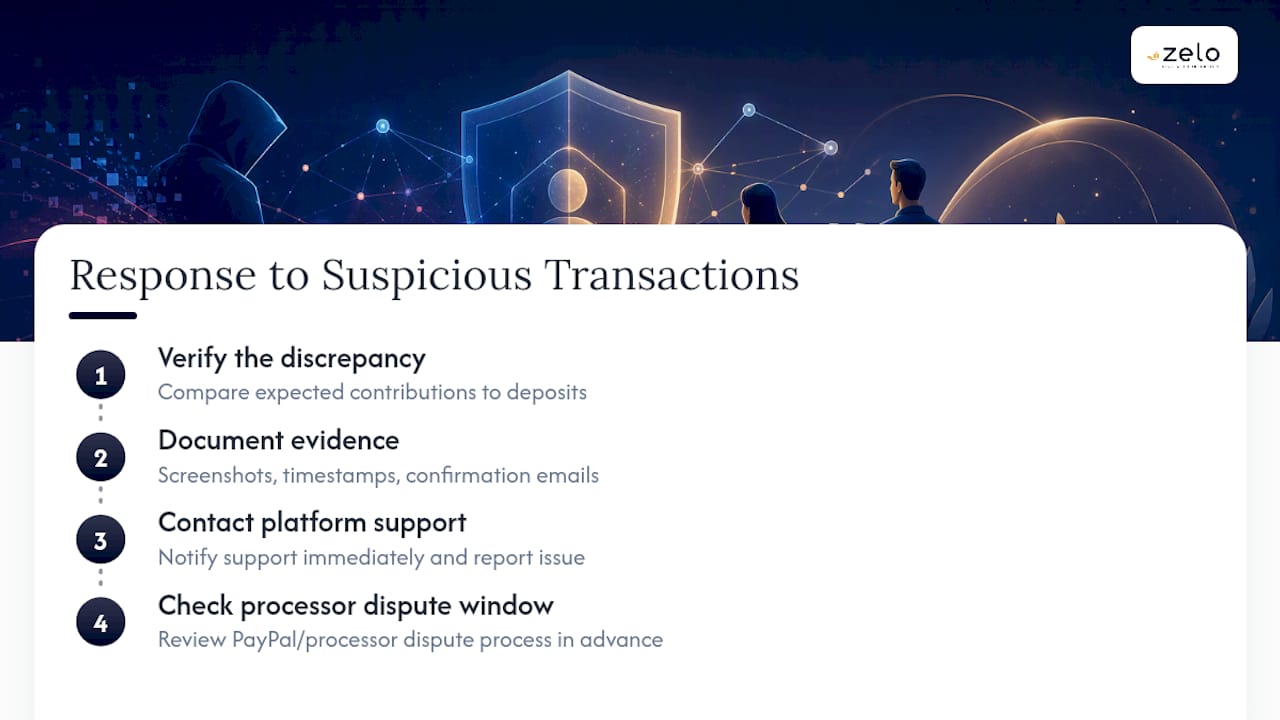
Most secure checkout processors, including PayPal, carry their own fraud protection and dispute resolution processes separate from the registry platform itself. Familiarize yourself with that dispute window in advance rather than scrambling to find it after something’s already gone wrong. Keeping a simple record of expected contributions against actual deposits, the reconciliation habit covered earlier, makes it dramatically easier to spot and report an issue quickly, which usually improves your odds of resolution.
If in-person cash goes missing, address it calmly and directly with whoever had custody of it last, rather than assuming the worst. Most physical cash issues at events trace back to a card or envelope simply being misplaced rather than actual theft. Still, having one designated point person for cash collection, as covered earlier, makes it far easier to trace what happened if something does go missing.
Monitoring Your Registry Long After the Event Ends
Security checks don’t stop once the last thank-you card goes out. Funds can continue trickling in for weeks after a milestone event, especially from guests who couldn’t attend and choose to give later. Keep monitoring your dashboard on a reduced schedule, monthly rather than weekly, until you’re confident the fund is genuinely closed out.
Before you consider the registry finished, confirm every payout that was supposed to happen actually happened, and that the total matches your own reconciled records. If a platform allows you to formally close or archive a fund, do that only after this final check, not before.
This final audit is also the moment to clean up. Delete or securely archive any exported spreadsheets you no longer need active, revoke collaborator access you set up temporarily, and change any shared passwords one last time. A registry that’s properly closed out is one less account sitting open with financial data attached to it, quietly aging in the background.
A Final Word on Getting This Right
The one check I’d never let a host skip is the combined fee and test payout. Everything else on this list protects you from inconvenience. That one protects you from a real financial surprise on the day you’re relying on the fund most. Run the test, confirm the math, and use this checklist as a working document rather than a one-time read. If something here doesn’t match what you’re seeing on your own registry, that’s worth a question to support before you launch, not after.
— Rodrigo
Getting Started With a Secure Registry on Zelo
Zelo is built around the same priorities this checklist covers: secure checkout through PayPal, clear event pages that let you name your goal instead of just asking for money, and payouts that go directly to you without the platform holding your funds along the way.

If you’re planning a wedding, a birthday, an anniversary, or any other milestone, you can set up a personalized page in a few minutes and share one link with your guests instead of juggling spreadsheets or envelopes. Start a page for any milestone you’re celebrating, or check out the wedding-specific wish list if you’re planning a ceremony and want wording examples built for that occasion. Either way, run your own test payment first, the same habit this whole checklist is built around, and you’ll know exactly what your guests will experience before you send a single invite.
Sources
- Asking for Cash as a Gift: Can You? And How Should You Do It? | GOBankingRates
- A Modern Guide to Wedding Registries, Cash Funds & More - Los Angeles Times
- Wedding Cash Registry & Honeymoon Fund Guide: Wording Templates, Fee Comparison & Stripe Payouts (2026) | QuikRSVP
FAQ
Is It Rude to Ask for Cash Instead of Gifts?
No, as long as you frame it around a specific purpose and lead with gratitude rather than an instruction. Etiquette guidance consistently finds this acceptable when hosts name a warm reason, like a honeymoon or a first home, instead of simply saying “cash only.”
Where Should I Put My Cash Registry Link?
Put it on your event website or RSVP page, not on the formal invitation itself. Wedding planning guides recommend this placement because guests who want to give will actively look for the link there.
How Do I Know How Much of My Gift Actually Reaches Me?
Check the combined platform fee plus card processing fee together, since that combined number is what actually reduces your payout. Confirm whether your platform lets guests cover that fee themselves, which protects your net total.
Does Zelo Hold My Funds Before Paying Out?
No. Zelo enables direct withdrawals without holding funds, and checkout runs through PayPal’s secure payment processing.
What’s the Fastest Way to Verify My Registry Is Set Up Correctly?
Run a small test transaction yourself before sharing the link with guests, and time exactly how long it takes to reach your bank account. This single step catches most payout and checkout issues before they can affect a real contribution.
Recommended
Enjoyed the article? Share it!