In the United States, bridesmaids traditionally do pay for their own dresses, and the average bridesmaid dress cost was $130 in 2022. That sounds simple on paper, but modern weddings rarely feel that simple once real budgets, group dynamics, and different family expectations enter the room.
A lot of readers arrive at this question in the same moment. The wedding party has been asked. Everyone is excited. Screenshots of dresses are flying around in the group chat. Then someone wonders whether the bride is choosing the dress, the bridesmaids are paying, or the cost is supposed to be shared somehow.
That question isn't awkward. It's responsible.
For couples planning weddings across the US, UK, Europe, Australia, or Brazil, the answer often depends on local etiquette, the price of the dress, and how openly everyone talks about money early on. The kindest path usually isn't the most traditional one. It's the clearest one.
The Big Question After the Big Ask
The champagne toast is over, the happy tears have dried, and the "Will you be my bridesmaid?" boxes are sitting open on the table. For a few minutes, everything feels easy. Then practical life returns.
One bridesmaid may be thinking about airfare. Another may be saving for a move. Someone else may be thrilled to say yes, but nervous about what "yes" will cost in total. The couple may be wondering how much direction is fair to give if friends are the ones paying for the look.
That tension is common because bridesmaid attire sits right at the intersection of tradition, friendship, and money.
Why this question feels loaded
The confusion usually comes from three things happening at once:
- The role feels emotional. Being asked to stand beside someone on their wedding day is very personal.
- The expenses feel practical. Dresses, fittings, shoes, travel, and beauty services all add up.
- The etiquette sounds fixed, but real life isn't. What's "normal" in one place or family can feel surprising in another.
A bride in New York may assume bridesmaids buy their own dresses because that's what everyone around her has always done. A family with UK roots may assume the couple covers attire because that's the tradition they know. A wedding with guests and bridal party members spread across Europe and Australia may need an entirely different conversation.
Practical rule: If a cost could surprise someone, it should be discussed before anyone checks out.
The good news is that there isn't one perfect script or one universal rule for every wedding. There is a respectful way to handle it. That usually starts with knowing the traditional expectation, then deciding whether that expectation still makes sense for this specific group of people.
The Traditional Etiquette of Bridesmaid Attire
In the US, the long-standing etiquette answer is usually yes. Bridesmaids have traditionally been expected to pay for their own dresses, even if the bride chooses the color palette, fabric, or specific style.

What the traditional rule actually means
This custom grew out of how the role itself was understood. Saying yes to being a bridesmaid often meant saying yes to some personal expenses tied to participating in the wedding, and attire sat near the top of that list.
A simple way to understand it is this: traditional etiquette treats the dress as part of the bridesmaid's participation, not as a gift automatically provided by the couple. That can feel a little counterintuitive when the bride has a clear vision for the look. But etiquette and fairness are not always identical. Etiquette explains the old default. It does not decide what is best for your specific group.
Here is the traditional framework in plain terms:
| Tradition | Usual expectation |
|---|---|
| Bride chooses or guides the look | Bridesmaid purchases her attire |
| Bridesmaid accepts the role | Bridesmaid plans for participation-related costs |
| Couple sets the wedding style | Bridal party contributes within their own budget if possible |
That distinction matters.
It helps explain why many families do not view self-pay as rude. In the traditional model, the couple is not billing friends for a costume. The expectation works more like joining a formal event with a shared dress code. The bride may set the aesthetic, and the bridesmaid covers the outfit she will wear to fulfill the role.
Why this tradition can still feel uncomfortable
Modern friendships often work with a different instinct. If one person chooses something specific, the group may assume that person should cover it. That is a reasonable reaction, especially if the dress is highly styled, hard to rewear, or paired with required shoes, alterations, and accessories.
That is why old etiquette needs translation. It gives you a starting point, not a script.
A helpful middle ground is to treat tradition like a map, not a contract. It shows where wedding customs started, while leaving room to adjust for real budgets, travel costs, and mixed expectations across families and cultures. Couples who want to keep the classic approach can do that more gracefully by being clear early. Couples who want to soften the cost can cover part of the attire, allow flexible dress options, or invite loved ones to support the celebration through a cash gift approach that reflects how modern weddings are shifting.
Where this tradition is strongest
This self-pay expectation is especially familiar in the US and is also commonly recognized in Australia. For weddings that bring together friends and relatives from different countries, that matters. Two people can both be polite and still walk into the same conversation with totally different assumptions about who pays.
Once everyone understands the traditional baseline, the money conversation gets easier. You are no longer guessing what the rule used to be. You are deciding, together, what feels generous and realistic now.
How Modern Weddings Are Changing the Rules
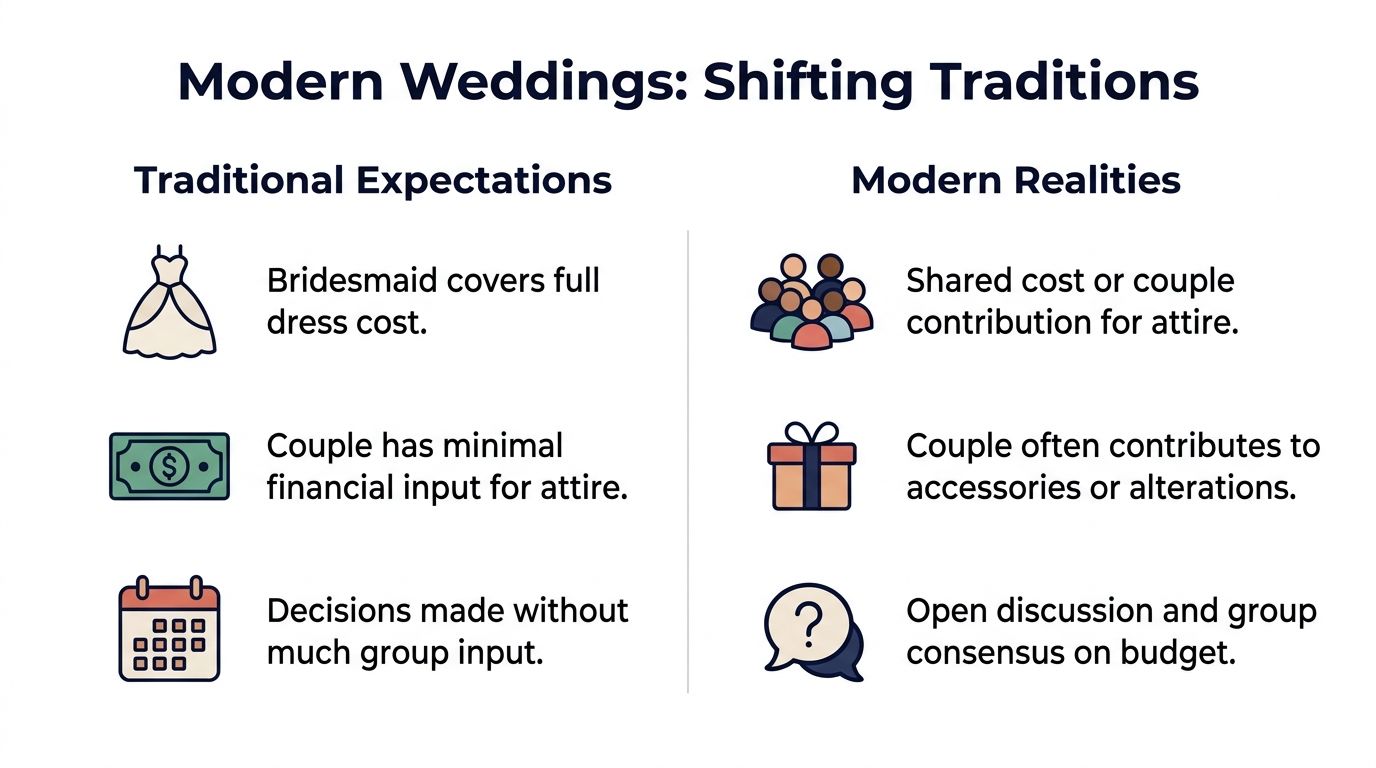
Tradition still matters, but modern weddings often work more like negotiated collaborations than rigid etiquette exercises. Couples are balancing personal style, multiple incomes, destination logistics, and bridal parties with very different financial realities.
The answer changes by country
One reason this topic gets confusing is that etiquette isn't universal.
In the UK, the older tradition leaned more toward the bride or the bride's family paying for bridesmaid dresses. But Bridebook's guide to bridesmaid costs notes a shift toward self-payment in about 60% of cases, especially as dress prices rise. The same source also notes that for dresses costing over £200, or about $250, etiquette often expects the bride to contribute so the bridal party isn't carrying an unreasonable burden.
That difference matters for couples planning weddings with family in the US and UK, or for international celebrations across Europe and Australia. People may show up to the same conversation with completely different assumptions about what's polite.
Price changes the etiquette
A simple rule helps here. The more specific and expensive the dress requirement becomes, the stronger the case for the couple to help pay.
If a bride says, "Wear any floor-length dress in sage," self-payment is typically considered reasonable because there is room to shop for comfort and budget. If she says, "Please order this exact gown in this fabric from this retailer," the request becomes much more like a mandated purchase.
That's often the point where etiquette starts to feel less like tradition and more like project management.
What modern couples are doing instead
Many bridal parties now choose one of these middle-ground approaches:
- Color palette over exact dress so each person can buy what suits her budget and body.
- Bride pays the difference if she falls in love with a pricier option.
- Couple covers one related expense such as hair, makeup, or accessories.
- Shared decision-making early before anyone commits emotionally or financially.
These approaches aren't a rejection of etiquette. They're a response to modern life.
The kindest weddings don't avoid money conversations. They have them early, clearly, and without embarrassment.
Another reason this shift feels natural is that celebrations themselves have changed. Digital planning tools, collaborative gift ideas, and more flexible registry habits have made people more comfortable discussing what support looks like. That broader change is part of why cash gifts are trending across modern celebrations, not just weddings.
A simple comparison that clears things up
| Scenario | What usually feels fair |
|---|---|
| Bridesmaid chooses from broad guidelines | Bridesmaid often pays |
| Bride requests one specific affordable dress | Bridesmaid may still pay, with clear notice |
| Bride requests a high-cost or hard-to-rewear dress | Couple often contributes |
| International wedding with mixed traditions | Discuss expectations before ordering |
The rule hasn't disappeared. It has become more context-sensitive.
A Realistic Look at the Bridesmaid Budget
A bridesmaid role can feel affordable at first glance, then look very different once the full checklist comes into view.
The dress is only one piece of the budget. Alterations, shoes, jewelry, hair, makeup, travel, lodging, and pre-wedding celebrations can turn one purchase into a series of smaller commitments that add up fast. It works a lot like planning a dinner party. The entrée may fit the budget, but drinks, dessert, tax, and parking still count.
That is why money tension often starts with surprise, not selfishness.
Typical Bridesmaid Expense Checklist
| Expense Item | Typical Cost Range | Who Typically Pays |
|---|---|---|
| Bridesmaid dress | Varies | Bridesmaid in the US, traditionally |
| Alterations | Varies | Usually bridesmaid |
| Shoes | Varies | Usually bridesmaid |
| Accessories | Varies | Usually bridesmaid, unless gifted |
| Hair and makeup | Varies | Depends on whether services are required |
| Travel and lodging | Varies | Usually bridesmaid |
| Bridal shower or bachelorette contribution | Varies | Often shared by bridal party |
As noted earlier, bridesmaid dress costs alone can be fairly moderate. The larger issue is the total spend, especially when several expectations arrive one after another instead of being shared upfront.
Where budgets usually go off track
Budget stress usually comes from stacking requests.
A bride may choose a dress that feels reasonable, then add a specific shoe, matching jewelry, professional makeup, hotel nights near the venue, and a contribution to the bachelorette weekend. Each item can sound small on its own. Together, they can change the financial reality of saying yes to the role.
Timing matters too. A bridesmaid who orders late may face rush shipping, limited size options, and fewer sale prices. Early planning gives people room to compare, borrow, rent, or buy secondhand without panic.
Ways to lower the cost without lowering the style
Beautiful bridal parties do not require identical spending. They require clear priorities.
- Let the overall look do the matching. A shared color or fabric family often photographs just as well as one exact dress, while giving each person more control over price and fit.
- Use one unifying detail. Matching bouquets, earrings, or wraps can tie the group together without requiring every item to match.
- Set the must-haves apart from the nice-to-haves. If professional hair is optional, say that plainly. If a certain dress length matters, name that and let the rest stay flexible.
- Encourage shopping early. More time usually means better pricing, more resale options, and fewer expensive last-minute choices.
- Welcome rewearable pieces. Neutral shoes and simple accessories often look polished and make the purchase feel more worthwhile.
- Treat required extras as part of the overall budget. If the wedding vision depends on a paid service or specific item, it helps to discuss that cost as openly as the dress itself.
Gift expectations can add another layer of confusion. This guide to group gift etiquette and how much to give can help bridal parties separate wedding party expenses from guest gifting.
A manageable bridesmaid budget usually comes from clearer expectations and fewer required add-ons.
For couples trying to balance tradition with modern costs, the goal is not to remove every expense. The goal is to make the full picture visible early enough for everyone to respond openly. That is what keeps friendship at the center of the celebration, where it belongs.
Graceful Scripts for Talking About Money
Most etiquette problems aren't really etiquette problems. They're communication problems.
People can handle a clear answer they don't love much better than a vague answer that keeps changing. Bridesmaids usually want to support the couple. Couples usually want their friends to feel celebrated, not strained. The bridge between those two goals is plain, kind language.
Scripts for the bride
These work best early, ideally before dresses are chosen.
"I'd love for you to be part of the wedding party. I'm still finalizing attire, but I want to be transparent that bridesmaids would likely be paying for their own dresses. If that feels stressful at any point, please tell me. I want us to figure out something that feels comfortable."
That script does two useful things. It names the expectation, and it gives permission for honesty.
If the bride wants a specific look:
For one exact dress
"I found a dress I really love for the wedding. Before I make it the official choice, I want to check that the price feels reasonable for everyone."For a flexible look
"I'm hoping for dresses in the same color family, but I want everyone to choose a style and price point that works for them."For a higher-cost dress
"This option is more expensive than I originally planned, so I'm happy to cover part of the cost if we go with it."
Scripts for bridesmaids
Bridesmaids don't need to apologize for having a budget. They do need to be timely and direct.
Here are cleaner ways to say something difficult:
If the cost feels high
"I'm so honored to be included. I want to be upfront that my budget is limited right now. Could we look at a lower-cost option, or something I could choose within your color guidelines?"If alterations or extras are the problem
"The dress itself may be manageable for me, but the extra costs are what I'm worried about. I wanted to say that early rather than wait."If participation isn't realistic
"I care about you so much, and I want to celebrate you well. I don't think I can take on the full cost of being a bridesmaid right now, so I wanted to be honest before plans go further."
Honest early conversations are kinder than silent stress followed by last-minute withdrawal.
A few communication habits that prevent hurt feelings
A short checklist helps more than a long speech:
- Say the number or expectation clearly. If the dress is chosen, say so. If the look is flexible, say that.
- Discuss total expectations, not just the gown. Shoes, glam, and travel matter.
- Make budget concerns private when needed. Not every issue belongs in the group chat.
- Avoid moral language. "Committed" and "supportive" shouldn't become code words for "able to spend more."
Couples who want more wedding communication advice often find helpful etiquette coverage in publications like Brides, especially when sorting through planning conversations with family and friends. And for a broader look at shared gift planning for milestone events, this complete guide to a collaborative gift registry offers a useful modern framework.
A Modern Solution for Group Gifting
Some weddings land in a practical middle ground. The couple doesn't want to put too much on the bridal party, but they also don't want to absorb every cost inside an already busy budget. That's where a modern cash registry can help, elegantly and without turning the bridal party into an accounting exercise.

A thoughtful option is to create a fund with a clear purpose, such as a Bridesmaid Dress Fund, Wedding Party Style Fund, or Bridal Party Glam Fund. That doesn't mean asking guests to buy a specific person's dress. It means giving gift-givers a meaningful way to support the celebration in a form the couple can use.
Why this feels more graceful than ad hoc requests
A registry page is cleaner than scattered money conversations. It gives context. It sets expectations. It lets supportive friends and family contribute because they want to, not because they're being cornered into solving a budget problem in private.
This approach can also work beautifully when parents or close family members want to help discreetly. Instead of handling reimbursements through text messages and screenshots, the support can be organized in one place and folded into the larger gift plan.
It works beyond weddings too
This is one reason modern cash registries resonate with more than engaged couples. Parents planning baby showers may create a fund for nursery essentials. Friends organizing milestone birthdays may use one for a group experience. Graduates may prefer support for a laptop, relocation, or first-apartment setup. The format is flexible because real celebrations don't always fit neatly inside a traditional gift box.
For couples exploring a wedding-specific option, Zelo's wedding cash registry offers a simple way to organize those contributions in one polished place.
A good registry doesn't replace etiquette. It supports it. The couple can still be thoughtful about what they ask of the bridal party, while also creating a practical path for people who want to help.
Celebrating Your Friendship and Your Big Day
So, do bridesmaids pay for their own dresses? Traditionally in the US, yes. In real life, the best answer depends on the wedding, the dress, the location, and the people involved.
The healthiest approach usually combines three things: a clear understanding of the old etiquette, a realistic view of the budget, and open conversation before expectations harden into stress. That's what keeps the wedding party feeling like a circle of support instead of a pile of separate invoices.
There isn't one gold-standard arrangement that proves a couple is more gracious or a bridesmaid is more loyal. There is only the arrangement that respects everyone's circumstances while protecting the joy of the day.
A wedding works best when the people standing beside the couple feel included, informed, and cared for. That same spirit can shape the guest experience too, especially when planning thank-you notes and post-wedding appreciation. This roundup of creative ways to thank wedding guests is a lovely next step once the big decisions are in place.
If you'd like a polished way to organize meaningful cash gifts for weddings, baby showers, birthdays, or graduations, explore Zelo and create a registry that feels clear, modern, and easy to share.
Enjoyed the article? Share it!