The clearest way to explain your event funding goal is one sentence: “Your presence is our greatest gift — if you’d like to contribute, we’re saving toward [goal].” That phrase works for a wedding, birthday, baby shower, graduation, or housewarming because it leads with gratitude, keeps the contribution optional, and names exactly what the money is for.
Where to place it:
- Your event website or registry page
- An RSVP insert card tucked inside the invitation envelope
- A private message to close family or your wedding party before invites go out
Never put it on the formal invitation itself. That single rule, covered in more detail below, is the foundation of gracious cash-gift etiquette.
Key Takeaways
Explaining your event funding goal graciously comes down to one rule: lead with presence, name the goal, and keep the contribution optional.
| Point | Details |
|---|---|
| Presence first, always | Open every request with gratitude for attendance before mentioning any contribution. |
| Use event pages, not invitations | Place your goal explanation on your event website or an insert card, never the formal invite. |
| Name the goal specifically | “Honeymoon in Italy” or “nursery fund” connects guests emotionally and increases engagement. |
| Offer multiple contribution paths | Provide a platform link, common payment apps, and an envelope option for guests who prefer cash. |
| Follow up with specific thank-yous | Reference each guest’s contribution in your note and share a brief update on how funds were used. |
| Getzelo for the full workflow | Getzelo’s event pages handle goal naming, progress tracking, and secure checkout in one place. |
Table of Contents
- Why explaining your cash-gift goal matters to guests
- Where and when to share your funding goal
- Exact wording: templates for every event and goal
- Practical ways guests can contribute
- Tone cues and red flags that pressure guests
- Step-by-step checklist to set up and share your fund
- How to thank guests and show the impact of their contributions
- Why many hosts choose a cash fund over a traditional registry
- Getzelo makes explaining and collecting cash gifts simple
- Sources
Why explaining your cash-gift goal matters to guests
Explaining your funding goal keeps the gift voluntary and helps guests feel connected to something real rather than handing over cash with no context. When guests understand that their contribution moves you closer to a honeymoon, a nursery, or a first home, the act of giving feels meaningful rather than transactional.

Emily Post’s guidance on cash gifts frames this well: the most gracious approach is to emphasize that presence is the greatest gift and to treat any monetary contribution as entirely optional. That framing removes pressure and preserves the spirit of celebration.
Practically, a clear explanation also reduces friction for digital contributors. Guests who understand the goal are more likely to complete an online contribution without second-guessing the amount or purpose.
Where and when to share your funding goal
The channel matters as much as the wording. Emily Post’s wedding registry etiquette guidance is direct: never place a gift request on the primary formal invitation. Use a separate card or your event website instead. Baby showers are a common exception where registry details can appear on the invite.
Recommended channels:
- Event website or registry page — the primary home for your goal explanation, contribution link, and progress updates
- RSVP or info insert card — a brief line directing guests to your event page (“Find our wish list at [link]”)
- Private messages to close family and your wedding party — tell your inner circle first so they can answer guest questions diplomatically
- Reception signage — a small card near the gift table or entrance with a QR code
- Social posts — appropriate for casual milestone events like milestone birthdays or housewarmings
Timing guidance:
- For weddings, publish the goal on your event website after invitations go out, typically 3–6 months before the date.
- For shorter-timeline events (baby showers, birthdays), share with RSVPs or 4–6 weeks in advance.
- Always brief your inner circle before the broader announcement so no guest hears about it awkwardly from a stranger.
Exact wording: templates for every event and goal
The core principle, drawn from practical cash-gift guides, is simple: lead with presence, make the contribution optional, and name the goal specifically. Saying “honeymoon fund” lands differently than saying “cash preferred.”
Wedding — honeymoon fund (neutral): “We have everything we need for our home. If you’d like to give a gift, a contribution to our honeymoon fund would mean the world to us.”
Baby shower — nursery fund (warm): “We’re so grateful you’ll be there to welcome our little one. If you’d like to contribute, we’re building our nursery and every bit helps.”
Birthday — experience fund (casual): “Your presence at my 40th is the real gift. If you’d like to add something extra, I’m saving toward [trip/experience].”
Graduation — down payment or career fund (formal): “Thank you for celebrating this milestone with me. If you’d like to give a gift, I’m putting contributions toward [goal].”
Housewarming — home fund (friendly): “We’re so excited to have you see the new place. If you’d like to contribute, we’re saving toward [specific home project].”
Language to avoid: “cash preferred,” “no gifts please” (when you actually want contributions), mandatory amounts, or any phrasing that implies a minimum. For wedding cash gift etiquette specifics, the guidance is consistent: name the goal, keep the tone warm, and never set a floor.
Practical ways guests can contribute
Offer multiple paths. A guest who prefers Venmo should not have to create a new account, and a guest who prefers an envelope at the reception should not feel out of place. Brides’ guidance on asking for cash gifts recommends offering both cash options and at least a small traditional registry so every guest has a comfortable route.
Collection method comparison:
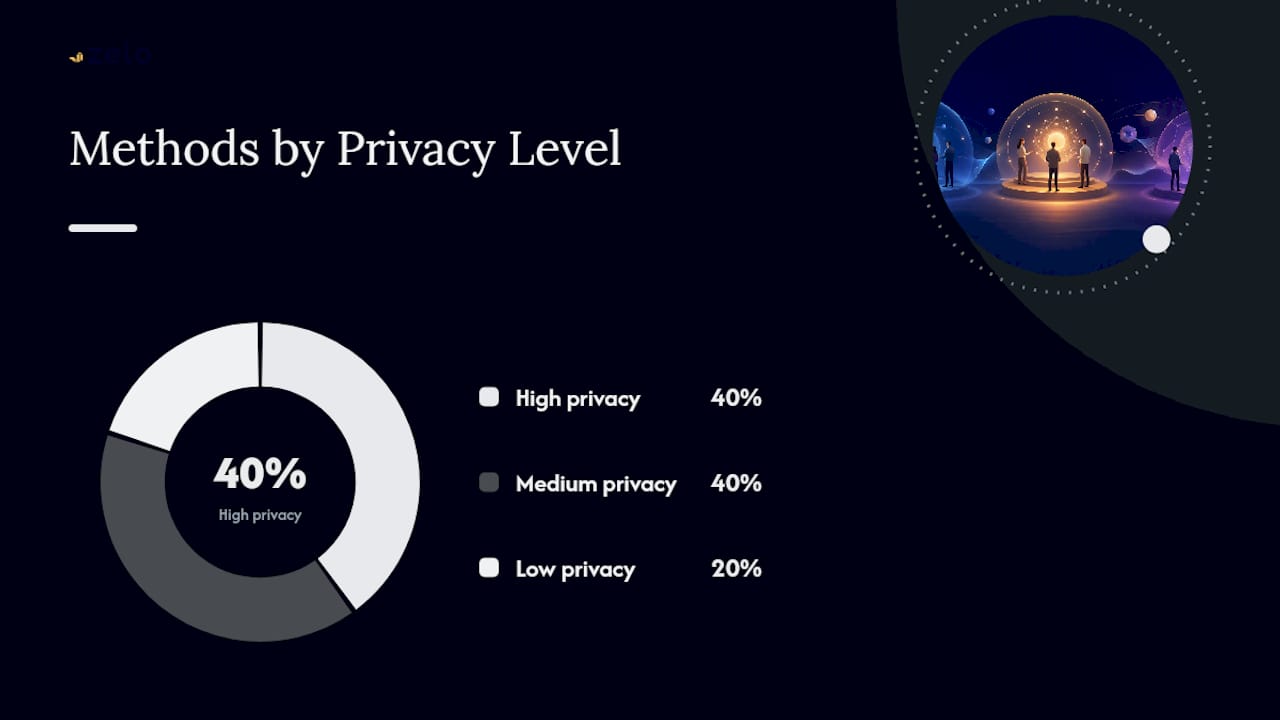
| Method | Ease for guests | Fee visibility | Privacy | Best for |
|---|---|---|---|---|
| Personalized event page (e.g., Getzelo) | High — single link, progress bar | Platform fee disclosed at checkout | High | Any milestone event |
| Venmo | High for existing users | No fee for bank transfers | Low (public by default) | Casual events |
| PayPal | Medium — account required | No fee for friends/family | Medium | Guests who prefer PayPal |
| Cash App | Medium | No fee for standard transfers | Medium | Younger guest groups |
| Envelope box at reception | High — no tech needed | None | High | Older guests, formal events |
Step-by-step checklist for setting up contribution instructions:
- Create your event page and name the goal clearly (e.g., “Honeymoon in Italy” not just “Honeymoon Fund”).
- Write a two-sentence goal description explaining what contributions will fund.
- Add your preferred payment options and test each link before sharing.
- Create a short URL or QR code for easy sharing.
- Add the link to your event website, RSVP insert, and any reception signage.
- Place a small envelope box at the reception for guests who prefer cash or checks.
For a full walkthrough, Getzelo’s step-by-step contribution guide covers the process from page creation to guest communication.
Tone cues and red flags that pressure guests
Pressure comes from language that sounds transactional or mandatory. The fix is usually one word or one structural change.
Red-flag phrases and behaviors to avoid:
- “Cash only” or “cash preferred” on any communication
- Listing suggested amounts on the invitation or event page
- Sending repeated public reminders on social media
- Noting who has or hasn’t contributed
- Framing the request as a requirement (“In lieu of gifts, please contribute to…”)
Replacement phrases that preserve graciousness:
- Instead of “cash only” → “If you’d like to give a gift, contributions to our [goal] are appreciated”
- Instead of listing amounts → describe what different contribution levels might fund (“$25 covers a night of dinner on our trip”)
- Instead of public reminders → a single private follow-up to guests who asked about gifts
Pro Tip: Customize your tone by guest group. For elderly guests or those less comfortable with digital payments, include a brief note that cash or checks at the reception are equally welcome. For out-of-town guests, emphasize that their travel is already a generous gift. Cultural context matters too — in some communities, cash gifts are the default expectation, while in others, a physical gift still signals respect.
Step-by-step checklist to set up and share your fund
3–6 months before the event:
- Choose your primary collection platform and create your event page.
- Name each goal specifically and write a short description for each.
- Draft your wording for the event website and insert card.
- Brief close family and your wedding party or event co-hosts.
2–4 weeks before: 5. Finalize and test all payment links. 6. Add contribution instructions to your event website. 7. Include the insert card with outgoing invitations (or update your RSVP page). 8. Order or prepare reception signage and an envelope box if needed.
Day of the event: 9. Place signage and the envelope box at the venue entrance or gift table. 10. Designate a trusted person to manage the envelope box and any cash received.
After the event: 11. Tally contributions and withdraw funds from your platform. 12. Send thank-you notes within two weeks, referencing each guest’s contribution specifically.
A complete baby shower registry guide and Getzelo’s setup resources cover platform-specific steps for each milestone type.
How to thank guests and show the impact of their contributions
Timely, specific thank-yous do more than fulfill an obligation. They close the loop for guests and make the contribution feel real. A note that says “Your gift helped us book our first night in Santorini” lands differently than a generic “Thank you for your generous gift.”
Handwritten note (any event): “Thank you so much for contributing to our [goal]. Your generosity brought us one step closer — we can’t wait to [specific detail]. It meant so much to have you there.”
Email or social post (for larger groups): “We’re thrilled to share that thanks to your generosity, we’ve reached [X% / specific milestone] of our [goal]. Here’s a photo from [moment]. We’re so grateful.”
Send notes within two weeks of the event. For contributions made through a platform like Getzelo, you’ll have a clear record of each guest’s contribution amount, which makes personalizing notes straightforward. A brief photo update — even a single image shared privately — reinforces that the money went exactly where you said it would.
Why many hosts choose a cash fund over a traditional registry
Hosts often prefer cash funds for flexibility, experiences, or to cover real project costs that no product registry can address. A couple saving for a down payment doesn’t need a third blender. A new parent building a nursery from scratch may need $800 in furniture, not a collection of small items from a traditional list.
The emotional case is just as real. When a host names a goal — “our first home,” “a babymoon before the baby arrives,” “a graduation trip” — guests contribute to a story, not a transaction. That shift in framing is why cash gifting has grown steadily as a preference among milestone event hosts.
The balance point is gratitude. Hosts who communicate warmth alongside the practical goal — who make clear that presence matters more than any gift — preserve the relationship regardless of whether a guest contributes.
Getzelo makes explaining and collecting cash gifts simple
Hosts who want a polished, secure way to put all of this into practice will find that Getzelo’s milestone event pages map directly to the etiquette advice above.

Create a personalized event page, name your goal, add a short description of what contributions will fund, and share a single link with guests. Getzelo’s progress bar shows guests how close you are to the goal, which makes the contribution feel tangible. Checkout is handled through secure PayPal processing, and hosts can withdraw funds directly without the platform holding them.
Getting started:
- Create your event and name your goal
- Add your wording and goal description
- Choose your payment options (PayPal checkout, standard processing)
- Share your event link via your website, insert card, or direct message
- Track contributions and send thank-yous from your dashboard
Getzelo charges a percentage-based platform fee per contribution — no setup fees, no subscriptions. For wedding cash registries, the platform includes goal tracking and guest communication tools built for the full planning timeline.
Sources
The guidance in this article draws on the following etiquette authorities and practical planning resources:
- Is It Okay to Ask for Money? — Emily Post
- How to Ask for Money Instead of Gifts — Emmaline Bride
- How to ask for cash as a wedding gift — Brides
For long-form wording examples and platform setup details, Getzelo’s event contribution guide is a practical next step for hosts ready to build their event page.
Recommended
Enjoyed the article? Share it!