
If you’d like to offer a cash option, use this: “If you’d like to give a gift, a contribution to my moving fund would mean a lot. Absolutely no obligation.” That single line does three jobs at once: it names a purpose, keeps the request optional, and thanks the giver in tone. Place it on a registry link, at the bottom of an invite, or in a personal text.
TL;DR:
- Using a dedicated fundraising platform with a clear purpose makes requesting cash easier and more private, avoiding clutter on invitations.
- Framing the gift as optional and explicitly naming its purpose creates a positive emotional connection and avoids sounding transactional.
- Short, polite invites like “a fund has been created” or “contributions are welcome but never expected” help maintain a no-pressure tone.
- Thank-you notes that mention the specific purpose of the gift without revealing the amount are more personal and better received.
- Sharing the fund link in a registry or personal message keeps the request straightforward and flexible, especially for different recipient types.
Table of Contents
- Ready-To-Use Graduation Cash Gift Phrases By Tone
- How Should Wording Change By Recipient?
- What Cash Gift Etiquette Rules Should You Follow?
- Where Should You Put Your Cash Request?
- How Do You Say Thank You For A Cash Gift?
- Why Trust This Advice: Rodrigo And Zelo
- The Small Wording Moves That Change How A Request Feels
- Set Up A Graduation Fund Without The Awkward Ask
- Sources
- FAQ
Ready-To-Use Graduation Cash Gift Phrases By Tone
The wording you choose should match how well you know the person reading it. A cousin’s group chat can handle a joke about student loans; a printed invitation to your grandmother cannot. Here are templates sorted by tone and where they work best.
Casual (texts, social posts, group chats):
- “No pressure at all, but if you’re feeling generous, my grad fund is open. Every bit helps me get to the next chapter.”
- “Cash, Venmo, gift cards, hugs. I’ll take any of it. Congrats to me, I guess?”
- “Skipping the toaster this time. If you want to contribute to my ‘move across the country’ fund, link’s below.”
- “Graduation is basically adulting boot camp. Cash donations toward my first apartment fund gratefully accepted.”
Neutral or formal (printed invites, RSVP cards):
- “Your presence is the only gift required. For those who wish to contribute, a fund has been set up to support [name]'s next step.”
- “In place of traditional gifts, contributions toward [name]'s graduate school fund are welcome but never expected.”
- “Should you wish to celebrate with a gift, [name] has created a fund for [purpose]. Details are on the invitation insert.”
Heartfelt (paired with a personal note):
- “You’ve watched me grow for four years. If you’d like to help me take the next step, a gift toward my moving fund would mean the world, but your presence at graduation already means more than you know.”
- “This chapter wouldn’t exist without people like you. If you’d like to contribute to my travel fund before I start my job search, I’d be grateful, but honestly, just seeing you there is the gift.”
- “I know cash gifts can feel less personal, so I want you to know: every bit toward my car fund gets me closer to independence, and I’ll think of you every time I turn the key.”
Light or funny (close friends only, use with caution):
- “I have a degree and no money. Cash gifts accepted, guilt trips declined.”
- “Diploma: acquired. Savings account: still tragic. Help a grad out?”
- “I promise to spend this responsibly. (I will not. Send funds anyway.)”
Notice the pattern across every tone: none of them demand anything. Combining a cash request with a [personal note] tends to make the gift feel more meaningful](https://blog.tribute.co/how-much-money-to-give-for-graduation/) than the money alone, whatever tone you land on.
How Should Wording Change By Recipient?
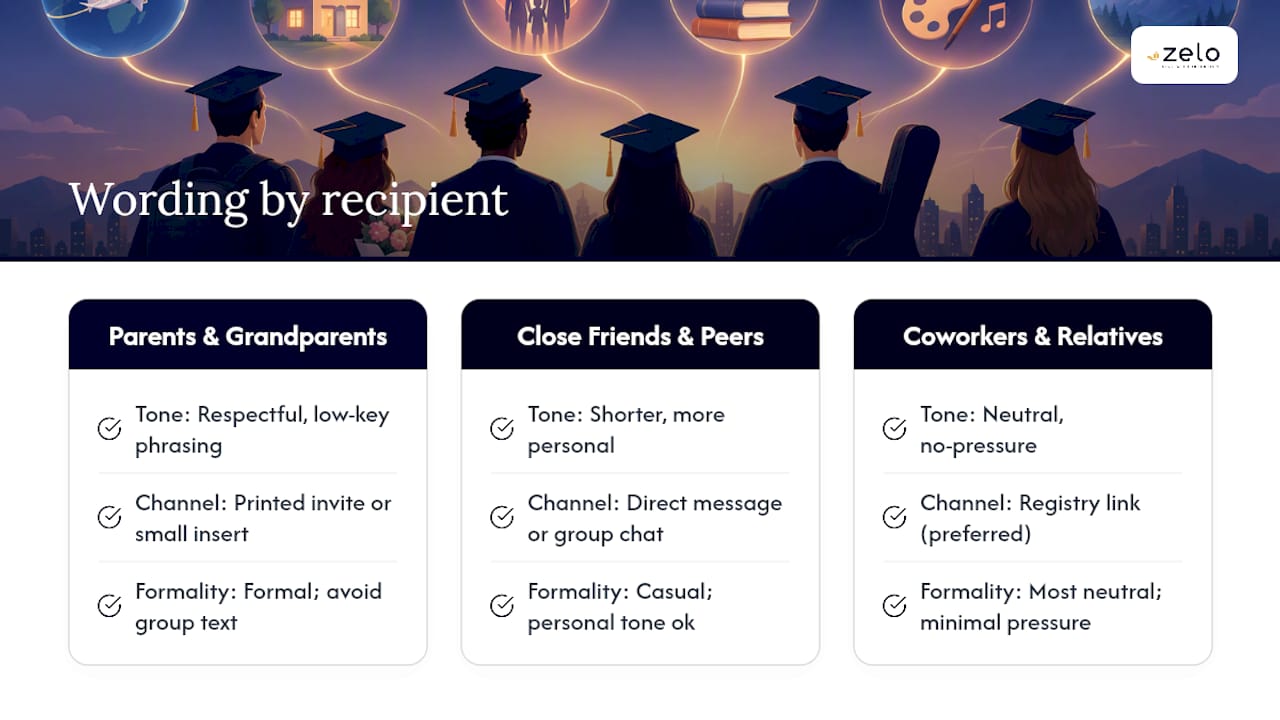
The same request can land very differently depending on who reads it. A coworker doesn’t need the same warmth you’d give a grandmother, and a close friend doesn’t need the formality you’d give a distant aunt.
Parents and grandparents respond best to respectful, low-key phrasing on a printed piece: “Your love and support mean everything. If you’d like to help with my next chapter, a contribution to my graduate school fund would be deeply appreciated.” Keep this on the invite itself or a small insert card, never a group text.
Close friends and peers can get something shorter and more personal, usually by direct message or group chat: “Hey! Skipping gift wrap this year. If you want to chip in toward my apartment fund, here’s the link. Either way, see you at the party.”
Coworkers and distant relatives need the most neutral, no-pressure version, typically shared through a registry link rather than a direct ask: “For those who’ve asked what I need, I’ve set up a small fund for [purpose]. No obligation at all, just grateful for the well wishes.”
Channel matters as much as wording. Printed invites should carry the shortest, most formal line. Group chats and DMs can carry more personality. Registry links do the heavy lifting either way, since they hold the full description without cluttering the invite.
What Cash Gift Etiquette Rules Should You Follow?
Good wording follows a few consistent rules, and breaking them is usually what makes a request feel pushy even when that’s not the intent.
- Always signal that giving is optional. Words like “optional” or “no obligation” do real work. If you’re sending an announcement rather than an invitation, etiquette guidance from Emily Post is direct on this: announcements should explicitly state that no gift is expected, since they carry no invitation and therefore no social debt.
- Skip “in lieu of gifts” phrasing. It reads as transactional and slightly cold. Swap it for “if you’d like to contribute” or “we’ve set up a fund for,” which frames cash as a choice rather than a substitution.
- Name the purpose. A generic ask for money feels transactional. A named purpose, like a moving fund or a study-abroad trip fund, gives guests a story to attach to their gift and makes them more comfortable giving in the first place.
- Protect your privacy. Never post a personal payment handle on a physical invitation where anyone can see it. Use a registry link instead, which keeps the transaction private and looks intentional rather than improvised.
Pro Tip: Pair the cash ask with one sentence about what it will fund. “Toward my first month’s rent” does more emotional work than “cash gifts welcome,” and it costs you nothing extra to write.
Where Should You Put Your Cash Request?
Three placement options exist, and each fits a different level of formality.
- A registry or fund page is usually the least awkward choice. It keeps the ask off the invite entirely, gives guests a progress bar and a choice of amount, and lets you write a fuller explanation than an invite line allows.
- A short invite line works when you want the option visible without a separate registry, something like “A small travel fund has been created for those who wish to contribute.” Keep it under one sentence.
- A private message fits when you’re asked directly, “What do you want for graduation?” That’s your cue to answer honestly rather than waiting for someone to guess wrong.
Whichever method you use, a good fund description should state the purpose, confirm the gift is optional, and thank the giver in advance. Registry-based wording keeps every contribution voluntary while still giving guests a clear, comfortable way to act on it.
How Do You Say Thank You For A Cash Gift?
A thank-you for cash follows the same rule as the request itself: name the purpose, skip the number.
- “Thank you for helping me start this next chapter. Your gift is going straight toward my first apartment.”
- “I’m still smiling about your generosity. It’s going toward my moving fund, and it means more than you know.”
- “Your gift made my graduation even more special. I plan to put it toward grad school, and I’m so grateful.”
- “Thank you for celebrating with me and for the gift. It’s going toward my travel fund, and I can’t wait to use it.”
- “You didn’t have to be this generous, but I’m so glad you were. Thank you from the bottom of my heart.”
- “Your support means the world as I figure out my next steps. Thank you for the gift and for being there.”
Short, specific thank-you notes sent within two weeks land better than delayed, generic ones, and mentioning intended use, without ever naming the amount, is what makes the note feel personal rather than procedural. Send these by card if you have the address, or by text if that’s how the relationship normally works.
Why Trust This Advice: Rodrigo And Zelo
Zelo is a cash gifting platform built for milestones like graduations, weddings, and birthdays, where naming a purpose matters more than listing a product. Rodrigo writes on gift registry etiquette for the Zelo blog, drawing on etiquette sources and gift-guidance research to shape practical, usable wording rather than generic advice.
The Small Wording Moves That Change How A Request Feels
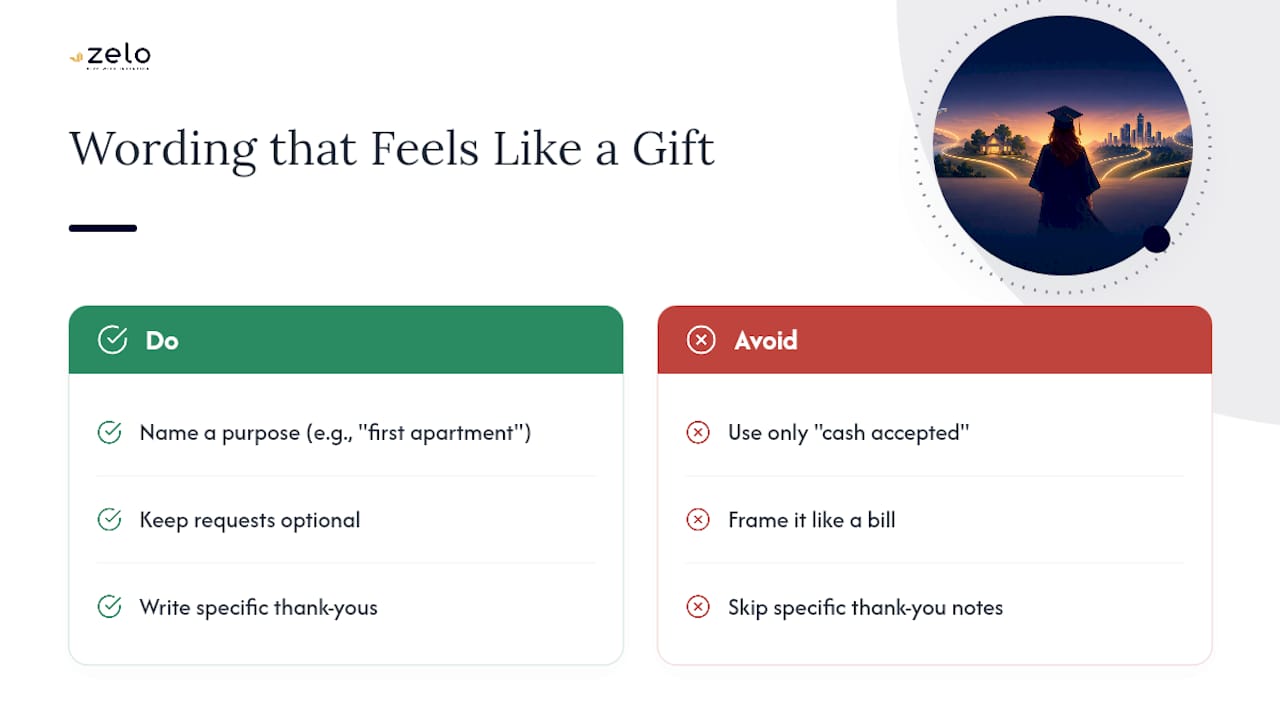
Naming a purpose changes the emotional math of a cash gift. When guests read “toward my first apartment” instead of “cash accepted,” they picture the outcome, not just the transaction, and that shift shows up in how warmly they respond. The wording matters less for the giver’s comfort than for the giver’s imagination.
Keep every request optional and every thank-you specific. That combination, more than any clever phrase, is what makes cash feel like a gift instead of a bill.
— Rodrigo
Set Up A Graduation Fund Without The Awkward Ask
A dedicated platform can turn the wording problem into a one-time setup instead of a dozen individual conversations. Create a personalized event page, name your purpose (moving fund, first apartment, grad school), and share one link instead of writing custom cash requests for every relative and coworker on your list. Guests contribute through a secure checkout, no account required on their end, and you can withdraw funds directly without waiting on a third party to release them.

Before you build your page, check the platform fee structure so there are no surprises when contributions come in. When you’re ready, create your graduation fund page and drop the link anywhere you’d normally put a wording line: invite, group chat, or registry section.
Sources
- Giftgiving
- Emily Post — Graduation etiquette
- How to Nicely Ask for Cash as Graduation Gifts - Greatest Gift
FAQ
Is It Rude To Ask For Cash At Graduation?
It isn’t rude as long as the wording keeps the gift optional and states a purpose. Etiquette authorities like Emily Post distinguish invitations from announcements, and either format is fine as long as it never implies an obligation.
Where Should I Put My Cash Gift Link?
A registry or fund page is the most comfortable placement because it keeps the request off the printed invite and gives guests a full description and a choice of amount. Platforms like Zelo let you create one shareable link that covers every guest at once.
Should I List The Gift Amount In My Thank-You Note?
No. Mention what the gift will go toward if you’re comfortable, but never state the actual amount in a thank-you card or message.
What Does Zelo Cost To Use?
Zelo charges a platform fee of 3.89% on each contribution guests make through your event page. There’s no setup or subscription fee, so you only pay when someone actually gives.
What’s The Best Phrase To Avoid Sounding Transactional?
Skip “in lieu of gifts” and use “if you’d like to contribute” or “we’ve set up a fund for [purpose]” instead. Naming the purpose, whether it’s a moving fund or a trip, makes the ask feel like a shared celebration rather than a bill.
Recommended
Enjoyed the article? Share it!