Embarking on the journey to your wedding day is a time filled with joy, excitement, and big dreams. One of the first questions on every newly engaged couple's mind is, "So, how much does a wedding cost?" While the numbers can feel daunting—with averages around $34,000 in the US and £21,990 in the UK—it's important to take a celebratory deep breath.
Those figures are just a starting point, not a price tag for your unique celebration. This guide is designed to demystify the costs, celebrate the planning process, and show how a couple's guest list, location, and personal style come together to create a budget that feels just right for their love story.
The Real Cost of Saying 'I Do' in 2026
Planning a wedding is one of the most exciting projects a couple will ever undertake. It’s a whirlwind of happy decisions and daydreams, but it also comes with very real financial questions. The key is blending that romance with savvy planning, turning what can feel like a mountain of an expense into a completely manageable and exciting journey. This is a moment for couples, parents planning a baby shower, or friends organizing a special birthday celebration to dream big.

While national averages offer a frame of reference, they don't paint the full picture. A wedding budget isn't an off-the-rack number; it’s a custom-fit plan. A chic celebration in a major city like New York or London will naturally have a different bottom line than a relaxed, intimate party in the countryside of Australia or Brazil.
To give couples a clearer snapshot, here’s a quick look at the top-line figures from recent industry studies.
Average Wedding Costs at a Glance (2026)
| Metric | United States (USD) | United Kingdom (GBP) |
|---|---|---|
| Average Total Cost | $34,000 | £21,990 |
| Average Cost Per Guest | $268 | £207 |
| Couples Who Overspend | 56% | 56% |
These numbers, based on reports from industry leaders like The Knot and Brides, aren't meant to cause alarm—they're meant to empower. Knowing where the costs lie helps couples plan smarter from day one.
What the Numbers Really Tell Us
The data reveals a crucial truth: a staggering 56% of newlyweds admit to going over their initial budget, usually because of unexpected costs that pop up along the way. It’s also clear that family support plays a huge role. For instance, 61% of UK couples receive financial gifts from relatives to help with expenses, a trend you can read more about in the full wedding industry report from The Knot Worldwide.
This isn't a warning; it's a road sign. When couples know where others often overspend, they can put up their own guardrails and plan for those possibilities.
A wedding budget isn’t a restriction; it’s a roadmap. It guides decisions, helps prioritize what truly matters, and ensures a couple starts their married life on a strong financial footing.
Planning a Celebration That Feels Authentic
At the end of the day, the goal is to create a day that’s a true reflection of the couple's love story, without kicking off their marriage with financial stress. Modern couples are focusing more on personalization and the guest experience, which can influence costs but also adds incredible, lasting value. This spirit of celebration extends to other life milestones, like planning for a new baby, a milestone birthday, or a graduation.
Here are a few practical tips to keep in mind:
- Prioritize with passion. What are the top three non-negotiables? Is it a live band that will have everyone on the dance floor, jaw-dropping photos, or food that guests will talk about for years? The budget should flow into those areas, with flexibility on the rest.
- Lean on community. Many couples find their loved ones are genuinely excited to contribute in a meaningful way. A modern cash gift registry lets guests put money toward big-ticket items like a honeymoon fund or a down payment on a home, making their gift feel both personal and impactful. This is also a wonderful way for loved ones to support expecting parents through a baby registry on platforms like BabyCenter.
- The couple is in control. Remember, those averages are just statistics. A wedding, baby shower, or graduation party can be absolutely beautiful and unforgettable whether the budget is $5,000 or $50,000.
This guide provides the tools to build a realistic budget, sidestep common financial traps, and find smart ways to fund the day of your dreams. When you're ready to see how friends and family can help you get there, you can explore Zelo and see just how simple it is to get started.
How Your Venue Shapes Your Entire Budget
Picking a wedding venue is easily one of the most exciting first steps in the planning journey. But it’s a decision that's about so much more than finding a beautiful backdrop for photos. The venue is the single biggest factor that will define a wedding budget.
Think of the venue as the foundation of a house. Its size, location, and what it comes with will determine the scale and cost of everything else built on top of it.

Once that contract is signed, a whole series of dominoes starts to fall. That grand ballroom downtown will have a different price tag and set of rules than a rustic barn out in the country. The venue choice impacts the guest count, catering options, how much will need to be spent on decor—pretty much everything.
Location and Timing: The Two Biggest Cost Factors
It all boils down to two simple things: where and when. Getting married in a major city like New York, London, or Sydney will naturally cost more than in a smaller town, simply because of demand and higher operating costs for the venue. The data doesn't lie.
For a real-world example, a couple might see an average venue hire cost of $7,200 in a hotspot like New York City, while the same kind of celebration in Las Vegas could average closer to $3,100. This pattern is global. A London venue might run £4,700, while a venue in Glasgow averages nearly half that at £2,500. These fascinating wedding cost insights from Tagvenue really drive home how much location matters.
Timing is the other major budget lever. A Saturday wedding in June is prime real estate in the wedding world and will always be the most expensive day. But what if the couple shifted to a Friday in November? Or even a Sunday afternoon? They could unlock serious savings on the exact same space just by being flexible with their date.
The venue fee often accounts for up to 50% of the total wedding budget. Understanding what this fee includes is the single most important step in taking control of spending from the start.
What Is Typically Included in a Venue Fee?
When a venue sends a price quote, couples must look past the main number and figure out what they’re actually getting. It’s absolutely crucial to ask for a detailed breakdown to compare apples to apples.
Generally Included:
- Exclusive use of the space for a set number of hours.
- Basic furniture, like tables and chairs for a certain number of guests.
- On-site staff, which usually includes a venue coordinator, a setup/cleanup crew, and sometimes security.
- Access to facilities like restrooms and a bridal suite or getting-ready room.
Often Costs Extra:
- Food and drinks. This might be handled by an in-house caterer or from an approved list of outside vendors.
- Upgraded rentals. Think specialty linens, fancier glassware, or those cool cross-back chairs from Pinterest.
- A/V equipment for a band or DJ, like special lighting or speakers.
- Guest services like valet parking or a coat check.
Asking the right questions during a venue tour is the best way to avoid surprise costs later. In places where Stripe Connect operates, like the US and Australia, it’s pretty standard to book popular venues 12-18 months in advance. In parts of Europe, the timeline can be a bit shorter, but it never hurts to start looking early.
That big venue deposit is often the first major check a couple will have to write, and it can feel a little daunting. This is exactly where creative couples are rethinking how they fund their wedding. By letting friends and family contribute to this tangible part of the day, they invite them into the process in a really meaningful way. Platforms like Zelo make this seamless, allowing couples to create your gift registry and turn a huge expense into a beautiful, collective gift.
Breaking Down the Per-Guest Cost
To unlock the secret to building a realistic wedding budget, couples need to understand one key metric: the per-guest cost. This single number is the most powerful tool for keeping spending in check.
But it’s so much more than just the price of a dinner plate. Think of each guest as a small, all-inclusive package of expenses. This package includes their meal and drinks, sure, but also a slice of the cake, their favor, and even a fraction of the big-ticket items like the venue rental, staffing, and decor that scale with the guest count.
The Power of the Guest List
The guest list is the ultimate budget lever. Honestly, no other decision will have such a dramatic and direct impact on the final bill. Couples can save a little by choosing a DJ over a band or scaling back on flowers, but trimming the guest list creates a powerful ripple effect, cutting costs across multiple categories all at once.
The data tells the story loud and clear. Industry research consistently shows that the guest count is the single biggest driver of wedding costs. The Knot's 2026 study, for example, clocked the average US wedding at 117 guests with an average cost of $292 per head. Over in the UK, data shows weddings with over 101 guests can cost 40% more than average. The trend is undeniable: more people means significantly more money.
A Tale of Two Weddings: A Real-World Example
Let’s put this into perspective with a quick comparison. Imagine two couples using the exact same venue and vendors, but with different guest lists. Using the US average of $292 per guest shows how the math plays out.
Wedding A: The Intimate Celebration (50 Guests) With 50 of their closest friends and family, the core "per-guest" costs add up to $14,600 (50 x $292). This leaves plenty of room in their budget for other priorities or simply means major overall savings.
Wedding B: The Grand Affair (150 Guests) Inviting 150 people sends the per-guest costs soaring to $43,800 (150 x $292). That’s a staggering $29,200 difference—enough money for a luxury honeymoon, a new car, or a solid down payment on a house in many markets.
Seeing the numbers side-by-side like this is often the wake-up call couples need to make more intentional decisions about who makes the final cut.
A smaller guest list doesn't mean a lesser celebration. It often means a richer one, allowing for a more personal, high-quality experience for every single person who attends.
Thoughtful Ways to Trim a Guest List
Deciding who to invite is easily one of the most emotionally charged parts of planning. The real goal is to gather the couple's absolute favorite people without causing too much friction with family and friends. It's why we're seeing a trend of US wedding parties shrinking by 20%, as couples choose to prioritize a top-notch experience for a smaller group.
Here are a few gentle strategies for managing a guest list:
- Create Tiers: Start with an "A-List"—the non-negotiables like immediate family and ride-or-die friends. Then, create a "B-List" and "C-List" to pull from if the budget and venue space allow.
- The "Plus One" Rule: A common and fair approach is to only offer a plus-one to guests who are married, engaged, or in a serious, long-term relationship.
- Consider an Adults-Only Reception: This isn't the right choice for everyone, but it can be a straightforward way to reduce the headcount, especially with large extended families with lots of kids.
- Host a Separate, Casual Event: Have a huge group of coworkers or distant relatives you’d love to celebrate with? Consider hosting a casual post-wedding brunch or a backyard BBQ to include them in a more budget-friendly way.
At the end of the day, a wedding is about two people, surrounded by those who have shaped their lives. By getting a firm handle on the per-guest cost, couples can craft a celebration that feels both generous and financially sane. And when it comes to offsetting those costs, allowing loved ones to contribute through a modern cash registry can be a game-changer. When you're ready to see how it works, you can start your Zelo page in just a few minutes.
A Complete Wedding Budget Checklist
Trying to create a wedding budget can feel like trying to assemble a massive puzzle without the picture on the box. We know the big pieces—the venue, food, and music—but what about all those smaller, oddly-shaped parts that have to fit somewhere? Think of this checklist as your guide, designed to map out every possible expense so you can build a solid financial plan without any nasty surprises.
When couples break down their wedding costs line by line, they sidestep that dreaded sticker shock and put themselves in the driver's seat from day one. It’s all about turning the overwhelming question of "how much does a wedding cost?" into a series of smaller, more manageable decisions. Let's dig into where the money really goes.
The Big-Ticket Items
These are the pillars of the celebration and, realistically, will take up the largest slice of the budget. Figuring these out first sets the foundation for everything else.
- Venue, Catering, and Rentals: This is the heavyweight category, often accounting for 45-55% of the total budget. It covers the physical space, every bite of food and sip of drink, and the essential rentals like tables, chairs, and basic linens. It’s no exaggeration to say this one category often eats up nearly half of an entire wedding spend.
- Photography and Videography: Capturing memories is a major investment, typically 10-15% of the budget. A seasoned photographer or videographer brings years of experience, a unique artistic eye, and professional-grade equipment, and their pricing reflects that. Couples can expect to see prices anywhere from $2,500 to $8,000+, depending on reputation, hours of coverage, and if photo and video services are bundled.
- Entertainment: The classic DJ vs. live band debate is a major budget fork in the road, making up 5-10% of costs. A great DJ who knows how to read a room might run $1,500 to $4,000. On the other hand, a talented live band can start around $5,000 and easily go up to $12,000 or more, especially for a larger group. This choice really defines the energy of the reception.
Style, Ambiance, and Personal Touches
This is where a couple's personality gets to shine. From their wedding day look to the feel of the room, these are the details that make the day uniquely theirs.
- Wedding Attire & Alterations: This bucket (5-7%) holds the wedding dress, suit or tuxedo, and any other special event outfits. A pro tip: always budget for alterations separately. They can easily add several hundred to over a thousand dollars to the final price tag of a gown.
- Flowers & Decor: Representing 8-10% of the budget, floral costs can swing wildly. A simple, elegant approach using local, in-season flowers will be far kinder to the wallet than complex installations with out-of-season or exotic blooms. Florists are artists; couples are paying for their design time and labor just as much as the flowers themselves.
- Hair and Makeup: Professional artists ensure everyone looks and feels incredible, and this typically costs 1-3% of the budget. Prices often include a trial run and can range from $150 to $350+ per person. If the couple is covering services for the entire bridal party on-site, that total can quickly hit $1,500 or more.
The Details That Tie It All Together
These smaller but mighty items connect the dots of the wedding experience, from the first impression guests receive to the final thank-you note they get in the mail.
- Invitations and Stationery: This category (2-3%) covers everything from save-the-dates and formal invitations to day-of paper goods like menus, programs, and place cards. While digital options are a great way to save, many couples still love the feel of a printed suite, which can range from $500 to $3,000 depending on the paper, printing method, and level of customization.
- Wedding Rings: This is a deeply personal expense, accounting for 2-3% of the budget, and the cost varies tremendously. It's all about the metal, the design, and whether the couple chooses to include any diamonds or other gemstones.
- Wedding Planner or Coordinator: Honestly, this can be one of the best investments a couple can make, typically costing 8-15%. A full-service planner who handles everything might charge a percentage of the budget or a flat fee (often $6,000+). A "day-of" coordinator is a more budget-friendly choice (around $1,500 - $2,500) and is invaluable for making sure the day itself runs without a hitch. For help staying organized, check out some of the best free wedding planning websites out there.
Heads Up on Hidden Costs! Always remember that service charges and taxes can inflate the food and beverage bill by an additional 20-30%. It's also smart to budget for vendor meals, delivery fees, and potential overtime costs. Factoring these in now will save major financial stress later.
To give a clearer picture, here’s how a typical $35,000 wedding budget might break down. This shows how quickly the costs for each category add up.
Sample Wedding Budget Breakdown (Based on $35,000 Total)
| Category | Estimated Cost (USD) | Percentage of Budget |
|---|---|---|
| Venue, Catering & Rentals | $17,500 | 50% |
| Photography & Videography | $4,375 | 12.5% |
| Wedding Planner/Coordinator | $3,850 | 11% |
| Flowers & Decor | $3,150 | 9% |
| Entertainment | $2,625 | 7.5% |
| Wedding Attire & Alterations | $2,100 | 6% |
| Invitations & Stationery | $875 | 2.5% |
| Wedding Rings | $875 | 2.5% |
| Total | $35,350 | ~100% |
As you can see, the big-ticket items consume a huge portion of the funds, which is why it’s so important to have these conversations early.
This flowchart illustrates how that massive venue and catering bill translates into a per-guest cost, which is then split between the meal, drinks, and cake.
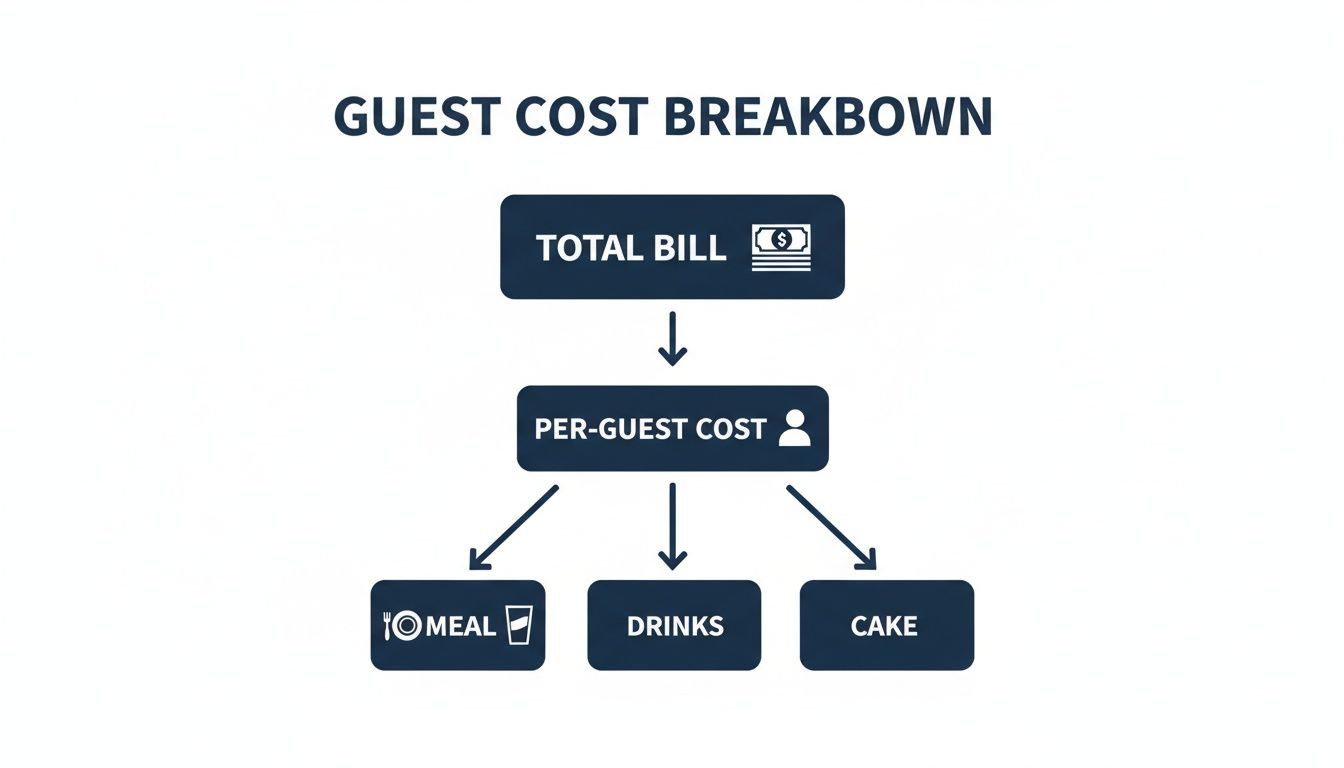
The visualization makes it crystal clear: the biggest driver of the per-person cost is the meal itself, followed closely by the bar tab.
By laying everything out into these distinct categories, couples can start making strategic decisions about where to allocate their money. If a breathtaking venue is their absolute must-have, they'll know they need to be a bit more conservative in other areas. This checklist gives them the power to build a celebration that’s not only beautiful but also financially comfortable.
Smart Ways to Fund Your Dream Wedding
Once couples have a handle on their budget, the big question looms: "How are we going to pay for all of this?" It’s a moment every couple has. The good news is, they don’t have to figure it out alone, and it doesn't have to mean starting their marriage in debt.
Instead of tackling the total cost as one giant number, modern couples are finding success by breaking it down. They’re using a smart mix of personal savings, contributions from family, and a new wedding tradition that’s quickly becoming a favorite: the modern cash gift registry.

This isn’t about just asking for money. It's about letting loved ones contribute to the things that will genuinely shape a couple's future together, moving far beyond the traditional toaster and towels.
The Power of a Cash Gift Registry
Think of it this way: guests truly want to give something that will be loved and used. But what if the thing a couple needs most isn't a thing at all? A cash registry gives friends and family a graceful and meaningful way to contribute directly to the biggest goals.
Platforms like Zelo make it incredibly easy. The couple sets up a personal registry page and can break down their goals into specific, tangible funds that guests can contribute to. It feels much more personal than just writing a check.
- The Dream Honeymoon: Let guests "buy" a specific experience, like airfare, a beachfront cabana in Brazil, or a special anniversary dinner in Paris.
- A Down Payment on a Home: Turn wedding gifts into the foundation of a future. Guests love knowing they’re helping build a home.
- The Venue Deposit: That first big payment can be a tough one. A cash fund lets the community help lock in the perfect spot.
- Big-Ticket Vendor Costs: Contributions can go toward that incredible photographer whose work is adored or the live band that will get everyone on the dance floor.
This approach makes guests feel like they are part of the story, giving a gift that truly matters.
Real-World Examples of Success
Couples all over the world use this community-focused approach to bring their wedding dreams to life without the stress.
Imagine a couple from Sydney who found their perfect venue, but it was just a little out of reach. They created a "Venue Fund" on their Zelo page, and their family and friends were so excited to help that they covered the entire $8,000 deposit. That wasn't just a monetary gift; it was the gift of making their dream location a reality.
Another couple in the UK had their hearts set on an Italian honeymoon. They detailed their dream trip on their registry, and guests loved being able to "treat" them to a gondola ride in Venice or a cooking class in Tuscany. They ended up funding their entire trip with the help of their community, creating memories to last a lifetime. For more tips, couples can learn how to politely and effectively be managing cash gifts in our detailed guide.
A Smarter Alternative to Debt
Let’s be honest: the thought of starting a marriage with a mountain of personal loans or credit card debt is the last thing anyone wants. A modern cash gift registry offers a much brighter, more celebratory alternative.
When a couple invites their community to support them in this way, they're not just avoiding debt—they're including them in their journey. Guests feel a real connection knowing their gift helped secure the venue or made that once-in-a-lifetime trip possible. It’s a shared victory.
Ultimately, this is about having the freedom to plan the wedding that’s uniquely yours without financial strain. It puts the couple in control, allowing them to focus on what really matters: celebrating their love.
Your Wedding Payment Timeline
One of the biggest surprises in wedding planning is that everything isn't paid for all at once. Instead of writing one giant, terrifying check, a series of payments will be spread out over a year or more. Knowing when those payments are due is the key to managing a budget without the stress.
Think of it less like a single purchase and more like a payment plan. The most important vendors will be secured with initial payments early on, with the final balances coming due closer to the big day. Here’s a look at a typical payment schedule so couples know exactly what to expect.
The First Financial Milestones
The first payments are all about locking in the people and places that can only be in one spot on a wedding day. As soon as a date is set, it’s time to get the foundational vendors on the books.
- 12+ Months Out: The very first checks will likely be for the venue and wedding planner. These two choices shape almost every other decision. Expect to pay a retainer, often up to 50% of their total fee, to officially reserve the date.
- 10-12 Months Out: Next up are the creative pros who are in high demand, like the photographer and band or DJ. Just like the venue, they can't be in two places at once. To make sure the couple gets their first choice, they’ll need to put down a retainer, which usually runs between 25% and 50%.
A quick but important note on contracts: the word "retainer," not "deposit," is often used. A retainer is a non-refundable fee paid to a vendor to hold a date, meaning they will turn down any other work that comes their way for that day. A "deposit" is typically a refundable down payment that goes toward the final bill. It's a small difference in wording with big implications.
Mid-Point and Final Payments
As the wedding gets closer, the payment schedule will pick up steam. Most of the remaining vendors—from the florist and caterer to the rental company—will require their final balance to be paid anywhere from 30 to 60 days before the wedding.
This is when things can feel a little intense, with several large bills coming due around the same time. It's also where a modern cash gift registry can be a lifesaver. When couples create your gift registry with Zelo, the funds received from generous guests can go directly toward covering these final, significant costs. It takes the pressure off, letting them focus on the celebration ahead.
To keep it all straight, a simple spreadsheet tracking who has been paid and what's still due is a planner's best friend. It’s an easy way to stay organized and feel completely in control of the finances.
Common Questions About Wedding Costs
Even after a budget is mapped out, some specific questions always seem to pop up. Let's tackle some of the most common ones we hear from couples. Getting these answers sorted helps them move past the what-ifs and get back to the fun part of planning.
Think of this as a go-to guide for those last few lingering doubts. We’ll clear things up so couples can plan with total confidence.
What Is a Realistic Budget for a 100-Person Wedding?
For a wedding with about 100 guests, a good starting point to consider is around $30,000 in the US or £27,000 in the UK. This figure is a general estimate based on average per-person costs, which wrap in everything from their meal to a slice of the venue rental fee.
Of course, that number can swing wildly depending on the choices made. A Saturday evening wedding in a big city like New York or London will naturally be on the higher end of that scale. On the other hand, a Friday or Sunday celebration in a more suburban or rural spot could cost significantly less. It's best to treat this number as a baseline, then adjust it based on what the couple values most.
How Can We Politely Ask for Cash Gifts?
This is a big one, and thankfully, the old etiquette rules have softened. The most graceful and modern way to ask for cash is through a dedicated cash gift registry platform. Services like Zelo are built for this, making it a celebratory and seamless experience for couples and their guests.
On a wedding website, a short, heartfelt note can explain the preference. Something like this works beautifully:
"Having you with us on our big day is truly the only gift we need! If you would like to give something, a contribution to our honeymoon fund would mean the world to us."
This framing feels personal and lets guests feel like they're contributing to a meaningful goal or experience, which they are often excited to do. It takes away any awkwardness and gives them a simple, secure way to contribute. Couples can start your Zelo page in just a few minutes and tailor it to their story.
What Are the Top Hidden Costs to Budget For?
No matter how carefully a couple plans, a few expenses almost always manage to catch them by surprise. Here are the three most common culprits to watch out for:
- Taxes and Service Fees: This is the big one. These fees can easily add 20-25% on top of the final catering and venue bills. When getting a quote, always ask if taxes and service charges are already included.
- Vendor Gratuities and Meals: The team works hard all day! It’s customary to tip many of the vendors, and a meal also needs to be provided for those on-site for the long haul, like the photographer, planner, and DJ. Our guide on wedding vendor tipping breaks down exactly who to tip and how much.
- Attire Alterations: That price tag on the dress or suit is just the beginning. Alterations are almost always a separate cost and can run anywhere from a few hundred to over a thousand dollars to get that perfect fit.
The best way to handle these pop-up costs? Build a contingency fund from the very beginning. Setting aside 10-15% of the total budget gives a crucial buffer for any unexpected expenses that arise.
Your wedding planning journey should be filled with joy, not financial stress. With a platform like Zelo, you can create a beautiful gift registry that helps fund your biggest dreams, letting you focus on the celebration ahead. Ready to make gifting simple and meaningful? Explore Zelo to see how it works.
Enjoyed the article? Share it!