
Nearly half of all wedding gifts are now cash or check, which means traditional gift registries are no longer the default choice for most celebrations. This shift is changing how hosts plan their events and how guests show up for the people they love. For many, the old model of picking items off a department store list feels outdated and impersonal. Modern cash gifting platforms are filling that gap, giving hosts new ways to personalize their celebrations while making the experience simpler and more meaningful for everyone involved.
Table of Contents
- How gifting shapes the guest experience
- The rise of cash gifting: Etiquette and expectations
- Comparing traditional registries and modern cash gifting platforms
- Practical tips to maximize joy for hosts and guests
- A fresh take: What really matters in guest gifting
- Elevate every guest interaction with smarter gifting
- Frequently asked questions
Key Takeaways
| Point | Details |
|---|---|
| Cash gifting on the rise | Cash and checks now make up nearly half of all event gifts, making them the new norm for many guests. |
| Personalization makes gifts memorable | Small touches and thoughtful communication turn a simple cash gift into a meaningful gesture. |
| Offer flexible options | Providing multiple gifting methods ensures comfort and ease for all guests, including older and international attendees. |
| Etiquette matters | Clear communication from hosts helps guests feel confident and appreciated, reducing stress around gifting. |
How gifting shapes the guest experience
Gifting is rarely just about the object or the money. At its core, it is an act of connection. When a guest chooses a gift, they are communicating care, recognition, and support for a milestone in someone’s life. That emotional weight matters, and it shapes how guests feel before, during, and after an event.
The psychology of meaningful gifts reveals that people feel more satisfied when their contribution has a clear, understood purpose. Guests who know their gift is going toward a honeymoon, a new home, or a child’s education feel more emotionally connected to the celebration. That sense of purpose is something a blender on a registry simply cannot replicate.
At the same time, guests often experience real anxiety around gift selection. They worry about spending too much or too little, choosing something the host already has, or picking an item that misses the mark entirely. These concerns create friction that can detract from the overall event experience.
Here is what is shifting in modern gifting culture:
- More guests now expect and prefer cash registry options at major life events
- Younger generations are comfortable with digital transactions and online platforms
- Hosts are increasingly open about their preferences, which reduces guest guesswork
- Physical gifts create logistical challenges, especially at large events or destination celebrations
“The best gift is one that actually gets used.” This sentiment is driving the move away from physical registries and toward contributions that fund real experiences and goals.
Registry gifts used to dominate, but cash and checks now account for 47% of all gifts given at weddings. That number reflects a broader cultural shift, not just a trend among younger couples. Guests across all age groups are recognizing that cash contributions often create more lasting value than physical items.
With the power of gifting established, it is worth digging deeper into how norms are changing and what that means for hosts planning events today.
The rise of cash gifting: Etiquette and expectations
For years, suggesting cash as a gift felt awkward or even rude in many social circles. That perception has changed significantly. Cash gifting is now etiquette-appropriate for virtually every type of celebration, from weddings and baby showers to graduations and milestone birthdays.
The shift is partly generational and partly practical. Younger hosts are more comfortable communicating their preferences directly, and guests appreciate the clarity. Nobody wants to haul a large wrapped box to a venue or worry about whether their gift survived the trip home.
Typical gift ranges by relationship
Understanding what is considered appropriate helps guests feel confident and removes the guesswork that causes anxiety:
| Relationship | Typical cash gift range |
|---|---|
| Acquaintance or coworker | $50 to $100 |
| Friend or colleague | $100 to $200 |
| Close friend or extended family | $150 to $300 |
| Immediate family member | $200 to $500 |
These gift amount ranges are not rigid rules, but they give guests a useful starting point. Factors like the guest’s own financial situation, travel costs, and the nature of the celebration all play a role in the final decision.
One of the reasons cash gifts are trending is that they give hosts genuine flexibility. A couple saving for a down payment on a house gets far more value from $200 in cash contributions than from a set of decorative towels they did not choose. That practical reality is resonating with both hosts and guests.

How hosts can encourage and personalize cash gifts
The key to making cash gifting feel thoughtful rather than transactional is communication and context. When hosts share the specific goal or experience their contributions will fund, the gift takes on meaning. A note on the event page saying “We’re saving for our first trip to Japan” transforms a cash contribution into a shared investment in someone’s dream.
Pro Tip: Consider pairing a cash gift request with a small tangible item, like a personalized card or a keepsake from the event. This gives guests who prefer a physical element something to present while still contributing to your real goals.
Comparing traditional registries and modern cash gifting platforms
Not all gifting options are created equal, and the right choice depends on the host’s goals and the guest’s comfort level. Traditional material registries have served generations of hosts well, but they come with real limitations that modern platforms are designed to solve.
Traditional registries vs. cash gifting platforms
| Feature | Traditional registry | Cash gifting platform |
|---|---|---|
| Personalization | Limited to available products | Fully customizable goals |
| Guest convenience | Requires shopping and shipping | Simple online contribution |
| Host flexibility | Tied to specific items | Funds go toward any purpose |
| International access | Shipping complications | Varies by platform |
| Emotional connection | Moderate | High, when goals are shared |
| Setup complexity | Moderate | Generally simple |
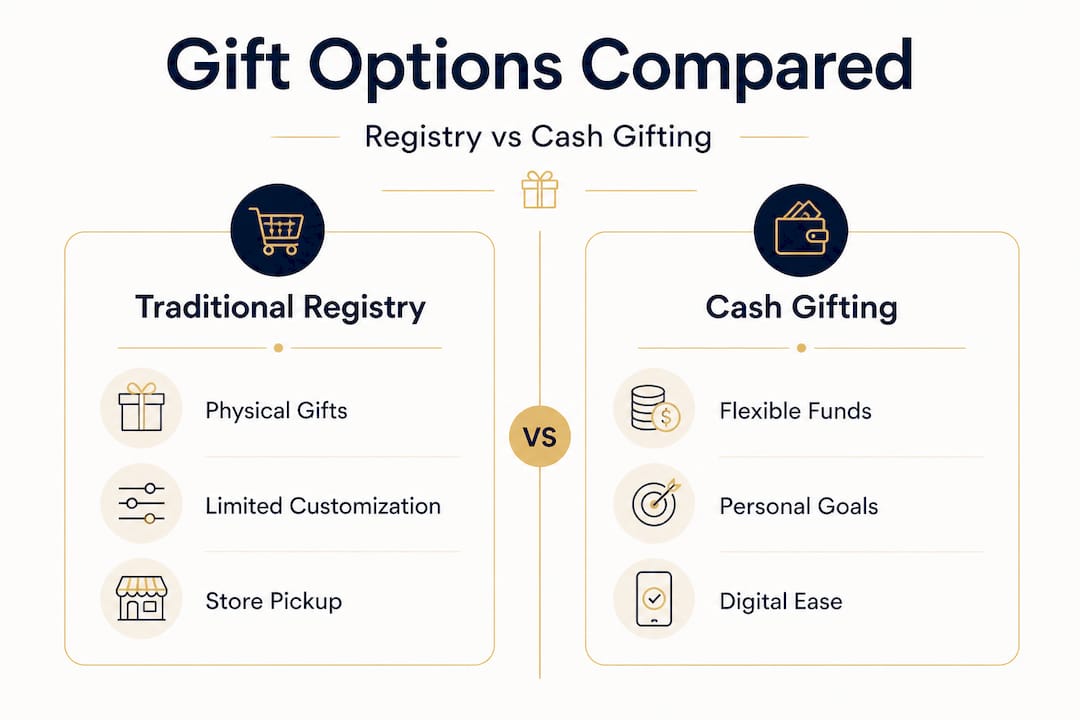
Traditional registries work well for guests who enjoy the experience of selecting and wrapping a physical item. Some guests, particularly older family members, genuinely prefer this format. It feels familiar and gives them a tangible sense of participation.
However, international guests often face limits with peer-to-peer payment platforms, and older guests may still prefer checks or physical cards. This is an important consideration for hosts with diverse guest lists. Offering multiple options rather than a single method ensures that no guest feels excluded or frustrated.
Here is a breakdown of which guest profiles benefit most from each option:
- Guests who prefer traditional registries: Older relatives, guests who enjoy gift-wrapping rituals, those unfamiliar with digital payment tools
- Guests who prefer cash platforms: Younger attendees, out-of-town guests, those attending destination events, guests who want to contribute without shopping
- Guests who want flexibility: Anyone attending multiple events in a season, guests on a budget who want to combine contributions with others
Experience gift registries represent a compelling middle ground. These allow hosts to request contributions toward specific experiences, like a cooking class, a spa day, or a travel fund, giving guests the satisfaction of knowing exactly what their gift will create.
Pro Tip: Give guests the option to choose between contributing to a cash fund or selecting a small physical item. This hybrid approach accommodates different preferences and makes every guest feel comfortable.
Best practices for hosts include clear communication about their preferences, a well-designed event page that explains the purpose of contributions, and multiple payment options to accommodate all guests. Accessibility matters, and the most successful gifting experiences are ones where every guest feels welcome to participate in the way that works best for them.
Practical tips to maximize joy for hosts and guests
The gifting process does not have to be stressful for anyone involved. With the right preparation, hosts can create a smooth, joyful experience that guests will remember positively.
Step-by-step best practices for hosts
- Set up your gifting page early. Give guests at least four to six weeks to plan their contributions, especially if they need to budget or arrange travel.
- Communicate your preferences clearly. Include a brief note on your invitations or event website explaining your gifting preferences and how guests can contribute.
- Share the story behind your goals. A sentence or two explaining what contributions will fund makes the experience more meaningful for guests.
- Acknowledge every contribution promptly. Send a personal thank-you note or message within two weeks of the event.
- Offer alternatives for guests who prefer physical gifts. A short list of small, meaningful items gives those guests a comfortable option.
- Follow up with a photo or update. Sharing a photo of the honeymoon, the new home, or the experience the gifts made possible closes the loop and deepens the connection.
“Sending gifts before or after the event avoids day-of chaos; pairing cash with a small tangible item adds meaning.” This approach works particularly well for destination weddings and events where guests are traveling.
For guests attending multiple events in a single season, managing gift budgets can feel overwhelming. Practical strategies include setting a per-event budget at the start of the season, contributing to group gifts to share costs, and prioritizing experiences over price tags. A heartfelt $75 contribution to a meaningful fund often creates more lasting impact than a $150 item from a registry.
Creative ways to thank guests go beyond the standard thank-you card. Hosts who personalize their gratitude, whether through a handwritten note, a small favor, or a personal message referencing the guest’s specific contribution, leave a lasting impression.
Collaborative gift registry tips are especially useful when a group of friends or family members wants to pool their contributions toward a larger goal. A collaborative registry allows multiple guests to contribute to a single fund, making it easy to collectively fund something significant like a piece of furniture, a travel experience, or a home appliance.
Pro Tip: For large guest lists, consider creating a collaborative fund specifically for group contributions. Label it clearly so guests know they can join others in funding a bigger goal together.
A fresh take: What really matters in guest gifting
Here is an opinion that challenges the conventional wisdom around event gifting: the value of a gift has almost nothing to do with its price tag and everything to do with the story attached to it.
Most gifting advice focuses on etiquette, amounts, and logistics. Those details matter, but they miss the deeper point. Guests do not remember what they spent. They remember whether their contribution felt seen, appreciated, and connected to something real. Hosts who understand this create gifting experiences that guests talk about for years.
Cash gifting has a reputation for being impersonal, and that reputation is largely undeserved. A $100 contribution to a couple’s travel fund, paired with a note saying “Can’t wait to hear about your adventures,” is far more personal than a kitchen gadget chosen from a list. The personalization comes from the intention and the communication, not the format.
The guest mindset is shifting in a digital-first world. People are increasingly comfortable expressing care through digital channels, and they expect the platforms they use to be simple, secure, and well-designed. Clunky payment tools or confusing processes create friction that undermines the emotional experience of giving.
Intimate celebrations are also reshaping gifting culture. Smaller events with closer guest lists create space for more personal contributions and more meaningful exchanges. When a host knows every person in the room, the gifting experience becomes less transactional and more relational.
The real opportunity for hosts is to treat gifting as part of the celebration itself, not an afterthought. When the gifting experience is thoughtfully designed, guests feel like active participants in the milestone rather than passive observers. That shift in framing changes everything.
Elevate every guest interaction with smarter gifting
Planning a meaningful celebration means thinking about every touchpoint, including how guests contribute and how hosts receive those contributions. Zelo makes it simple to create a personalized event page where friends and family can contribute toward real goals, whether that is a honeymoon fund, a new home, a birthday experience, or any other milestone worth celebrating.

With Zelo, hosts can share their story, communicate their goals, and give guests a joyful, secure way to participate in the celebration. The platform handles the logistics so hosts can focus on the moments that matter. From birthday cash gifts to wedding funds, Zelo supports every type of meaningful event with a clean, modern experience that guests actually enjoy using. Ready to make gifting a highlight of your next celebration? Create a cash gift registry on Zelo and give your guests a contribution experience worth remembering.
Frequently asked questions
What is the most common wedding gift today?
Cash or checks are now the most common wedding gifts, making up 47% of all gifts given at weddings, surpassing traditional registry items.
How much should a guest typically give in cash?
Gift amounts typically range from $50 to $100 for acquaintances, $100 to $200 for friends, and $200 to $500 for close family members, though personal circumstances always factor in.
What’s the best way to make cash gifting feel personal?
Pair cash contributions with a handwritten note or small keepsake, and communicate your goals clearly so guests understand the purpose and meaning behind their contribution.
How do hosts make gifting easy for international guests?
Offer multiple contribution options including digital platforms, checks, and physical cards, since some P2P platforms may not be accessible or functional for guests outside the United States.
Is it acceptable to suggest cash gifts instead of a traditional registry?
Yes, it is increasingly common and etiquette-appropriate to suggest cash gifts for modern celebrations, and most guests now expect and appreciate this option.
Recommended
Enjoyed the article? Share it!