
Online gifting etiquette is the set of norms that governs how people thoughtfully send and receive gifts through digital channels. These norms cover timing, personalization, cultural sensitivity, and security. As celebrations increasingly happen across time zones and screens, the gap between a gift that lands well and one that falls flat comes down to how carefully these principles are applied. This article covers the core rules, timing strategies, cultural considerations, and security practices that make digital gifts feel as warm and intentional as anything handed over in person.
What are the key rules of online gifting etiquette?
Online gifting etiquette starts with matching the gift type to the occasion and the relationship. A digital gift card works well for a casual birthday, but a wedding or milestone anniversary calls for something more considered. Physical gifts sent to a home address carry a different weight than a digital experience, and the choice between them should reflect how well you know the recipient.
Personalization is the single most important factor in making a digital gift feel sincere. Over-reliance on algorithmic suggestions can make a gift feel cold and automated. Adding a handwritten note, a voice message, or a short video referencing a shared memory transforms a transactional exchange into a genuine gesture.

Budget transparency matters too, especially in group settings. Hosts planning events should communicate expected contribution ranges clearly so guests are not caught off guard by shipping costs or minimum amounts. Setting expectations upfront prevents awkwardness and keeps the focus on celebration.
The most common pitfalls in digital gift giving include:
- Sending broken or expired links without testing them first
- Choosing gifts with cultural associations you have not verified
- Delivering gifts too early or too late relative to the event
- Using generic, template-style messages that signal minimal effort
- Ignoring time zone differences when scheduling digital deliveries
Pro Tip: Always open your digital gift link in a private browser window before sending. This simulates the recipient’s first experience and catches expired tokens, login walls, or broken media before they do.
How to time and deliver online gifts for virtual events
Timing is the most underestimated element of proper online gifting. A gift that arrives three days after a birthday feels like an afterthought, even if the gift itself is thoughtful. Getting the timing right requires planning ahead, especially when logistics and international shipping are involved.
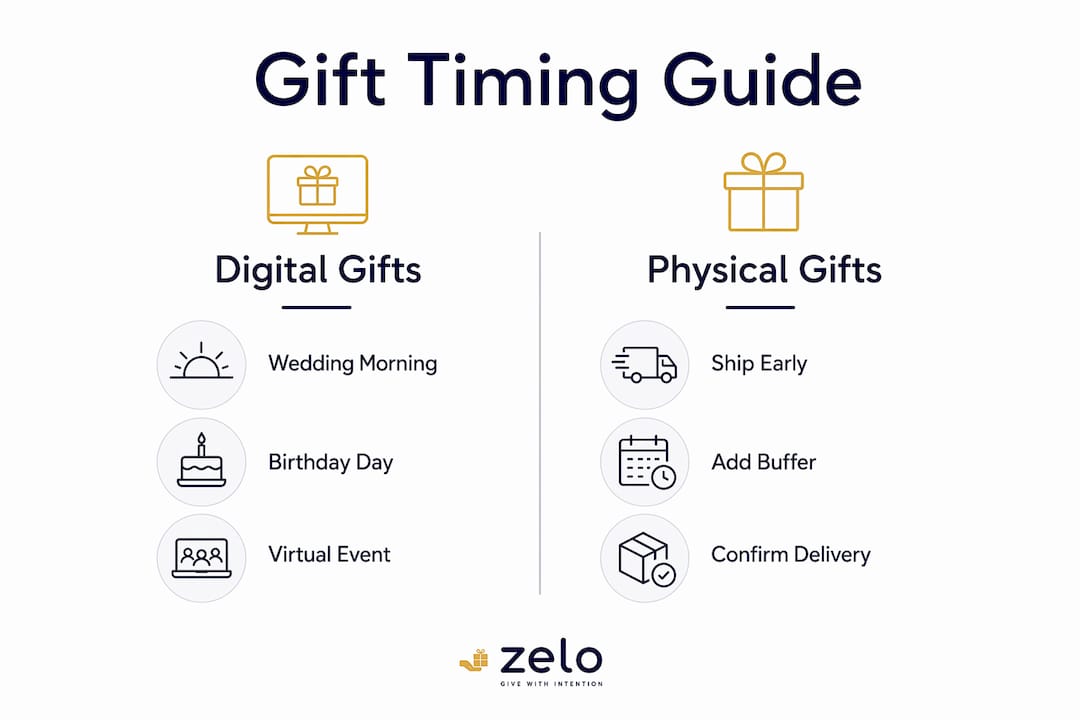
The standard guidelines for virtual milestone events are clear:
- Send digital gifts the morning of the event. For virtual weddings, birthdays, and graduations, digital gifts should arrive on the morning of the event so they are acknowledged before the ceremony or celebration begins.
- Ship physical gifts at least one week in advance. Physical items sent to a home address need a minimum of seven days of lead time to account for carrier delays and handling.
- Budget for shipping in group exchanges. For virtual Secret Santa or group gift programs, organizers should allocate a shipping budget two to three weeks before the event so remote participants have enough time for delivery.
- Use scheduling features on gifting platforms. Most reputable platforms allow you to schedule digital gift delivery for a specific date and time. Use this feature rather than relying on manual sending.
- Coordinate with the event host when possible. Hosts often know the exact schedule of the day and can confirm the best delivery window.
Pro Tip: For international deliveries, add an extra five to seven business days to your shipping estimate. Customs processing varies widely by country and can delay even expedited shipments.
The table below summarizes recommended timing for common gifting scenarios:
| Occasion | Digital gift timing | Physical gift shipping |
|---|---|---|
| Wedding | Morning of the event | At least 7 days before |
| Birthday | Day of, by morning | 5–7 days before |
| Baby shower | Day of event | 7–10 days before |
| Virtual Secret Santa | Scheduled for event day | 2–3 weeks before |
| Graduation | Morning of ceremony | 7 days before |
How do cultural differences affect online gifting etiquette?
Cultural awareness is not optional in digital gift giving. A gift that feels generous and thoughtful in one country can carry unintended meaning in another. Colors, numbers, and item types that seem neutral in one region can be sensitive or offensive elsewhere, and the anonymity of online gifting makes these errors easier to make and harder to recover from.
The most common cultural considerations to research before sending include:
- Color symbolism. White is associated with mourning in several East Asian cultures. Red carries celebratory meaning in China but can signal danger or warning in other contexts.
- Number taboos. The number four is considered unlucky in Japan and China because it sounds like the word for death. Sending four of anything, or a gift valued at $44, can feel disrespectful.
- Gift type restrictions. Clocks, knives, and handkerchiefs carry negative associations in several cultures. Even digital versions of these items, such as a clock-themed experience or a knife set, can land poorly.
- Religious and dietary considerations. Food gifts, including digital restaurant vouchers, should account for dietary restrictions tied to religious practice.
- Asking preference questions. When in doubt, asking subtle questions about preferences before sending is the most respectful approach. Framing it as “I want to make sure this is something you will actually enjoy” signals care rather than uncertainty.
Personal touches convert convenience into meaning, and this is especially true across cultural lines. A brief note that acknowledges a shared experience or references something specific about the recipient communicates effort in any language. Generic messages, by contrast, feel transactional regardless of the gift’s monetary value.
What security practices protect online gift senders and recipients?
Digital gifting carries real security risks that physical gifting does not. Phishing links disguised as gift notifications are a documented threat, and recipients who are not paying attention can expose personal information by clicking through a malicious link. Using reputable platforms with bank-grade security is the baseline requirement for any digital gift exchange.
Always verify the sender’s domain before clicking any gift notification link. Legitimate gifting platforms send emails from consistent, recognizable domains. A slight variation in the domain name, such as a missing letter or an added word, is a reliable indicator of a phishing attempt.
For senders, the technical checklist before sending any digital gift includes:
- Test the gift link on both a mobile device and a desktop browser
- Confirm the redemption process does not require the recipient to create an account or share payment information
- Check that audio, video, or interactive elements load correctly across platforms
- Store gift card codes in a secure location until they are redeemed
- Avoid sharing gift codes over public or unsecured messaging channels
Pro Tip: Screenshot the gift confirmation page and save the redemption code separately from the delivery email. If the email is lost or filtered as spam, you will still have the code to resend.
Broken links signal disrespect more than sending no gift at all. Recipients interpret a non-functioning gift as evidence that the sender did not care enough to check. Testing takes two minutes and eliminates that risk entirely.
Key Takeaways
Proper online gifting etiquette combines personalization, precise timing, cultural awareness, and security to ensure digital gifts feel as thoughtful as in-person ones.
| Point | Details |
|---|---|
| Personalize every gift | Add a note, voice message, or specific reference to avoid the cold feel of automated gifts. |
| Time deliveries precisely | Send digital gifts the morning of the event; ship physical gifts at least one week in advance. |
| Research cultural norms | Verify color, number, and item associations before sending gifts across cultural lines. |
| Test before sending | Open every digital gift link in a private browser to catch broken links or expired tokens. |
| Contribute specifically | When giving to a cash fund, select a specific item or experience rather than a general total. |
What I have learned about making online gifts feel real
I have watched a lot of digital gifts land flat, and the reason is almost always the same. The sender treated the technology as the gesture. They found a platform, clicked a few buttons, and considered the job done. The recipient received something that felt like it came from a vending machine.
The gifts that actually move people share one quality: the sender communicated effort. Explicitly referencing the time spent curating or selecting a gift increases its perceived emotional value more than any price point does. That is not a soft observation. Recipients genuinely judge the sincerity of a digital gift by the specificity of the message attached to it.
Remote gifting also removes the social feedback loop that in-person giving provides. When you hand someone a gift, you read their face. Online, you get silence until they respond, and sometimes they do not respond at all. This makes the message you attach to the gift more important, not less. A note that says “I spent an afternoon thinking about what would actually make you smile” does more work than a $200 gift card with no context.
The other lesson I keep returning to is that cash contributions feel most meaningful when they are tied to something specific. Contributing to a general fund feels like dropping coins in a jar. Contributing toward a couple’s honeymoon flight or a friend’s cooking class feels like participation. Platforms like Getzelo are built around this principle, letting contributors connect their money to a real experience rather than a vague total. That specificity is what separates a contribution that is remembered from one that is forgotten.
— Rodrigo
Getzelo makes cash gifting personal and simple
Planning a celebration and wondering how to make gifting feel meaningful for everyone involved? Getzelo is a modern cash gifting platform built for exactly this. Hosts create personalized event pages for weddings, birthdays, baby showers, graduations, and more, where guests contribute toward real goals and experiences rather than a generic fund.

Getzelo handles secure payment processing, contribution tracking, and event page personalization in one place. Guests contribute through a clean checkout experience, and hosts can see exactly who gave and toward what. Setting up a cash gift registry takes minutes and gives every contributor a clear, meaningful way to participate. For anyone planning a celebration where thoughtful gifting matters, Getzelo removes the friction and adds the personal touch that digital gifting often lacks. You can also find more gifting tips and guides on the Getzelo blog.
FAQ
What is online gifting etiquette?
Online gifting etiquette is the set of norms for sending and receiving digital or shipped gifts thoughtfully, covering timing, personalization, cultural sensitivity, and security. Following these norms ensures gifts feel intentional rather than automated.
When should you send a digital gift for a virtual event?
Digital gifts should be scheduled to arrive on the morning of the event so the recipient can acknowledge them before the celebration begins. Physical gifts should be shipped at least one week in advance.
How do you make a digital gift feel personal?
Add a specific message that references a shared memory or explicitly mentions the time you spent selecting the gift. Recipients judge sincerity by the specificity of the message, not just the monetary value.
What should you check before sending a digital gift link?
Test the link in a private browser window on both a mobile device and a desktop to confirm it loads correctly, does not require the recipient to share payment information, and that all media elements function properly.
Is it better to contribute to a specific item or a general cash fund?
Contributing to a specific item or experience on a registry creates a stronger emotional connection than adding to a general total. Tying your contribution to a concrete goal makes it more memorable for both the giver and the recipient.
Recommended
Enjoyed the article? Share it!