
Registry etiquette is defined as the accepted social guidelines for creating, sharing, and using gift registries in a way that respects both the host and the guest. These customs apply across weddings, baby showers, housewarmings, graduations, and anniversaries. At their core, registry etiquette guidelines center on three principles: clear communication, mutual respect, and genuine gratitude. Platforms like Zola and Getzelo have helped modernize how registries work, but the underlying social rules remain grounded in consideration for everyone involved. Whether you are planning an event or shopping for a gift, understanding what is registry etiquette gives you the confidence to participate gracefully.
What is registry etiquette, and why does it matter?
Registry etiquette is the recognized term for the customs that govern how gift registries are created and used at celebratory events. A well-curated registry removes gift guesswork for guests, ensuring their generosity is appreciated and reducing waste. That single benefit explains why etiquette around registries exists at all. Without shared guidelines, hosts risk appearing demanding and guests risk giving gifts that miss the mark entirely.
The stakes are real. Zola’s brand team has noted that couples without a registry often receive gifts mismatched to their style or needs. A registry is not a demand list. It is a communication tool that makes generosity easier for everyone. When both sides understand the rules, the experience feels natural rather than transactional.

What are the key principles of registry etiquette for hosts and guests?
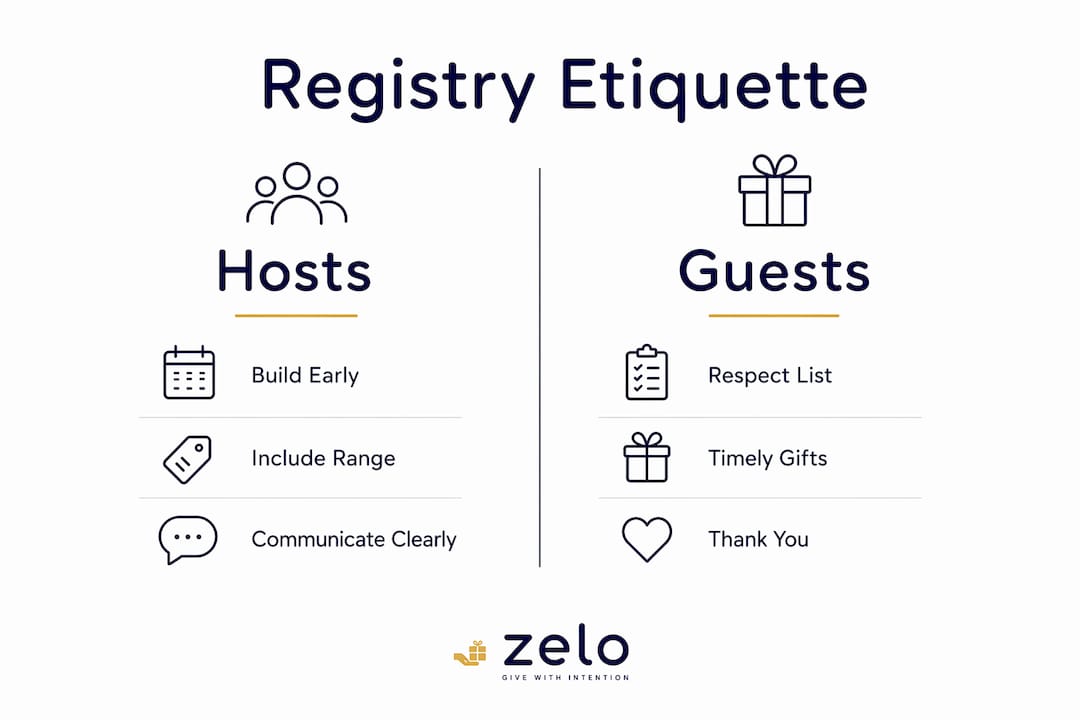
Good registry gift etiquette starts with how the registry is built. Hosts should include items across a wide range of price points, from modest options under $50 to larger items above $200. A registry stacked only with expensive pieces puts guests in an uncomfortable position. The goal is to give every guest a comfortable choice.
Sharing the registry correctly matters just as much as building it well. Registry information should never appear on the main wedding invitation. Professional planners consistently advise using a separate enclosure card or a wedding website instead. This distinction signals that the gift is optional, not expected.
Guests carry their own responsibilities under acceptable registry practices:
- Stick to the registry as a default. A survey of more than 1,300 readers found that 60% consider small deviations from a registry acceptable, while 20% prefer strict adherence. When in doubt, choose from the list.
- Respect the budget range. National averages for 2026 show wedding gift budgets typically fall between $75 and $150, varying by relationship and region. Give within your means.
- Send a handwritten thank-you note. Thank-you notes are required for every gift and should be sent within three months of the event, ideally starting within two to three weeks of receiving each gift.
- Treat cash gifts with the same gratitude as physical ones. A contribution to a cash fund deserves the same warm acknowledgment as a wrapped present.
Pro Tip: Build your registry at least two months before the event. This gives guests time to shop without pressure and allows you to update items as your needs change.
How does registry etiquette differ across event types and registry formats?
The rules shift depending on the occasion. Wedding registries carry the most formal expectations, while birthday and housewarming registries tend to be more casual. Baby shower registries occupy a middle ground, where practical items like strollers and car seats are expected alongside smaller gifts.
Modern registries now include cash funds, experience registries, and charitable donations alongside traditional household items. This expansion reflects how gift-giving preferences have changed. Cash registries, like those offered by Getzelo, provide a flexible option that aligns with contemporary expectations without sacrificing the personal touch.
The table below outlines key etiquette differences by event type:
| Event type | Registry format | How to share | Timing |
|---|---|---|---|
| Wedding | Traditional, cash, or experience | Wedding website, enclosure card | 6–8 months before |
| Baby shower | Practical items, cash fund | Shower invitation insert, word of mouth | 2–3 months before |
| Housewarming | Home goods, experience fund | Casual mention, event page | 2–4 weeks before |
| Graduation | Cash fund, experience registry | Event page, direct message | 2–4 weeks before |
| Birthday | Wishlist or cash fund | Informal, social sharing among close friends | 1–2 weeks before |
One nuance worth noting: birthday and graduation registries carry less formal weight. Sharing a link directly with close friends or family is perfectly appropriate. Wedding registries, by contrast, require more careful handling because the guest list is larger and the social stakes are higher.
For hosts considering experience gift registries, the etiquette is the same as for any other format. Communicate clearly, share discreetly, and express gratitude promptly.
What are common registry etiquette mistakes to avoid?
Most registry missteps come from either over-managing expectations or under-communicating. Both create discomfort. The following mistakes appear most often:
- Putting registry details on the main invitation. This reads as a gift demand. Use a separate card or a wedding website link instead.
- Registering only for expensive items. A registry with no options under $100 signals entitlement. Include a range of price points so every guest feels included.
- Sharing registry links on public social media. Posting registry info publicly creates pressure for people who were not invited and is widely considered inappropriate.
- Ignoring the registry as a guest without reason. Buying something entirely off-registry without a meaningful personal reason can feel dismissive of the host’s preferences.
- Failing to send thank-you notes. Skipping this step is the single most common etiquette failure after an event. It signals indifference regardless of how much you appreciated the gift.
- Specifying gift amounts. Telling guests how much to spend crosses a clear line. The registry should suggest options, not set minimums.
Handling off-registry gifts gracefully is its own skill. When a guest gives something unexpected, the host’s job is simple: accept it warmly and send a genuine thank-you note. No explanation is needed, and no comparison to registry items is appropriate.
Pro Tip: If you genuinely do not want gifts, say so clearly and early. A simple note on your event page or invitation that reads “Your presence is the only gift we need” sets the right tone without awkwardness.
What practical steps help hosts and guests navigate registry etiquette smoothly?
Knowing the rules is one thing. Applying them without stress is another. For hosts, a clear process makes the difference between a registry that works and one that creates confusion.
For hosts building a registry:
- Start with a list of what you actually need, not what looks impressive.
- Include at least five items under $75 for guests with tighter budgets.
- Update the registry regularly as items are purchased to avoid duplicates.
- Share the link through your event website, a dedicated event page on a platform like Getzelo, or a personal message to close family members.
- Avoid sharing the link on public social channels. Keep distribution within your invited guest list.
For guests selecting gifts:
- Check the registry first, even if you plan to give something personal.
- If you go off-registry, choose something that reflects a genuine knowledge of the host’s tastes.
- For cash contributions, use the platform the host has set up rather than sending cash directly. This keeps records clean for both sides.
- Review appropriate cash gift amounts before contributing to a cash fund, especially for weddings.
Thank-you note etiquette deserves its own attention. Write notes by hand when possible. Reference the specific gift in each note. Send them within the three-month window, but aim for the first two to three weeks after the event. For large guest lists, working through the list in batches of ten per day keeps the task manageable. Getzelo’s platform includes tools that help hosts track contributions and manage guest acknowledgment, which reduces the chance of anyone being missed. For more creative approaches, Getzelo’s blog covers ways to thank wedding guests that go beyond the standard note.
Key takeaways
Registry etiquette works best when both hosts and guests treat the registry as a communication tool rather than a transaction, grounded in respect, clear sharing practices, and timely gratitude.
| Point | Details |
|---|---|
| Registry as communication | A registry guides guests toward wanted gifts and reduces the risk of mismatched giving. |
| Share discreetly | Never include registry details on the main invitation. Use a separate card or event website. |
| Include varied price points | Offer options across a wide range so every guest can give comfortably within their budget. |
| Thank-you notes are required | Send handwritten notes within three months, starting within two to three weeks of the event. |
| Modern formats are acceptable | Cash funds, experience registries, and charitable donations are now recognized registry options. |
Registry etiquette in 2026: what I’ve actually observed
The most important shift I’ve seen in registry etiquette over the past few years is the move away from rigid rules toward genuine kindness. The old framework treated etiquette as a checklist. The better framework treats it as a way of reducing stress for everyone involved.
Cash registries are the clearest example of this shift. A decade ago, asking for cash felt crass. Now, platforms like Getzelo have made it normal, personal, and even elegant. Guests appreciate the flexibility. Hosts appreciate receiving something they will actually use. The etiquette around cash gifts has caught up with the reality that most couples and new parents already have the basics covered.
Where I see hosts go wrong most often is in over-managing the registry experience. Sending multiple reminders, posting links publicly, or building a registry that reads like a wish list rather than a practical guide all signal the wrong priorities. The registry should make things easier for guests, not more complicated.
The one rule I would never bend: the thank-you note. Gratitude expressed in writing, specifically and promptly, is the single act that closes the loop on every gift exchange. No platform or digital tool replaces it. Everything else in registry etiquette is negotiable. This is not.
— Rodrigo
How Getzelo makes registry etiquette easier to practice
Registry etiquette is easier to follow when the platform you use is built around the same principles: clarity, discretion, and gratitude.

Getzelo is a modern cash gifting platform designed for weddings, baby showers, graduations, housewarmings, and other milestones. Hosts create a personalized event page, share it discreetly with invited guests, and receive contributions through a secure checkout. The platform supports collaborative gift registries and tracks guest contributions, making thank-you note follow-up straightforward. For anyone looking to move beyond a traditional product registry, Getzelo’s cash registry platform offers a flexible, etiquette-friendly alternative that fits the way people actually celebrate today.
FAQ
What is registry etiquette?
Registry etiquette is the set of accepted social guidelines for creating, sharing, and using gift registries at celebratory events. It covers how hosts build and communicate their registry and how guests select and acknowledge gifts.
Should registry information go on the wedding invitation?
Registry information should never appear on the main wedding invitation. Include it on a separate enclosure card or a wedding website to avoid the appearance of demanding gifts.
Is it acceptable to give an off-registry gift?
A survey of more than 1,300 readers found that 60% consider small deviations from a registry acceptable. When giving off-registry, choose something that reflects genuine knowledge of the host’s preferences.
How soon should thank-you notes be sent after an event?
Thank-you notes should be sent within three months of the event. Starting within two to three weeks of receiving each gift is the recommended practice.
Are cash registries considered proper etiquette?
Cash registries are now a widely accepted registry format. Platforms like Getzelo make cash gifting personal and secure, aligning with contemporary gift-giving preferences across all event types.
Recommended
Enjoyed the article? Share it!