The role of technology in gifting is to make gift giving more personal, flexible, and emotionally meaningful than physical traditions allow. Digital tools now shape every stage of the gifting process, from selecting the right present to delivering it instantly across any distance. Nearly 75% of U.S. consumers now engage with AI for gift ideas, which signals a fundamental shift in how people approach special occasions. Platforms like Getzelo reflect this shift by replacing static product registries with personalized, contribution-based event pages that match how people actually want to give and receive today.
How does the role of technology in gifting change gift selection?
AI is the most significant force reshaping how people choose gifts. 49% of U.S. consumers regularly use AI tools for gift recommendations, with another 23% using them occasionally. That level of adoption means AI-assisted gifting is now a mainstream behavior, not a niche experiment.

AI tools work by analyzing relationship context, past preferences, and occasion type to surface relevant suggestions. A person shopping for a colleague’s retirement gift gets different recommendations than someone buying for a close friend’s birthday. This contextual filtering reduces decision fatigue and increases the chance that a gift lands well.
The nuance, though, is important. Research with 567 participants found that recipients express lower gratitude when they know a gift was AI-recommended rather than human-chosen. AI works best as a starting point, not a replacement for genuine thought. The most effective approach combines AI suggestions with personal knowledge of the recipient.
- AI recommendations perform well for acquaintances and professional relationships where personal knowledge is limited.
- For close friends and family, AI narrows the field but human judgment should make the final call.
- Platforms built for AI-powered event planning use these tools to help hosts communicate gift preferences clearly to guests.
- Recipient-led models, where the recipient signals what they actually want, consistently outperform sender-imposed selections.
Pro Tip: When using AI for gift ideas, add one specific personal detail about the recipient, such as a hobby or recent life event, to get recommendations that feel genuinely considered rather than generic.
What impact does digital delivery have on gifting experiences?
Digital delivery has changed the economics and logistics of gifting more than any other single factor. Mobile-based digital gift card purchases now account for 68% of all digital gift transactions. Gen Z and Millennials make up 73% of that market, and mobile purchases carry a 23% higher average value than other channels. That combination of volume and value shows digital gifting is not a convenience shortcut. It is the primary channel.
Speed is one of the clearest advantages. Digital gift cards are redeemed in an average of 16.8 days, compared to 35.3 days for physical cards. Faster redemption means the gift stays relevant to the moment it was given. Physical cards often sit in drawers until the occasion has passed.
Satisfaction data reinforces the shift. 96% of consumers report equal or higher satisfaction with gift cards compared to physical presents. That figure challenges the assumption that a wrapped box feels more thoughtful. Recipients value choice and usability, and digital formats deliver both.
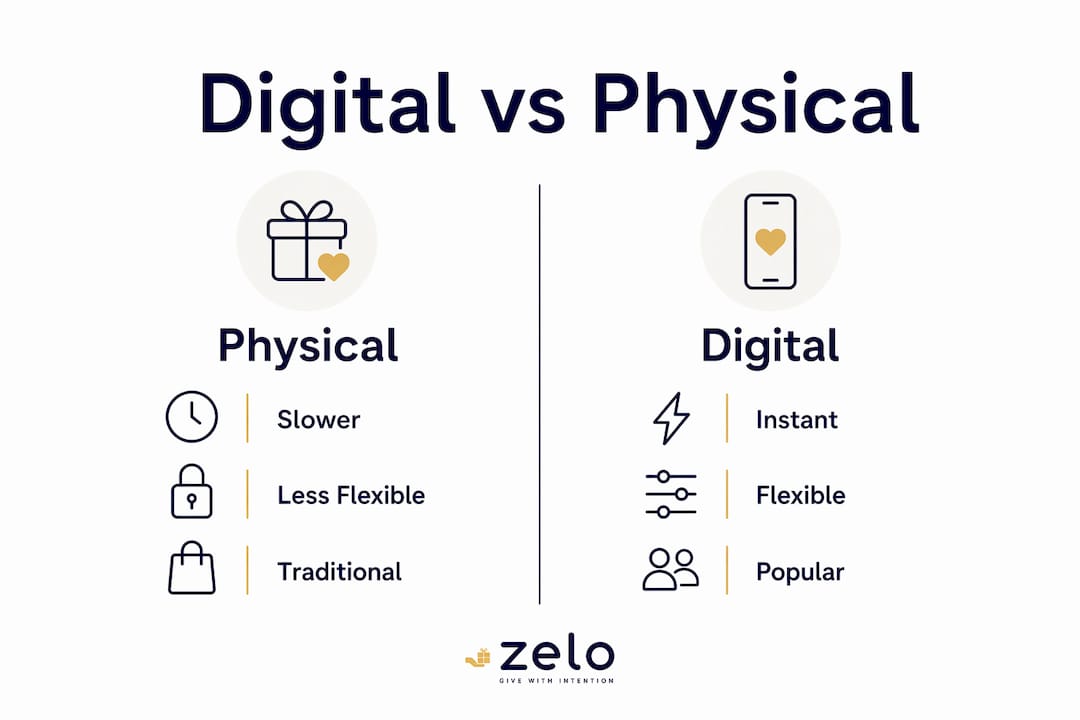
| Feature | Physical gift cards | Digital gift cards |
|---|---|---|
| Delivery speed | Days to weeks | Instant |
| Redemption time | 35.3 days average | 16.8 days average |
| Budget control | Fixed denominations | Flexible amounts |
| Loss or damage risk | High | None |
| Recipient satisfaction | High | Equal or higher |
Pro Tip: For milestone events like weddings or graduations, digital contributions through a platform like Getzelo give recipients full control over how funds are used, which produces higher satisfaction than any single physical item.
How does technology support meaningful personalization beyond convenience?
Convenience is the entry point, but meaningful personalization is the real goal. Human-Centered Design philosophy, shaped by thinkers like Don Norman, positions technology as an enabler of emotional connection rather than a substitute for it. The best gifting technology does not automate the feeling. It removes friction so the feeling can come through more clearly.
Recipient-led personalization is the most effective model. The most effective digital gifting strategies give recipients choice from curated selections rather than locking them into a sender-imposed item. This approach increases satisfaction and brand recall in corporate contexts, and the same logic applies to personal gifting. When someone can choose how to use a gift, the gift becomes more useful and more memorable.
Technology also enables experience-based gifting at scale. A guest contributing to a honeymoon fund, a group pooling money for a friend’s cooking class, or a family collectively funding a graduation trip are all examples of technology facilitating something that would have required significant coordination without it. Getzelo’s personalized gifting approach makes this kind of collective, experience-focused giving simple for any occasion.
The social dimension adds another layer of meaning. Digitally managed gifts generate up to 300 times more social media shares than traditional physical gifts. That amplification turns a private moment of generosity into a shared celebration, which deepens the emotional impact for both giver and recipient.
What are the current digital gifting trends and future directions?
The gifting market is moving toward flexibility, recipient control, and experiences over objects. Several clear trends define where things are heading.
-
Cash and flexible gifting are growing fast. 50% of consumers used gift cards as a formal budgeting method in 2025. Cash contributions and prepaid options give recipients real purchasing power rather than a specific item they may not want.
-
Spending thresholds shape format preferences. Below $100, recipients favor specific experience-based brands. Above $100, flexible prepaid options dominate because recipients want to apply larger amounts to practical purchases. Understanding this threshold helps event planners set contribution ranges that match what guests actually prefer to give.
-
Social sharing multiplies emotional value. Digital gifts generate dramatically more social engagement than physical ones. That sharing extends the celebration beyond the event itself and creates lasting digital memories tied to the occasion.
-
Emotion-aware gifting is emerging. Platforms are beginning to incorporate sentiment analysis and behavioral data to recommend gifts that match the emotional context of an occasion, not just its category. A birthday gift for someone who just moved to a new city carries different emotional weight than one for a longtime local.
-
Subscription models and digital memory tools are gaining traction. Gifting a subscription to a service the recipient loves, or contributing to a digital memory book, reflects a broader shift toward gifts that extend over time rather than existing as a single moment.
The future of cash gifting points toward platforms that combine financial flexibility with emotional personalization. The goal is not to make gifting transactional. The goal is to make it more intentional.
Key takeaways
Technology transforms gifting by combining AI personalization, digital delivery, and recipient-led choice to make gifts more meaningful, flexible, and satisfying than traditional physical options.
| Point | Details |
|---|---|
| AI assists but does not replace human intent | Use AI to narrow options, then apply personal knowledge to make the final choice. |
| Digital delivery outperforms physical on speed and satisfaction | Digital gifts redeem faster and match or exceed satisfaction rates of physical presents. |
| Recipient choice drives satisfaction | Curated, flexible gifting options consistently outperform sender-imposed selections. |
| Spending thresholds matter | Below $100, specific brands win; above $100, flexible options are preferred. |
| Social sharing amplifies emotional impact | Digital gifts generate up to 300 times more social shares than physical gifts. |
Technology is a tool, not a replacement for thought
I have spent years watching gifting technology evolve, and the pattern I keep seeing is this: the tools get better, but the intention behind the gift still determines whether it lands. A perfectly targeted AI recommendation means nothing if the giver did not stop to think about what the recipient actually needs right now.
The most memorable gifts I have seen given through digital platforms were not memorable because of the technology. They were memorable because someone used the technology to remove every obstacle between their intention and the recipient’s experience. A group of friends pooling contributions for a friend’s solo travel fund. A family collectively covering a new parent’s grocery delivery subscription for three months. The platform made those things easy. The people made them meaningful.
My honest concern with the direction of gifting technology is over-automation. When platforms start making all the decisions, from the amount to the occasion framing to the delivery message, the gift stops feeling like it came from a person. Recipients notice. The research on AI-recommended gifts confirms it. Gratitude drops when people know a machine made the call.
Use the technology to handle logistics. Use your own judgment to handle meaning. That combination is what makes a gift worth giving and worth receiving.
— Rodrigo
How Getzelo brings tech-enhanced gifting to special events

Getzelo is built for exactly the kind of gifting this article describes: flexible, personalized, and centered on what the recipient actually wants. Instead of a traditional registry filled with items guests may not want to buy, Getzelo lets hosts create a personalized event page where friends and family contribute directly toward real goals and experiences. The checkout process is simple and secure, and hosts can communicate the purpose of each contribution so guests understand exactly what their gift supports. For anyone planning a wedding, birthday, baby shower, or graduation, a Getzelo cash registry puts the best of digital gifting technology to work for your celebration.
FAQ
What is the role of technology in gifting?
Technology in gifting refers to the use of AI, digital delivery platforms, and data-driven personalization to make gift giving more relevant, flexible, and satisfying. It covers everything from AI-powered gift recommendations to digital cash registries.
How does AI improve gift selection?
AI analyzes relationship context and occasion type to surface relevant gift suggestions, reducing decision fatigue. Research shows it works best as a starting point, with human judgment making the final call for close relationships.
Are digital gifts as satisfying as physical ones?
96% of consumers report equal or higher satisfaction with gift cards compared to physical presents, and digital cards are redeemed nearly twice as fast as physical ones.
What is the spending threshold effect in digital gifting?
Below $100, recipients prefer specific experience-based brands. Above $100, flexible prepaid options are favored because recipients want to apply larger sums to practical purchases of their own choosing.
How does Getzelo use technology to enhance gifting?
Getzelo provides a digital platform where event hosts create personalized contribution pages, allowing guests to give cash toward specific goals. This combines the flexibility of digital gifting with the emotional personalization of a curated event experience.
Recommended
Enjoyed the article? Share it!