A parent is often halfway through party planning when the gift question starts to feel bigger than expected. The cake is picked, the family group chat is active, and someone often asks, “What does the baby need?”
That sounds simple until the choices pile up. Plush toys, walkers, blocks, musical sets, personalized keepsakes, giant climbers, tiny gadgets. For many families, choosing toys for 1st birthday celebrations is not really about finding something cute. It is about finding something that feels safe, useful, joyful, and worth bringing into the home.
The tender part is that a first birthday carries more meaning for the adults than for the child. Loved ones want to mark a major milestone. Parents want to choose well. Guests want to give something thoughtful without wasting money or adding clutter.
A good gift can do all three. It can delight a baby, support development, and make daily life easier instead of noisier. That is why the best choices are rarely the flashiest ones. They are the toys that fit a one-year-old’s world.
Celebrating a Year of Firsts
The week of a first birthday often feels like a small family documentary. One parent is wiping frosting off the high chair, a grandparent is asking what gift would be helpful, and the birthday child is happily more interested in the box than the bow.

That is part of the beauty of this age. Adults are trying to honor a huge milestone, while the child is still learning through touch, movement, repetition, and surprise. A first birthday gift carries a little extra weight because it often stands in for everything the family wants to celebrate about that first year.
Parents usually feel two wishes at once. They want something joyful now, and they want something they will still be glad to have three months from now. That is why the best toys for 1st birthday celebrations are often the ones that grow with the child instead of performing for one afternoon.
A good first birthday gift works like a sturdy pair of shoes. It should fit the child’s stage now, leave room for growth, and hold up to real daily use. That could mean simple stacking toys and push toys, or it could mean a larger milestone item such as a Montessori climber, a nugget-style play couch, or a play kitchen that becomes part of everyday play for years.
For many families, cost is where the decision gets stuck. The most lasting gifts are often the hardest to buy alone. Group gifting solves that problem in a practical, modern way. Instead of ending up with five similar plastic toys, friends and relatives can contribute toward one high-use gift that supports movement, pretend play, coordination, or independence.
The emotional side matters too. The psychology of giving meaningful gifts helps explain why loved ones want their present to feel personal and useful. They are not just handing over an object. They are joining in the child’s first year story.
Safety belongs in that story as well. Many popular roundups skip an important question. Is this toy made from materials you feel comfortable bringing into your home, especially for a child who mouths objects often, has sensory sensitivities, or processes sound and texture differently? For some neurodiverse children, a toy that seems harmless to one child can feel overwhelming, irritating, or impossible to engage with.
That does not make gift choosing harder than it needs to be. It provides a clearer filter.
The strongest first birthday gifts bring together delight, development, and day-to-day usefulness, while still respecting a family’s budget and a child’s sensory needs.
Understanding Your One-Year-Old's World
You set a new toy in front of a one-year-old, and within seconds it is being shaken, dropped, chewed, turned upside down, and possibly banged on the floor. That is not random play. It is a young child running small experiments all day long.
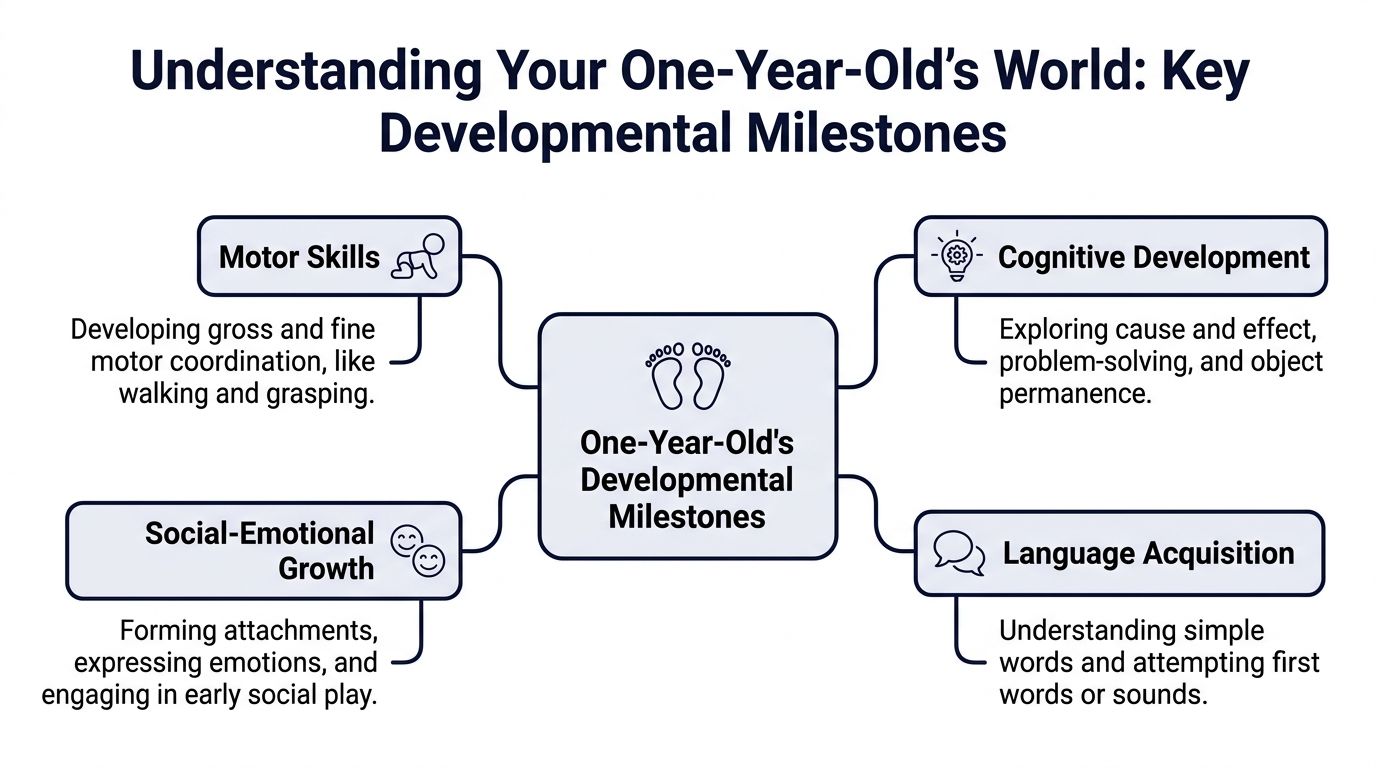
At this age, play is physical first. A one-year-old learns with the whole body before they can explain anything with words. They test weight, texture, sound, distance, and cause and effect through repetition. A block dropped from the high chair is a lesson in gravity. A cup filled and dumped again is early problem-solving.
That mix of dependence and determination can feel confusing to adults. Your child still needs help with nearly everything, yet they may be intensely motivated to do it alone. That tension is part of healthy development. It also explains why the best first birthday toys often look simple to us and very interesting to them.
Gross motor changes
Around the first birthday, many babies are pulling up, cruising along furniture, standing briefly, or beginning to take steps. As noted earlier from EasyTot’s guide citing CDC growth chart data, many children are entering a major movement leap around this age, with about half taking first steps by 12 months.
That shift changes what holds their attention. A child who is practicing balance usually wants toys that invite action. Push walkers, low climbing structures, ride-on toys, and sturdy activity tables match that urge to move. The body is doing the studying here. Every squat, wobble, and push helps build coordination and confidence.
This is also where practical gift planning helps families. A large movement toy may suit development beautifully, but the price can feel out of reach for one giver. That does not mean the idea is unrealistic. It may belong in the group-gift category, especially for a milestone birthday.
Fine motor and problem-solving
Hand skills are changing quickly too. Many one-year-olds are passing objects from one hand to the other, using a more controlled grasp, banging items together, and trying to put one object inside another.
Simple toys support these efforts well because they isolate one skill at a time. A ring stacker teaches lift, aim, and release. Nesting cups support filling, dumping, and size comparison. Large blocks give children a chance to grasp, place, knock down, and try again.
Parents sometimes worry that a child is "not using it correctly." For a one-year-old, the attempt is often the whole point. Handling the object, testing what it does, and repeating the action is the lesson.
Cognitive growth through repetition
Repetition can look odd from the outside. Drop, retrieve, drop again. Open, close, open again. Put in, take out, repeat.
That pattern is how young children build early concepts like cause and effect, object permanence, and spatial relationships. Repetition works like practice scales on a piano. The motion may look basic, but it is building fluency underneath.
Earlier market data from EasyTot also noted strong spending in the toddler toy category, which helps explain why so many products target this age. Still, popularity should not be the main filter. The better question is whether a toy gives a child something clear to practice.
Social, sensory, and language awareness
A one-year-old is also studying people. They watch facial expressions, copy sounds, respond to familiar routines, and begin connecting words with actions. Toys that invite interaction often do more than toys packed with features. A ball rolled back and forth, a baby doll, a set of animal figures, or a simple musical toy can become a conversation starter.
Sensory experience matters here too, especially for children who are neurodiverse or who show strong preferences around noise, texture, light, or movement. A flashing toy with loud sound effects may excite one child and overwhelm another. A toy made from non-toxic materials with a calmer sensory profile can be easier to explore, mouth safely, and return to often.
If you feel stuck, come back to one grounding question: what is this child practicing right now? Walking, carrying, dropping, stacking, imitating, babbling, climbing, or cuddling. Once you see the skill, the gift choice gets much clearer.
The Best Toys by Developmental Skill
The easiest way to choose a first birthday toy is to match the gift to the skill a child is practicing right now. That shift helps parents buy with purpose instead of grabbing whatever is loud, popular, or covered in buttons.
A good toy at this age works like a simple tool. It gives a child one clear job to repeat, then lets that job get a little smoother each week.
Fine motor favorites
Fine motor play is all about small hand movements. Picking up a block, turning a cup, fitting a shape into a hole, or dropping an object into a container may look simple to adults, but these actions build hand strength, coordination, and control.
As noted earlier, Hiccapop’s developmental toy guide reports that daily play with stacking and building toys is linked with earlier pincer grasp progress and longer engagement with the toy itself. That helps explain why these classics stay in rotation. They give children something clear to do, then let them practice it again and again without needing batteries or instructions.
Good examples include:
- Chunky wooden blocks that are easy to grip
- Nesting cups for stacking, hiding, and dumping
- Large interlocking bricks such as MEGA BLOKS First Builders
- Simple shape sorters with oversized pieces
- Posting toys that let children drop large pieces into a slot or box
If a parent wonders whether these toys are too basic, the answer is usually no. Basic often means repeatable, and repeatable is what helps a new skill stick.
Gross motor toys that invite movement
Around age one, many children are working on balance, weight shifting, climbing, cruising, or early walking. A helpful gross motor toy gives them a reason to move without asking them to do too much at once.
Some reliable options are:
- Push walkers with a broad, stable base
- Ride-on toys for scooting with feet
- Soft climbing pieces for supervised play
- Low climbing frames with simple, predictable surfaces
- Balls that are easy to grasp, roll, carry, and chase
Parents often hesitate over bigger movement toys because the price can jump quickly. This is also where practical gifting matters. A Montessori climber, indoor slide, or high-quality ride-on can support play well beyond the first birthday year, but it may feel out of reach for one guest. Group gifting through a tool like Zelo can solve that problem neatly. Instead of five small plastic toys that lose appeal in a month, friends and family can contribute to one durable item a child will use for much longer.
That approach is often better for space, budget, and development all at once.
Cause and effect toys
One-year-olds are little researchers. They press, drop, open, close, and repeat because they are testing a very exciting idea. “If I do this, what happens next?”
That is why cause-and-effect toys work so well at this age. The best ones keep the response clear and immediate.
Helpful choices include:
- Pop-up toys
- Drop boxes
- Ball ramps
- Busy boards with a few simple features
- Musical toys with one clear response per action
Press a button, hear a sound. Drop a ball, watch it roll out. Open a door, find the figure behind it. The child is not being entertained passively. The child is building prediction, memory, and persistence.
Toys that do too much on their own can interrupt that learning. If lights, songs, and motions start before the child has to act, the toy can become a show instead of a tool.
Early pretend play and social connection
Pretend play at one usually starts small and sweet. A toddler hugs a doll, offers a spoon to a stuffed bear, or holds a toy phone to their ear because they are practicing what they see people do every day.
These toys support that kind of early imitation well:
| Toy type | What it supports |
|---|---|
| Baby doll | Nurturing, imitation, early empathy |
| Play phone | Social imitation and back-and-forth play |
| Toy kitchen piece | Familiar routines such as stirring or serving |
| Stuffed animal | Comfort, affection, and symbolic play |
Keep the setup simple. One doll with a blanket or one toy pot with a spoon is often more useful than a huge set with tiny accessories.
For families thinking ahead, a play kitchen is a good example of a milestone toy that can grow beautifully with a child. At age one, it may support imitation. At age two or three, it often becomes richer pretend play. If the cost feels high, it is a strong candidate for a shared gift rather than a solo purchase.
Sensory-rich but not overwhelming
Sensory play should help a child stay engaged, not flood their system. This matters for every child, and it matters even more for neurodiverse children who may be more sensitive to noise, flashing lights, certain textures, or sudden changes in stimulation.
Look for toys such as:
- Textured balls
- Soft cloth books
- Wooden instruments with gentle sound
- Silicone bath toys
- Water play items for supervised use
- Simple sensory bins with large, safe materials
A calmer sensory profile can be a real gift. Many children return more often to toys that feel predictable and comfortable in the hands, mouth, ears, and eyes.
Material choice matters here too. Parents shopping for a child with sensory sensitivities often prefer toys made from non-toxic materials with fewer strong odors, less peeling paint, and less brittle plastic. Those details are easy to miss on a “top toys” list, but they shape whether a child will enjoy the toy.
Long-lasting toys worth considering
Some of the best first birthday gifts are not the smallest or the flashiest. They are the ones that still make sense six months from now.
A play couch, low climbing structure, push-and-ride combo, child-sized table set, or well-made kitchen can serve more than one stage of development. These toys often cost more upfront, but cost and value are not the same thing. If a toy supports movement, pretend play, and daily use for years, it may be the smarter buy than several cheaper toys that lose their appeal quickly.
That is why it helps to ask two questions before buying. What skill does this toy support now? What kind of play could it still invite next year?
When a gift answers both, parents can feel much more confident saying yes.
A Parent's Guide to Toy Safety
Parents can usually spot whether a toy looks cute. Safety takes more practice. It helps to slow down and inspect a toy as if it were going to live on the floor, get chewed, thrown, and revisited every day. Because it probably will.
Start with the obvious hazards
A one-year-old explores with hands and mouth. That means toy safety begins with size, durability, and simple construction.
A parent can check for:
- Small removable parts that could become choking hazards
- Loose magnets or button-style pieces
- Long cords or strings
- Sharp edges or cracked plastic
- Battery compartments that are easy to open
Many families use the toilet paper roll test as a quick at-home check. If a piece fits fully inside the tube, it is too small for a one-year-old.
For more general guidance, BabyCenter’s toy safety advice is a useful companion when reviewing products from different brands.
Look closely at materials
Material safety matters just as much as shape. For toys for 1st birthday gifting, many parents feel more comfortable with unfinished or child-safe sealed wood, food-grade silicone, organic fabrics, or clearly labeled BPA-free plastic.
That does not mean one material is automatically perfect. It means the toy should be transparent about what it is made from and feel sturdy enough for heavy use.
A parent might reasonably skip a toy if the labeling is vague, the odor is strong, or the finish chips easily.
Consider sensory needs and neurodiversity
Many gift guides fall short here. Gentle Nursery’s discussion of gifts for one-year-olds highlights that safety for neurodiverse children is often overlooked. That matters, especially when 1 in 36 U.S. children are diagnosed with ASD by age 3, and when 10 to 15% of toddlers have allergies, as referenced in that source.
For some children, “safe” also means manageable. A toy may be developmentally interesting but still be a poor fit if it is painfully loud, visually chaotic, strongly scented, or made with materials that irritate sensitive skin.
Helpful questions include:
- Is the volume adjustable or naturally gentle
- Does the toy have a strong fragrance from packaging or material
- Could the texture bother a child with eczema or sensory defensiveness
- Can the lights or sounds be controlled
- Is the toy usable in more than one way, depending on the child’s comfort
A safe toy is not only one that avoids injury. It is one that a child can use without distress.
For children with emerging motor delays, adults may also look for vertical play opportunities, stable support surfaces, and easy-to-grasp handles. For children who become overstimulated quickly, simpler open-ended toys often feel more inviting than high-output electronic ones.
Thinking Big How to Group Gift Milestone Toys
Small toys are easy to wrap, so they often dominate first birthday shopping. That does not always make them the best gift.
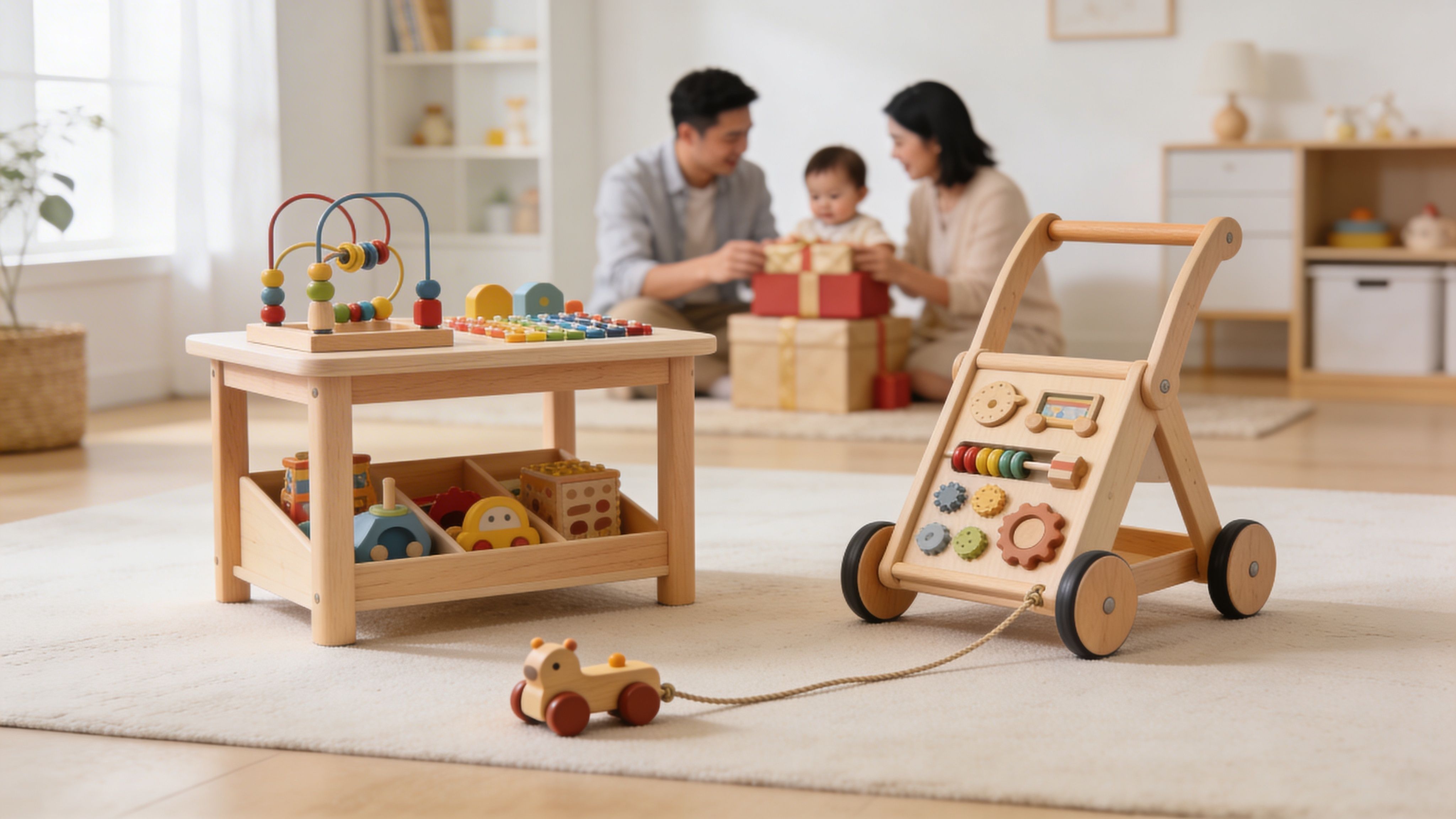
Many of the most useful developmental items are larger, pricier, and meant to stay in the home for years. A climbing triangle, modular play couch, ride-on bike, or sturdy play kitchen can support movement, imagination, and daily routines well past the first birthday.
Why bigger gifts make sense
A larger gift can solve several problems at once. It can reduce clutter, last longer, and better match how a child develops.
That matters because Workspace for Children’s gift guide points to a major gap in typical first birthday advice. It notes that 80% of U.S. parents report toy overload by age 1, while 65% of millennial parents prefer cash contributions for meaningful items.
Those two ideas belong together. Families do not necessarily need more toys. They often need better ones.
What counts as a milestone toy
A milestone toy is less about size and more about lifespan. It is the kind of item a child grows into and keeps revisiting.
Examples might include:
- A Pikler-style climber for movement and body awareness
- A modular play couch for climbing, crashing, forts, and pretend play
- A balance bike or beginner ride-on
- A sturdy play kitchen
- A high-quality water table for outdoor use
These gifts often work best because they are not single-purpose. A one-year-old may use a play kitchen to open and close doors. An older toddler may cook elaborate pretend meals.
Why shared gifting feels more realistic
One guest may not want to buy a large item alone. Several guests may happily contribute if the process is clear. That is where modern group gifting helps.
A practical shared-gift setup can:
- Prevent duplicates by giving people one clear destination
- Welcome different budgets so guests can give comfortably
- Reduce awkwardness because no one has to coordinate manually in a chat thread
- Help parents choose intentionally instead of receiving whatever arrives
Families who want to learn how these shared gift lists work in practice can read Zelo’s complete guide to collaborative gift registry planning.
A real-world way to think about it
Consider two birthday scenarios.
In the first, a child receives several battery-operated toys, multiple stuffed animals, and duplicate shape sorters. Everyone was generous. The home feels fuller, but not necessarily more supported.
In the second, a few relatives and friends contribute toward one climbing toy, one stackable block set, and a small library of board books. There is still excitement at the party, but the gifts feel calmer and more useful over time.
Neither family did anything wrong. The difference is planning.
Group gifting works especially well for milestone birthdays because many loved ones want to help, but not every loved one wants to guess.
This approach also fits modern families across the US, UK, Europe, Brazil, and Australia, where digital-first celebrations and shareable registries have become a normal part of weddings, baby showers, birthdays, and graduation gifts.
Navigating Gift Budgets and Etiquette
A familiar first birthday moment goes like this. A grandparent asks what the baby needs. A friend texts, “What’s a normal amount to spend?” Parents pause because they want to be helpful without sounding demanding. Guests pause because they want to be generous without overspending.
That tension is common, and it usually has a simple cause. No one is quite sure what the rules are.
The good news is that first birthday gifting does not need strict rules. It works better like a potluck. One person may bring the main dish, another brings fruit, and someone else brings napkins. The value comes from everyone contributing in a way that fits their role and budget.
What budget context really means
Earlier in this article, we noted that families often spend thoughtfully on first birthday gifts because they want items that will last and support development. That idea matters more than any single dollar amount.
A healthy gift budget starts with two questions:
- What feels comfortable for the giver?
- What would be useful for the child? Those answers will vary from family to family.
One guest may choose a sturdy board book. Another may contribute to a Montessori climber, a play kitchen, or another milestone toy that would be hard for one person to buy alone. Both can be thoughtful gifts.
This is also where modern group gifting helps close a real gap. Development experts often recommend high-use toys that build motor planning, coordination, pretend play, and problem-solving over many years. Many of those toys cost more than a typical single gift budget allows. A shared gift lets families choose for long-term value instead of settling for a pile of smaller items that may be outgrown quickly.
Good etiquette for parents
Parents do best when they give guidance that feels clear, warm, and low-pressure.
That usually means:
- Share the child’s current interests. “She loves climbing, filling and dumping, and simple pretend play.”
- Offer a range of options. Include a few lower-cost gifts, a couple of mid-range ideas, and a group contribution choice for a larger item.
- Keep the tone optional. “If you’d like gift ideas” feels much better than “Please buy from this list.”
- Mention safety preferences. It is completely appropriate to say you are choosing non-toxic materials, avoiding strong scents, limiting flashing lights, or selecting calmer toys for a neurodiverse child.
- Welcome non-toy gifts. Books, toddler utensils, museum memberships, and contributions to one meaningful item can all fit beautifully.
That last point is often overlooked. Some children, including many neurodiverse children, do better with toys that are simpler, quieter, and made from materials their parents trust. Naming those needs is not picky. It is thoughtful care.
Parents who want help phrasing contribution requests can use Zelo’s guide to group gift etiquette and how much to give.
Good etiquette for guests
Guests rarely need to impress anyone. They only need to respond to the family’s lead with care.
Here is a simple way to decide:
| If the family shares... | A thoughtful response looks like... |
|---|---|
| A larger milestone toy | Contributing an amount that feels comfortable |
| Several small toy options | Choosing one that matches your budget |
| A note about non-toxic or sensory-friendly preferences | Respecting those needs, even if you would have picked something else |
| Books, clothes, or experiences | Following their cue instead of adding clutter |
| No guidance at all | Choosing one practical, age-appropriate gift |
A modest gift can still be a wonderful gift. Stacking cups, a favorite board book, a soft ball, or a contribution toward a lasting play item can all support a one-year-old’s growth.
The kindest standard
Good etiquette is really about removing pressure. Parents should feel comfortable asking for useful gifts. Guests should feel comfortable giving within their means.
That mindset keeps the celebration where it belongs. On a child who is just beginning to explore the world, and on a circle of people helping that exploration happen with care.
Create Your First Birthday Gift Registry
By the time a family has narrowed down the best toys for 1st birthday gifting, one practical question remains. How should they organize it all without turning the celebration into a logistics project? A modern registry can make life much easier. Instead of fielding messages from relatives, answering the same gift questions repeatedly, and hoping duplicates do not appear, parents can put everything in one clear place.
A digital registry works especially well for first birthdays because needs are often mixed. A family may want one larger developmental item, a few simple open-ended toys, and perhaps a couple of books or experience gifts. Guests can then choose what feels right for them.
Zelo fits that style of planning well. It gives families a clean way to collect contributions toward meaningful gifts, share their list, and keep the process simple for everyone involved. That same format also works for weddings, baby showers, birthday celebrations, and graduations.
Parents looking for inspiration before they set one up may like Zelo’s guide on how to plan the perfect birthday party registry.
A first birthday gift registry should feel like a tool, not a performance. It should make it easier for loved ones to participate generously, whether they are contributing to a climbing toy, choosing a board book, or helping fund a keepsake that will be used for years.
When the logistics are clear, the celebration gets lighter. That leaves more room for the part everyone cares about. A happy child, a room full of love, and gifts chosen with real thought behind them.
Frequently Asked Questions
What if a child receives duplicate gifts
Parents can respond warmly and keep it simple. Thank the giver, check whether the item can be exchanged, and keep one version if it makes sense. If a registry is used next time, duplicates usually become much easier to avoid.
Are electronic toys always a bad idea
Not necessarily. Some electronic toys are engaging and well-designed. The better question is whether the toy leaves room for the child to act, think, and repeat. If lights and sounds overwhelm the child or do all the work, a simpler toy may be a better fit.
Is it rude to share a first birthday registry
No, not if it is shared politely. A registry is most helpful when it is offered as a convenience, not as pressure. A short note with practical wording usually lands well.
What should parents put on a first birthday registry
A balanced list often works best. Families might include a few open-ended toys, one or two milestone items, books, and maybe a non-toy option. That gives guests flexibility.
Can friends contribute small amounts toward one big gift
Yes. In fact, that is often one of the most helpful options for larger developmental items. Families who want the mechanics spelled out clearly can visit the Zelo FAQ.
Are books still a good first birthday gift
Absolutely. Books support language, connection, and routine. They also pair well with toy gifts, especially when a family wants to keep the gift pile intentional rather than excessive.
A first birthday deserves gifts that feel joyful, useful, and easy to give. Explore Zelo to create your gift registry, organize contributions for meaningful milestone gifts, and make the celebration simpler for everyone involved.
Enjoyed the article? Share it!