Every love story is unique, yet the desire for a beautiful, seamless wedding ceremony is universal. For many couples, the timeless structure of a traditional wedding provides a perfect framework to build upon. It offers a rhythm and flow that guests instinctively understand, creating a space where emotion and celebration can unfold naturally. Knowing the traditional wedding ceremony order is not about following rigid rules; it's about understanding the classic steps so couples can personalize them, infuse their own story, and create a day that feels both grandly significant and intimately theirs.
This guide breaks down the eight key components, from the moment the processional music begins to the triumphant exit as a newly married couple. We'll explore the purpose of each step, offer timing suggestions, and provide practical tips for making every moment count. Whether planning a grand cathedral affair in the US or an intimate secular gathering in Australia, this detailed roadmap will ensure the ceremony flows with grace and joy.
As couples plan these unforgettable moments, from selecting the perfect music to capturing the first kiss, they should remember that their loved ones want to celebrate them. A platform like Zelo allows friends and family to contribute to the experiences and items that make the day special, helping the couple build their future together, one heartfelt gift at a time. By letting guests contribute to a honeymoon fund or a down payment on a home, a couple can start their married life with meaningful support. Couples can explore Zelo to see how easy it is to set up a gift registry and share their story with friends and family.
1. The Processional: The Grand Entrance
The processional is the beautifully orchestrated entrance that marks the official start of the wedding ceremony. It’s a moment filled with anticipation and emotion as family members, the wedding party, and finally, one or both partners make their way down the aisle. Guided by carefully chosen music, this formal parade sets the tone for the entire event, focusing everyone's attention on the momentous occasion about to unfold. It’s the first major step in the traditional wedding ceremony order.
 or a brief mention of what to expect after the I do's.
3. Readings and Declarations from Family/Friends
Following the officiant's introduction, the ceremony transitions into a deeply personal segment: the readings. This part of a traditional wedding ceremony order involves selected family members or close friends sharing meaningful words, poems, or religious passages. These declarations add diverse voices to the ceremony, honoring important relationships and creating a rich, multi-layered emotional experience for everyone present.
A reading can be anything from a sacred text to a modern poem or even a personally written statement. The key is that the words resonate with the couple and reflect the values they want to bring into their marriage. Here are a few examples to show the range of possibilities:
- Religious Example: In an interfaith ceremony in the UK, one family member might read a passage from the Old Testament, such as Song of Solomon, while another reads a verse from the Quran that speaks of love and partnership, beautifully blending both traditions.
- Literary Example: A maid of honor could read an excerpt from a favorite author, like Maya Angelou's "Touched by an Angel" or a classic sonnet, connecting the couple's love story to timeless literature.
- Personal Example: The father of the bride, who is a widower, might share a short, heartfelt declaration about seeing his own love story reflected in his child's and offering a blessing for their future.
Making It Your Own
Selecting the right reading and the right reader are both crucial for this moment to land with grace and impact.
- Choose with Care: Select readers who are confident public speakers and who understand the emotional weight of their role. A passionate delivery makes all the difference. Provide them with the text well in advance.
- Keep It Concise: To maintain the ceremony's flow, readings should be brief, ideally between one and three minutes long. This ensures guests remain engaged and the moment feels poignant rather than drawn out.
- Vary the Content: Consider a mix of sources. A religious text followed by a contemporary poem can create a beautiful balance between tradition and modern personality.
Pro Tip: Seat readers in the first or second row so they can easily walk to the lectern or designated spot without a long or awkward pause. Also, have a printed copy of the reading waiting for them at the podium, even if they plan to bring their own, just in case.
4. The Exchange of Vows
The exchange of vows is the heart of the wedding ceremony. This is the moment when the couple makes their solemn, public promises to each other, articulating the commitment they are undertaking. Whether using time-honored traditional wording or deeply personal self-penned declarations, the vows are the emotional and legal centerpiece of the entire event. This element is a fundamental part of any traditional wedding ceremony order, creating the most memorable and moving minutes for the couple and their guests.
Variations and Examples
The style of vows can vary dramatically depending on the couple's personalities, beliefs, and cultural background. Here are a few examples of how couples approach this pivotal moment:
- Traditional Vows: "I, [Partner A], take you, [Partner B], to be my wedded wife/husband, to have and to hold from this day forward, for better, for worse, for richer, for poorer, in sickness and in health, to love and to cherish, till death do us part." This classic script offers a sense of history and permanence.
- Personalized Vows: "I promise to always be your biggest fan and your partner in crime. I vow to listen to your advice, and then do my own thing anyway. I will love you through every challenge and celebrate every triumph, today and for all of my days." This style allows for inside jokes, specific memories, and unique promises.
- Military Vows: A couple in the service in a country like the US or UK might include a promise to support each other through deployments and to honor the commitments their partner has made to their country, adding a layer of unique sacrifice and duty to their personal promises.
Making It Your Own
To make the vow exchange feel authentic and run smoothly, thoughtful preparation is key.
- Use Notecards: Instead of trying to memorize vows (which can add stress), write them on small, elegant notecards. This ensures the couple says exactly what they mean without the pressure of perfect recall.
- Practice Delivery: Read the vows out loud several times. This helps manage the emotional swells and find a natural rhythm and pace for speaking.
- Set a Time Limit: Keep personalized vows concise to maintain the ceremony's flow. Aiming for 2-3 minutes per person is a good guideline that allows for heartfelt emotion without losing guest engagement.
Pro Tip: If a couple is incorporating cultural traditions that may be new to some guests, their officiant can briefly explain the symbolism. For example, they could introduce a handfasting ritual by saying, "Next, [Partner A] and [Partner B] will honor their heritage with a handfasting, symbolizing their two lives being bound together as one."
5. The Ring Exchange
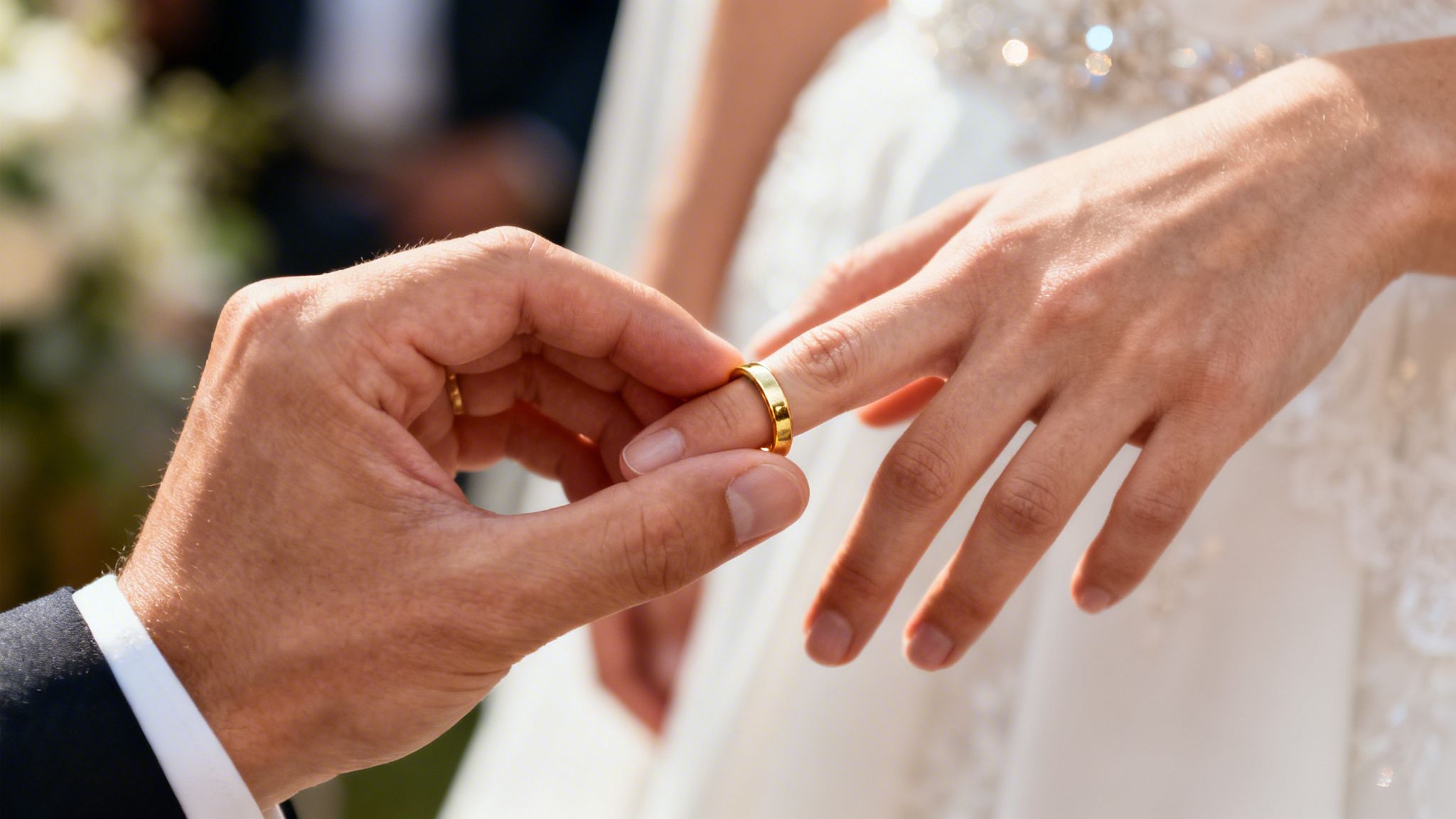
The ring exchange is a powerful, tangible moment in a wedding ceremony where the promises just made become visible. As the wedding bands are placed on each other's fingers, the couple is presenting a physical symbol of the unending circle of their love and commitment. This ancient tradition is often one of the most photographed and emotionally charged parts of the proceedings, serving as a constant, beautiful reminder of the vows.

This part of the ceremony involves the officiant asking for the rings, followed by the couple exchanging them, often while reciting specific vows. The wording here can be short and sweet or deeply personal, depending on their preference. Here are a few examples to illustrate the different approaches:
- Religious Example: "Take this ring as a sign of my love and faithfulness. In the name of the Father, the Son, and the Holy Spirit." This phrasing directly connects the exchange to sacred vows and divine witness.
- Secular Example: "I give you this ring to wear as a symbol of my commitment. With it, I thee wed. It is a circle, with no beginning and no end, just like my love for you." This focuses on the symbolism of the ring itself and the personal commitment between partners.
- Personalized Example: A couple might choose to incorporate a meaningful quote or inside joke, such as, "With this ring, I promise to always be your partner in adventure and your comfort in times of need. Wear it and know you are my home."
Making It Your Own
To make the ring exchange seamless and meaningful, a little preparation goes a long way.
- Practice Makes Perfect: During the rehearsal, practice putting the rings on each other's fingers. Nerves and emotion can make fingers swell, so practicing the motion helps avoid any awkward fumbling.
- Assign a Ring Guardian: Designate a reliable best man, maid of honor, or a specific ring bearer to hold the rings. Brief them on where to stand and how to hand them off smoothly.
- Consider a Ring Warming: A beautiful ritual where the rings are passed among guests to be "warmed" with their blessings and well-wishes before the exchange. This adds a deeply personal touch, involving the community in the moment.
Pro Tip: If the wedding rings are a significant investment, couples can consider how to fund them without stress. They can add a specific cash fund for them when they create your gift registry, allowing loved ones to contribute to this lasting symbol of their marriage.
6. Unity Ceremonies and Symbolic Acts
Following the ring exchange, a unity ceremony provides a powerful visual representation of a couple's commitment. This symbolic act is where the partners perform a meaningful action together, symbolizing the merging of two lives, two families, or two distinct paths into one. It’s an optional but deeply personal element that enhances the traditional wedding ceremony order, creating a memorable, photograph-worthy moment that reflects a unique story.
These ceremonies are not bound by one single tradition and can be adapted to fit any style of wedding. Below are some popular examples showing the diversity of these symbolic acts:
- Handfasting: An ancient Celtic tradition popular in places like Ireland and Scotland where the couple's hands are bound together with cords or ribbons, symbolizing their joined lives. The officiant often explains the meaning of each colored ribbon as it's wrapped.
- Sand Ceremony: The couple pours different colored sands from individual vessels into a single, larger one. This creates a beautiful, layered pattern representing that, just as the grains of sand can never be separated, their lives are now permanently intertwined. This is especially popular for beach weddings in places like Brazil or Australia.
- Jumping the Broom: A tradition with deep roots in African American history, the couple jumps over a decorated broom to signify sweeping away the old and welcoming the new as they begin their life together.
- Unity Candle: The couple each takes a lit taper candle (often lit by their mothers or other family members) and jointly lights a central pillar candle, signifying the creation of a new, single flame from their individual lives.
Making It Your Own
The beauty of a unity ceremony is its potential for personalization. It’s a chance to share something meaningful about the couple's culture, values, or relationship.
- Choose with Intention: Select a ceremony that has genuine significance, whether it’s a nod to heritage (like handfasting) or a reflection of a shared hobby (like a wine blending ceremony for oenophiles).
- Explain the Symbolism: Have the officiant briefly explain the meaning behind the act before it begins. This brings guests into the moment and helps them appreciate its importance. A note in the wedding program can also provide this context.
- Practice Beforehand: Do a dry run of the ceremony. Make sure the couple knows how to pour the sand without spilling or how to light the unity candle without fumbling. This ensures the moment flows smoothly. Many modern couples are looking for unique ways to personalize their day, a trend expected to continue. Couples can explore more about future wedding trends for 2026 to find more inspiration.
Pro Tip: Position the unity ceremony element where all guests can see it. If the venue is large, consider placing the table on a raised platform or slightly to one side of the altar so the view isn't obstructed. Aim to keep the ceremony itself to 2-3 minutes to maintain the pace of the proceedings.
7. Blessing, Pronouncement, and Kiss
This is the crescendo of the entire ceremony, the moment everyone has been waiting for. Following the exchange of rings and any unity rituals, this three-part finale formally and joyfully concludes the marriage ceremony. The officiant bestows a final blessing upon the couple, pronounces them legally married, and invites them to share their first kiss as spouses. It is a powerful, climactic moment that officially marks the end of the ceremony and the beginning of the celebration, making it an unforgettable part of any traditional wedding ceremony order.
The pronouncement and kiss serve as the ultimate emotional release, transforming the quiet reverence of the vows into exuberant celebration. How this moment is presented can be tailored to fit the couple's personality and the overall tone of the wedding, from deeply religious to lighthearted and modern.
Examples of Blessings and Pronouncements
The wording here is powerful and carries significant emotional weight. It can be adapted to reflect a couple's faith, values, and journey. Consider these distinct approaches:
- Religious Example: "By the power vested in me by God and the State of [State/Country], I now pronounce you husband and wife. What God has joined together, let no one put asunder. You may now kiss." This is a classic, authoritative pronouncement that emphasizes the sacredness of the union.
- Secular Example: "And so, in the presence of your friends and family, who have witnessed your promises today, it is my absolute joy to declare you officially married! You may now seal your union with a kiss." This version focuses on community and personal joy.
- Personalized Blessing: An officiant might say, "May your life together be a grand adventure. May you always be each other’s best friend and greatest support. And now, having declared your love and commitment to the world, I pronounce you united in marriage."
Making It Your Own
This final sequence should feel completely authentic to the couple. Communication with their officiant is key to crafting the perfect conclusion.
- Discuss Kiss Comfort Level: The big kiss is iconic, but not for everyone. If a couple prefers a more understated moment, like a forehead kiss, a hug, or simply holding hands and facing their guests, they should tell their officiant. The moment should reflect their comfort, not just tradition.
- Time the Applause: The officiant can be asked to cue the guests. A simple phrase like, "Please join me in congratulating the newlyweds!" after the kiss will signal the start of applause and cheers, building momentum for the recessional.
- Position The Photographer: This is one of the most photographed moments of the day. Ensure the photographer has a clear, unobstructed view and knows the plan so they can capture the perfect shot.
Pro Tip: Don't rush this moment. Hold the kiss for a few seconds (a count of three is a good rule of thumb) to give the photographer ample time to capture the shot and to let both partners soak in the feeling. It's the first moment of married life—enjoy it!
8. The Recessional: The Celebratory Exit
The recessional is the grand finale of the ceremony, the jubilant exit that officially marks the transition from fiancés to a married couple. Following the pronouncement of marriage and the first kiss, this moment is pure celebration. Accompanied by upbeat music, the newly married couple and their wedding party walk back down the aisle, concluding the formal proceedings and kicking off the party. This final element in a traditional wedding ceremony order sets a joyous tone for the reception that follows.
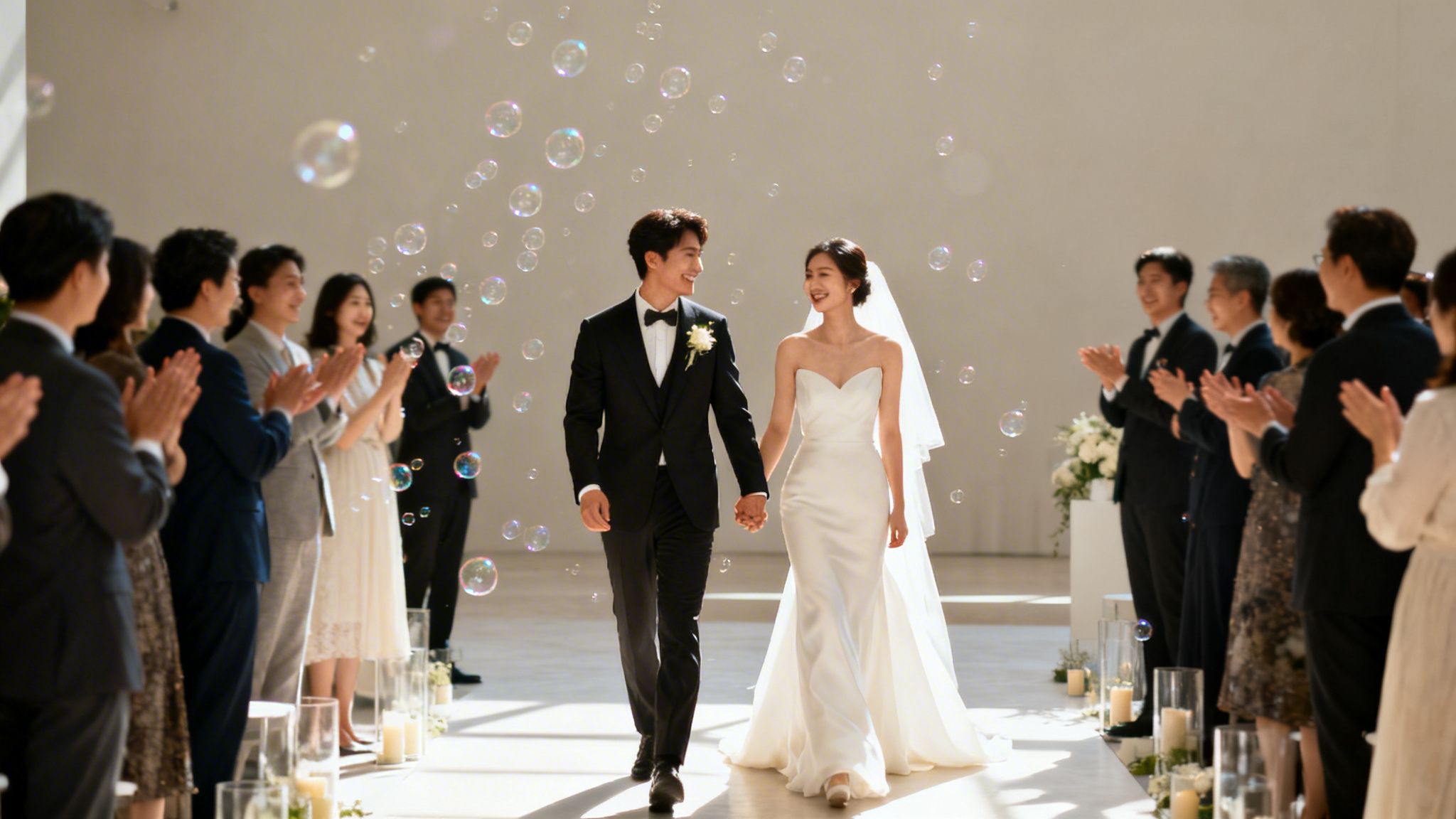
Unlike the more formal and often slower-paced processional, the recessional is all about high energy and happiness. The music choice here is key to establishing the mood. Below are some examples of how couples approach this celebratory moment:
- Traditional: A classic choice involves soaring, triumphant pieces like Mendelssohn’s "Wedding March" from A Midsummer Night's Dream. This option feels timeless and grand, perfectly capping a formal ceremony.
- Modern Pop: Many couples choose a contemporary song that is meaningful to them, like "Signed, Sealed, Delivered I'm Yours" by Stevie Wonder or "Happy" by Pharrell Williams. This makes the exit feel personal and fun.
- New Orleans Second Line: For a truly unique and high-energy exit, some couples, especially in Louisiana, USA, opt for a "second line" parade. A brass band leads the couple and their guests from the ceremony to the reception in a dancing procession, creating an unforgettable experience.
Making It Your Own
The recessional is the first walk as a married couple, so it should reflect their personalities and the atmosphere they want for their reception.
- Choose Your Anthem: Select a song that makes both partners want to cheer. Don't be afraid to pick an upbeat indie, rock, or folk track if that's more their style. This is their victory lap.
- Plan the Exit: Decide if guests should participate. Bubbles, lavender buds, or eco-friendly confetti can make for amazing photos. Ensure a clear path and brief the wedding party on the order of their exit and proper spacing.
- Coordinate with Vendors: Give the photographer and videographer a heads-up on the recessional plans, especially if there's something special like a dance move or a dip planned. This ensures they capture the perfect shot of the euphoric exit.
Pro Tip: As guests transition from the ceremony, it's a perfect moment for them to find the couple's gift registry. Having the link on the wedding website or program makes it easy for them to send a celebratory cash gift while the joy is fresh. Couples can create your gift registry with Zelo to make the process simple for everyone.
8-Step Traditional Wedding Ceremony Comparison
| Element | Implementation Complexity | Resource Requirements | Expected Outcomes | Ideal Use Cases | Key Advantages |
|---|---|---|---|---|---|
| Processional | Moderate — choreography and timing for groups | Music, rehearsal, coordinator/ushers, space | Formal tone, visual entrance, guest focus | Traditional or large wedding parties, formal venues | Memorable visuals, builds anticipation, identifies wedding party |
| Officiant's Welcome | Low — script prep and tone setting | Officiant time, draft review, basic rehearsal | Sets tone, orients guests, frames ceremony | Interfaith, mixed-audience, or narrative-driven ceremonies | Personalizes ceremony, clarifies flow, welcomes families |
| Readings & Declarations | Moderate — coordination of multiple participants | Selected readers, scripts, rehearsal, program printing | Diverse voices, emotional depth, inclusion of loved ones | Honoring family/friends, cultural or interfaith inclusion | Adds variety, honors relationships, highlights traditions |
| Exchange of Vows | Moderate — writing and emotional preparation | Time to draft/practice, notecards, officiant guidance | Emotional centerpiece, personalized commitment | Couples seeking personalization or intimate ceremonies | Highly meaningful, authentic, flexible structure |
| Ring Exchange | Low to moderate — timing and handling precision | Rings, rehearsal, optional ring bearer | Tangible symbol of union, highly photographable moment | Universal use across ceremonies and traditions | Strong symbolism, quick yet meaningful, daily wearable token |
| Unity Ceremonies | Variable — depends on chosen ritual complexity | Props/materials, explanation, rehearsal, safety prep | Personalized symbolism, visual focal point | Couples wanting cultural symbolism or custom rituals | Highly customizable, culturally meaningful, photo-worthy |
| Blessing, Pronouncement & Kiss | Low — precise timing at ceremony climax | Officiant, photographer/videographer | Official marriage pronouncement, emotional crescendo | Ceremony conclusion, formal or celebratory ceremonies | Clear legal/ritual closure, iconic memorable moment, guest participation |
| Recessional & Exit | Low to moderate — pacing and logistics | Upbeat music, coordination with vendors, ushers | Celebratory exit, smooth transition to reception | Any ceremony ending, high-energy or formal send-offs | Energizes guests, signals transition, creates joyful photos |
From Ceremony to Celebration: The Journey Begins
As a couple pieces together the elements of their special day, the traditional wedding ceremony order serves as a reliable and beautiful blueprint. This guide has walked through the key moments, from the anticipation of the processional to the triumphant joy of the recessional. Each step, whether it’s the officiant's heartfelt welcome, the deeply personal exchange of vows, or a symbolic unity ceremony, represents a building block in the foundation of a new life together. Understanding this structure isn’t about rigid adherence to a script; it’s about giving couples the confidence to make it their own.
The true beauty of a wedding ceremony unfolds when a couple’s personality shines through these traditions. By thoughtfully selecting music, choosing readings that resonate with their story, or writing vows that capture their unique promises, they transform a sequence of events into a deeply personal narrative. This framework is not a set of rules but a canvas. The task is to paint it with the colors of a unique love story, creating a moment that feels both timeless and distinctly theirs.
Key Takeaways for Crafting the Perfect Ceremony
Mastering the flow of the ceremony allows a couple to be fully present on their wedding day, free from worry about what comes next. Here are the most important insights to carry forward into planning:
- Structure Creates Freedom: A well-defined ceremony order, shared with the officiant, wedding party, and vendors, ensures a smooth and seamless experience. This organization frees the couple to focus on the emotional weight of the moment, not the logistics.
- Personalization is Paramount: The most memorable ceremonies are those that reflect the couple. Weaving in personal anecdotes, cultural traditions, or unique symbolic acts makes the experience authentic for both the couple and their guests.
- Communicate with the Team: The officiant is a guide. Couples should have open discussions about their vision, from the tone of the opening remarks to the exact wording of the pronouncement. As noted by wedding experts at Brides, clear communication is the cornerstone of a successful ceremony execution.
Actionable Next Steps: Bringing the Ceremony to Life
With this guide in hand, couples are ready to move from concept to reality. Their immediate next steps should be focused on solidifying the details that will make the ceremony flow perfectly.
- Finalize the Officiant and Script: Schedule a detailed meeting with the officiant to finalize the entire ceremony script. Confirm the wording for the welcome, vows, ring exchange, and pronouncement. Provide them with the names and roles of everyone involved.
- Create and Distribute a Timeline: Develop a minute-by-minute ceremony timeline. Share this document with the wedding planner, photographer, videographer, musicians, and the entire wedding party. This ensures everyone knows their cues.
- Plan for the Guest Experience: Consider how guests will transition from the ceremony to the reception. Is the path clear? Will there be music? Are ushers prepared to guide them? A smooth transition maintains the celebratory energy just built.
Ultimately, the wedding ceremony is the heart of the wedding day. It’s the sacred time where a couple formalizes their commitment in front of the people who matter most. These loved ones have come to celebrate and want to honor this new beginning in a meaningful way.
Modern celebrations often blend timeless traditions with practical support. Guiding guests toward gifts that help build the future is a natural extension of sharing this journey. A cash gift registry allows a community to contribute directly to a couple's biggest goals, whether it’s funding a honeymoon in Europe, furnishing a new home in a city like London, or investing in their future together.
Planning the first chapter of a life together is an exciting adventure, and Zelo is here to help couples build the future they've always dreamed of. By creating a cash gift registry, they make it simple for friends and family to give a meaningful gift that directly supports their goals. Start your Zelo page today and seamlessly blend tradition with modern celebration.
Enjoyed the article? Share it!