The list is open on the laptop. One tab shows bassinets. Another shows bottles. A phone note says “diapers, swaddles, thermometer, maybe a swing?” and somehow that tiny note has already turned into pages of decisions.
That moment is familiar to many expectant parents. They aren’t just trying to figure out what to buy for a newborn. They’re trying to separate genuine needs from panic purchases, useful gear from marketing, and immediate essentials from items that can wait.
That’s where a calmer strategy helps. A newborn doesn’t need an entire store. A newborn needs a safe place to sleep, a way to eat, clean diapers, a few simple clothes, and a home setup that makes early days easier on tired adults. Everything else sits somewhere on a spectrum from helpful to optional.
Some families also discover that the hardest items to buy aren’t the tiny ones. They’re the larger essentials, like a car seat and stroller system or a higher-end bassinet, that relatives and friends often want to help with but don’t always know how to contribute toward clearly. That’s one reason many parents look into flexible options like baby shower money gifts, especially when they want practical support instead of duplicate blankets and novelty outfits.
Welcoming Your Little One A Guide to Newborn Essentials
The nursery corner is half-finished. Tiny clothes are folded in a drawer. A dozen tabs are open with bassinets, bottles, swaddles, and diaper caddies. At some point, preparing for a baby starts to feel less like nesting and more like sorting through a very small store.
That feeling is normal.
Getting ready for a newborn can be joyful and disorienting at the same time. New parents are not only asking what a baby needs. They are also trying to judge timing, budget, space, and usefulness, often while every product description insists it belongs in the cart.
A calmer approach helps. Newborn shopping works a lot like packing for a short trip to an unfamiliar place. You start with what covers the first few days safely and comfortably. Then you add what makes daily life easier. The rest can wait until you know your baby, your routine, and your home a little better.
That shift matters because many families do not need a giant haul before birth. They need a short first-wave list, a plan for what can be bought later, and a practical way to handle bigger items without turning the registry into a pile of duplicates.
Public health programs have reflected that same reality by recognizing that basic newborn supplies can be hard for families to gather all at once. The larger lesson is reassuring. If support systems focus on the basics first, parents can too.
It also helps to separate newborn items into three simple groups. There are immediate needs, such as a safe sleep space, feeding supplies, diapers, a few weather-appropriate outfits, and a properly installed car seat for the trip home. There are convenience items that save energy during long days and interrupted nights. Then there are preference-based extras, which may be wonderful in one household and untouched in another.
That framework keeps emotion from driving every purchase. It also makes registry planning smarter. Instead of asking friends and relatives to guess which brand of towel or pacifier you want, many parents reserve group support for larger purchases and use flexible options like cash baby shower gifts for big newborn essentials to help cover items that shape daily life.
The goal is not to buy everything early. The goal is to come home with what you need, leave room for learning, and spend with more confidence than panic.
The Must-Have Newborn Essentials Checklist
A useful newborn checklist should feel like a kitchen counter, not a warehouse. You want the items you reach for again and again, arranged in clear groups, with enough flexibility to adjust once your baby is born.
That matters because the first weeks are full of learning. A baby may love one bottle nipple and refuse another. A diaper brand may fit beautifully or leak by day three. Buying for a newborn works best as a starter plan, not a final answer.
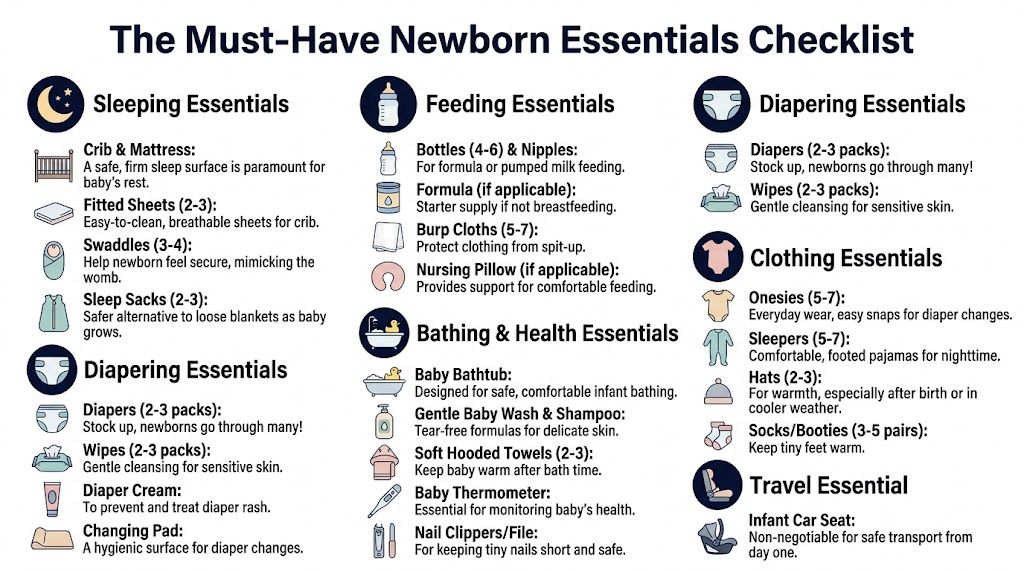
Parents who want help sorting immediate needs from later purchases can pair this list with a practical baby shower gift registry complete guide before building a registry.
Diapering essentials
Diapering supplies earn their place by being easy to grab at 2 a.m. A good setup is simple, portable, and stocked where you change the baby.
A strong starter list includes:
- Diapers in newborn size or size 1, plus a small pack of the next size up. Babies grow quickly, but fit still matters, so it helps to avoid buying too far ahead.
- Unscented wipes. Simple is often the easiest place to start.
- Diaper rash cream. This is one of those products you want before you need it.
- A changing pad or washable changing surface. Easy cleanup matters more than extra features.
- A diaper caddy or basket. This keeps the routine from turning into a scavenger hunt.
- A way to contain dirty diapers. A diaper pail works, and a regular trash can with frequent emptying can work too.
Feeding essentials
Feeding is the category that changes fastest after birth. Some families breastfeed, some formula feed, some pump, and many do a mix over time.
Start with enough to begin comfortably:
- Burp cloths. Keep more than you think you need.
- A few bottles and nipples. A small test run is often smarter than committing to a full set.
- Formula, if formula feeding is part of the plan. A starter supply can prevent a stressful last-minute store run.
- Nursing pads and nipple cream, if breastfeeding.
- A nursing pillow, if helpful. Some parents use one constantly in the early weeks. Others prefer regular pillows.
- Vitamin D drops, if your pediatrician recommends them.
A helpful rule is to treat feeding gear like a first-day hospital bag. Pack what gets you started well, then fill in the gaps based on real life.
Practical rule: Buy enough feeding gear to begin, not enough to predict every possible feeding path.
Clothing essentials
Baby clothes are often the easiest items to overbuy because they are joyful, giftable, and tiny. Day-to-day newborn clothing is much more practical than it looks in store displays.
Start with:
- A small set of onesies
- Sleepers or footed pajamas
- Socks and hats, depending on climate
- Receiving blankets
- A couple of going-home or outing outfits
Laundry rhythm should guide this category. If you expect to wash clothes every few days, you need fewer pieces. If laundry is harder to do often, a slightly larger rotation helps.
Many new parents pause here and wonder, "How many outfits does a newborn wear in a day?" Sometimes one. Sometimes four. Spit-up, diaper leaks, and temperature changes are wardrobe planners.
Bathing and health basics
This group is easy to keep small. A newborn does not need a spa setup. Gentle, basic supplies cover almost everything.
Keep this part focused:
- Gentle baby wash and shampoo
- A soft towel or hooded towel
- Washcloths
- A basic baby tub or a sink-safe option
- Nail care tools
- A thermometer
The thermometer deserves special attention. Pediatricians often want newborn fevers checked carefully, so having a reliable thermometer at home can save time and stress when something feels off.
Don’t forget laundry and organization
These items rarely make the cutest registry photos, but they do a surprising amount of heavy lifting. They support the whole system.
A few practical helpers include:
- Baby-safe or fragrance-free detergent if your baby has sensitive skin
- Baby hangers
- Drawer dividers or simple bins
- A hamper for baby laundry
- Storage baskets for blankets, bibs, and backup clothes
Organization works like labeling drawers in a small kitchen. You are not trying to create perfection. You are trying to make the right item easy to find with one free hand.
That same mindset can help with buying, too. Put the daily basics on your list now. Leave room to add preference-based items later. For bigger purchases, many families now ask for group contributions instead of multiple small duplicate gifts, especially when they want to save their budget for the gear that shapes everyday life most.
Creating a Safe and Soothing Nursery
It is 2:13 a.m. The room is dark except for a small lamp, your baby is finally drowsy, and you are lowering them into their sleep space with your whole body holding its breath. In that moment, nursery choices stop feeling decorative and start feeling practical. You want the room to do two jobs well. Keep baby safe, and make those repeated day and night routines a little gentler on everyone.
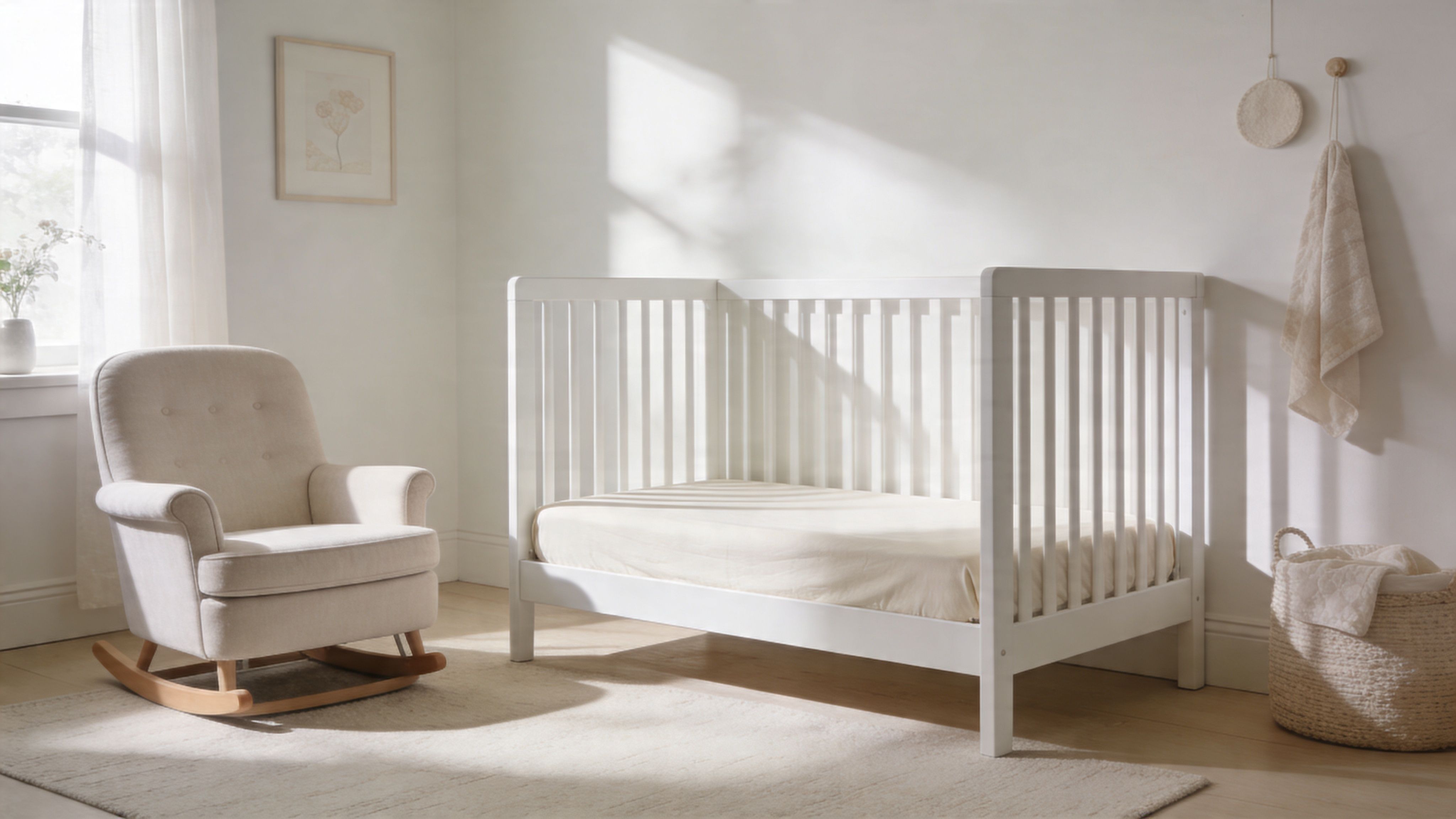
This kind of calm, uncluttered space is a good visual model.
What matters most in a sleep space
Start with the part that carries the most weight. A safe sleep setup.
For a newborn, that usually means a firm, flat bassinet or crib mattress that meets CPSC standards, fits snugly, and is used with a fitted sheet only. A sleep space works like a clear runway. The fewer extra items inside it, the fewer things can interfere with safe rest.
A simple filter helps parents sort through a crowded baby market fast:
- Choose a firm, flat sleep surface
- Check that the mattress fits snugly
- Use fitted sheets only
- Skip loose blankets, pillows, bumpers, and plush accessories
- Keep the crib or bassinet setup plain
That last point surprises many first-time parents. Stores often display cribs with blankets, stuffed animals, and layered décor. Real newborn sleep spaces are much simpler.
Helpful labels and standards
Safety labels can blur together after a while. The easiest way to read them is by asking one question: what is this label helping me check?
| Term | What parents should understand |
|---|---|
| CPSC | Shows the product is intended to meet U.S. consumer safety requirements for items like cribs, bassinets, and sleep products |
| ASTM | Refers to testing standards commonly used for juvenile products and product safety |
| GREENGUARD Gold | Appeals to families who want lower chemical emissions from nursery furniture and materials |
These labels narrow your options. They do not replace careful setup at home.
The smartest nursery purchase is often the plainest one. A firm mattress and a correctly assembled crib do more for your baby than any themed upgrade.
Technology can reassure, but it does not replace the basics
Some families add a video monitor, a sound machine, or a wearable monitor for extra peace of mind. Those tools can be helpful, especially during the foggy first weeks, but they belong in the support category. The foundation is still the sleep space itself.
If you are deciding what to buy now versus later, this is a good place to be selective. A crib, bassinet, or nursery chair may be worth planning for early, especially if friends and family want to contribute toward larger purchases through a collaborative gift registry for nursery and baby essentials. By contrast, some tech items are easier to add after birth if you discover you want them.
Nursery items that often earn their place
Once the sleep setup is handled, a few supporting pieces tend to make everyday life easier:
- A bassinet or crib with straightforward assembly
- Two fitted sheets
- A mattress protector
- A dim lamp or soft night light
- A comfortable chair for feeds
- A sound machine, if your household likes one
- A sleep sack, once your baby is ready for one
These items help for different reasons. Extra sheets and a mattress protector solve messy middle-of-the-night moments. A chair matters because newborn care involves a lot of sitting, feeding, rocking, and waiting. A low light helps you see what you are doing without fully waking the room.
For broader nursery inspiration and baby room planning ideas, many families also browse guides from BabyCenter.
Gear for Your Baby On The Go
The first trip out with a newborn often starts with a very small mission. A pediatrician visit. A quick stop at the pharmacy. A short walk to get fresh air. Then suddenly you are asking big questions at once. How will the baby ride safely? Where will the diaper bag go? Will your arms be free if the baby wants to be held the whole time?
That is why on-the-go gear helps to treat travel like a system, not a pile of products. The goal is not to buy every gadget that looks useful. The goal is to cover three jobs clearly: safe transport in the car, practical movement outside the house, and close comfort when your baby wants to be held.
Start with the gear you will use right away
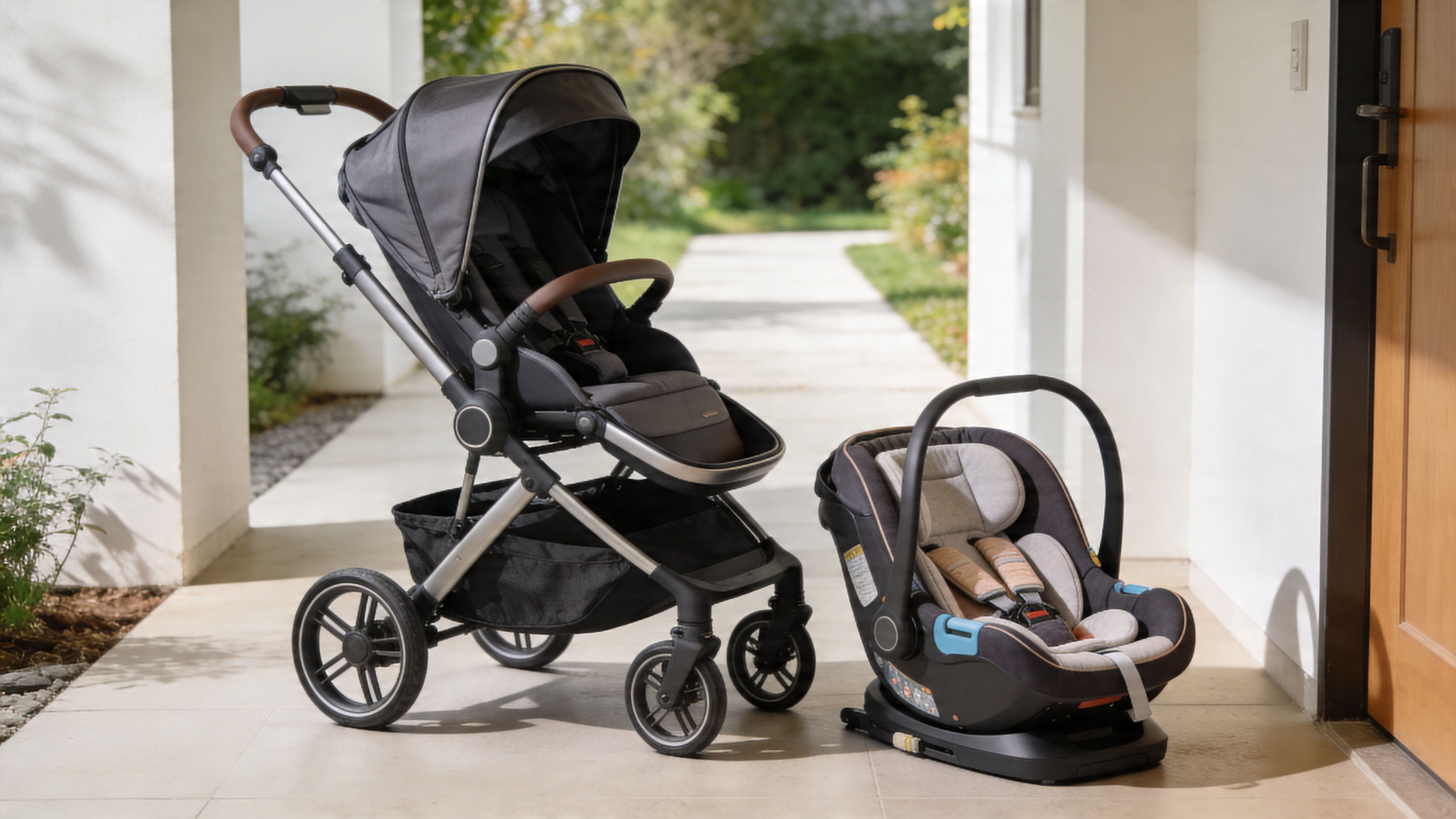
For many families, that begins with the car seat.
Parents usually choose between two common paths:
Infant car seat
Built for the early months. Many models click into a stroller frame or travel system, which can make errands and appointments simpler for families who drive often.Convertible car seat
Designed to last longer through later stages. It usually stays in the car, so it offers less portability in the newborn period.
The better choice depends on daily life, not marketing promises. A family making frequent car trips may appreciate being able to move a sleeping baby from car to stroller. A family trying to buy fewer items may feel good starting with a convertible seat, as long as it fits the car well and works for a newborn.
Stroller and carrier are not duplicates
Many parents struggle with this decision. A stroller and a carrier can seem like two versions of the same thing, but they solve different problems.
A stroller works like a rolling basecamp. It helps on longer outings, gives you storage, and takes the weight off your body. A carrier is closer to an extra set of hands. It helps with stairs, crowded spaces, short errands, and those newborn moments when being close is the only acceptable plan.
Many parents end up using both, just in different settings.
A practical way to decide
Try matching the gear to your real week, not an ideal version of parenthood.
- Frequent driving: an infant seat and stroller combo may make the most sense
- Walkable neighborhood: a stroller with good wheels, shade, and storage often earns its place
- Public transit or stairs: a comfortable carrier can matter as much as a stroller
- Small car or limited storage: a compact fold may matter more than extra features
- Baby who wants constant contact: a soft wrap or structured carrier may become part of daily life fast
That last point catches many new parents by surprise. Some babies are happy to ride. Others strongly prefer being held. A carrier gives you a backup plan that can turn a stressful outing into a manageable one.
Buy for your routine, not for a fantasy
One of the most common mistakes is choosing travel gear for a life that does not match your own. A large stroller may look impressive in a store and feel frustrating in a third-floor walk-up. A minimalist setup may sound appealing and feel limiting if you spend long days out of the house.
A simple test helps. Picture your most likely first month with baby. Are you mostly driving to appointments, walking the neighborhood, visiting family, or switching between all three? Your answer usually points toward the right setup more clearly than any trend list.
Big-ticket travel gear can also be a smart category for group giving. If friends and family want to help with a car seat or stroller, a collaborative gift registry for larger baby essentials can make those contributions easier to organize without filling your home with duplicates.
Parents who want a mainstream overview of registry and baby gear expectations often also look at The Knot for practical inspiration around gifting and planning.
The Smart Shopper's Timeline and Budget
The easiest way to overspend on a newborn is to buy everything too early. The easiest way to feel panicked is to wait too long on the few items that can’t be delayed. A better rhythm is to match purchases to timing.
What to buy when
A practical shopping timeline often looks like this:
Second trimester
This is a good time for research-heavy items. Parents usually have a bit more energy, and the pressure still feels manageable. It’s often the right window to choose the car seat, sleep space, and registry structure.
Third trimester
This is the stage for setup. Wash clothes and sheets. Assemble the bassinet or crib. Stock diapers, wipes, postpartum supplies, feeding basics, and the health items that are frustrating to buy in the middle of the night.
After baby arrives
Restraint offers clear advantages. Many non-essentials are easier to judge once the baby is home. Families can see whether they want more bottles, another carrier style, a bouncer, or additional soothing tools.
That wait-and-see pattern matches the broader parent guidance discussed earlier. It helps avoid clutter and makes purchases more responsive to real life rather than hopeful guessing.
Estimated Newborn Budget Tiers
This table uses qualitative tiers rather than invented price points. It’s designed to help families prioritize, not to pressure them into a “full” setup.
| Category | Essentials-Only Budget | Comfort & Convenience Budget | Premium & Tech Budget |
|---|---|---|---|
| Sleep space | Basic safe bassinet or crib setup | Added mattress protection and extra linens | Higher-end bassinet and upgraded materials |
| Feeding | Starter bottles, burp cloths, core supplies | Nursing pillow, extra bottle sets, storage helpers | Expanded feeding gear and specialized accessories |
| Diapering | Diapers, wipes, cream, changing surface | Portable caddies, diaper pail, backup stations | Premium storage and more elaborate room setups |
| Clothing | Simple starter wardrobe | Extra sleepers, seasonal layers, backup sets | Larger curated wardrobe and specialty fabrics |
| Bath and health | Gentle wash, towels, thermometer, nail care | Baby tub and extra grooming tools | Expanded wellness gear and added monitoring tools |
| Travel | Car seat only or very simple setup | Car seat plus practical stroller or carrier | Full travel system and multiple carry options |
| Registry strategy | Focus on immediate needs | Mix essentials with a few comfort upgrades | Reserve larger group-funded items for top priorities |
A simple budgeting mindset
Many families find it useful to sort every item into one of three groups:
- Must have before birth
- Helpful but can wait
- Nice if gifted
That small exercise stops the list from expanding forever. It also makes baby shower planning more realistic, especially when relatives want guidance.
For parents trying to prepare well without overspending, this kind of baby shower on a budget planning guide can help align gift expectations with actual needs.
For broader etiquette and registry norms around showers and celebrations, Brides is another useful mainstream reference.
Common Mistakes and What Parents Wish They Knew
A very common newborn shopping moment happens around week 34 or 35. The drawers are full of tiny outfits, a few cute gadgets are waiting in boxes, and then one simple question appears. What will you reach for at 2 a.m. with a hungry, crying baby in your arms?
That question helps separate preparation from overbuying.
Buying for an imaginary baby instead of your real one
Many parents buy with the kindest goal possible. They want to cover every possibility before birth. The catch is that newborn life is highly personal. Your baby may spit up constantly or barely at all. Your feeding routine may stay simple or change in the first two weeks. A product that feels smart in the store can sit untouched at home.
Clothing shows this clearly. Newborn-size outfits are adorable, but daily life often comes down to a small stack of soft sleepers that wash well and go on easily. Fancy outfits, single-purpose gadgets, and niche accessories can crowd out the things that make the day easier.
A good rule is to buy the first version, not every version. Start with enough to get through the first stretch, then add based on what your baby and your routine need.
Forgetting the quiet workhorses
The least exciting items often carry the heaviest load.
Parents remember swaddles and forget stain remover. They compare baby carriers and realize later they still need a reliable thermometer. They stock cute bibs but have no system for laundry, diaper backups, or where the burp cloths will live.
Those support items work like the drawers and shelves in a kitchen. You do not notice them much while planning, but daily life becomes harder without them.
A quick reality check helps before you buy more:
- Laundry needs a basic plan
- Diapering works better with backup supplies in more than one spot
- Feeding often takes some trial and error
- Health items are easiest to buy before you need them quickly
Buying everything before you know your pattern
Some baby items are best chosen after birth, not before. A swing, wrap, pacifier style, bottle type, or sound machine may become a favorite. It may also be something your baby refuses completely.
That is why timing matters almost as much as the list itself. Buy the items you know you will need right away. Keep a short second-wave list for products that depend on your baby’s preferences or your recovery experience. This approach protects your budget and your space.
It also makes gifts more useful. Instead of asking friends and family to guess which gadget your baby might like, many parents now set aside part of their registry for later purchases through a cash gift registry for baby essentials. That gives you room to respond to real needs instead of committing too early.
The goal is a home that supports your actual first weeks with baby. Calm, simple, and flexible usually beats fully stocked.
The Modern Registry How to Fund Your Future with Zelo
Traditional registries work well for some categories. They’re straightforward for towels, bottles, bibs, and books. They can work less smoothly for larger essentials that multiple guests might gladly support together.
That gap matters because some of the most useful baby purchases are also the hardest to fund all at once. The verified data behind this topic points to a real shift. In major markets, baby gear inflation has been rising by 8 to 12% annually, 65% of millennial parents prefer cash-fund registries for flexibility, and 1 in 5 low-income families skip essentials due to cost barriers, according to the summary provided with this discussion of bare-bones baby essentials.
Why group contributions make sense
A nursery chair, premium bassinet, stroller system, or car seat setup often matters more than a pile of novelty gifts. Friends and family usually want to help in a meaningful way. They just need a clear method.
A flexible registry can solve that by turning one overwhelming purchase into a shared gift. Instead of five guests buying random small accessories, they can contribute toward a stroller fund or safe sleep setup that the parents were already planning to buy.
A realistic example
A couple preparing for a shower might set up a page with a few clearly named priorities:
- Car seat and stroller fund
- Safe sleep fund
- Postpartum recovery essentials
- Newborn diaper and laundry fund
That framing helps guests understand the purpose behind each contribution. It also reflects real life better than a long product list padded with filler.
One option for doing this is to explore Zelo, a modern cash gift registry platform that lets guests contribute money toward meaningful gifts through a shareable digital registry. For parents planning a baby shower, that can be a practical fit when the goal is to fund larger essentials rather than collect only individual products.
How to make a modern registry feel personal
Cash gifting works best when the registry still feels specific and warm. Parents can add short notes that explain why an item category matters.
For example:
- “We’re putting gifts toward a travel system we’ll use from the first ride home.”
- “This fund will help us finish a simple, safe sleep setup.”
- “We’d love help covering early essentials like diapers, wipes, and postpartum supplies.”
That wording keeps the registry grounded in the baby’s real needs. It also gives loved ones the good feeling of contributing to something tangible and useful.
Embracing the Journey With Confidence
The most reassuring answer to what to buy for a newborn is also the least flashy one. Parents don’t need everything. They need a thoughtful start.
That start usually looks simple. Buy the items that support feeding, diapering, sleep, clothing, health, and safe travel. Hold off on some of the extras until the baby arrives and daily life becomes clearer. Let practicality lead, especially when the shopping noise gets loud.
There’s something joyful in that approach. It leaves room for generosity without waste, for preparation without panic, and for gifts that support the first weeks of family life. It also reminds parents that they’re not trying to build a perfect nursery catalog. They’re building a caring, functional home for a brand-new person.
The list matters. The support matters even more.
A modern registry can make that support easier to organize. If friends and family want to help with the essentials that matter most, parents can create your gift registry with Zelo and turn big newborn needs into clear, shareable gift goals.
Enjoyed the article? Share it!