
Gifting money for baby showers is defined as contributing cash or a cash fund contribution in place of a physical present, and it has become one of the most practical choices guests can make for new parents. Cash gifts now make up about 20% of all baby shower presents, a share that grows each year as parents face rising costs for diapers, childcare, and nursery essentials. A baby shower cash fund gives expectant parents the flexibility to direct support exactly where it is needed most, whether that is stocking up on supplies, covering a big-ticket purchase, or building a small financial cushion before the baby arrives. For guests, contributing money removes the guesswork of choosing the right size, color, or brand.
Why gift money for baby showers: the real reasons it works
Cash gifts at baby showers solve a problem that physical registries cannot fully address: unpredictability. No registry, however carefully curated, accounts for every expense a new parent will face in the first year.
The practical case for money gifts is strong. Diapers alone cost $70–$80 per month, adding up to more than $800 in the first year. Childcare in urban areas commonly runs $1,000–$2,500 per month. Those numbers make a diaper fund or childcare fund far more useful than a third set of onesies.
Beyond the numbers, cash gifts offer flexibility that physical items simply cannot match:
- Avoiding duplicates. Guests who give cash never risk buying something the parents already received from someone else.
- Supporting big-ticket items. A stroller, a crib, or a breast pump often costs more than any single guest wants to spend alone. Cash contributions pool naturally toward these purchases.
- Covering ongoing expenses. Diapers, formula, and wipes are consumed continuously. A cash fund replenishes these supplies long after the shower ends.
- Funding savings or emergency costs. Parents can set aside cash contributions for unexpected medical bills or a postpartum support service.
- Personalizing the gift. When a guest contributes to a named fund, such as a “nursery finishing fund,” the gift feels purposeful rather than generic.
Framing monetary gifts as contributions to specific needs enhances guest comfort and transforms a transactional exchange into an act of genuine support. That framing is the single most effective way to make cash gifting feel warm and personal.
Pro Tip: When setting up a cash fund, give it a specific name tied to a real goal. “Diaper Fund” or “First-Year Essentials Fund” tells guests exactly how their contribution will be used, which consistently increases participation.

How much money to give at a baby shower
Spending norms for baby shower gifts follow a clear pattern based on relationship proximity. Knowing the typical ranges helps guests give confidently without overspending or underspending.
| Relationship | Typical gift range | Notes |
|---|---|---|
| Coworker or acquaintance | $25–$50 | Group gifting is common at this level |
| Friend | $30–$75 | Mid-range cash or a cash fund contribution |
| Close friend | $50–$100 | Often paired with a small personal gift |
| Immediate family | $75–$200 | Higher amounts reflect closer relationship |
| Grandparents | $100–$200+ | Frequently the largest individual contributors |
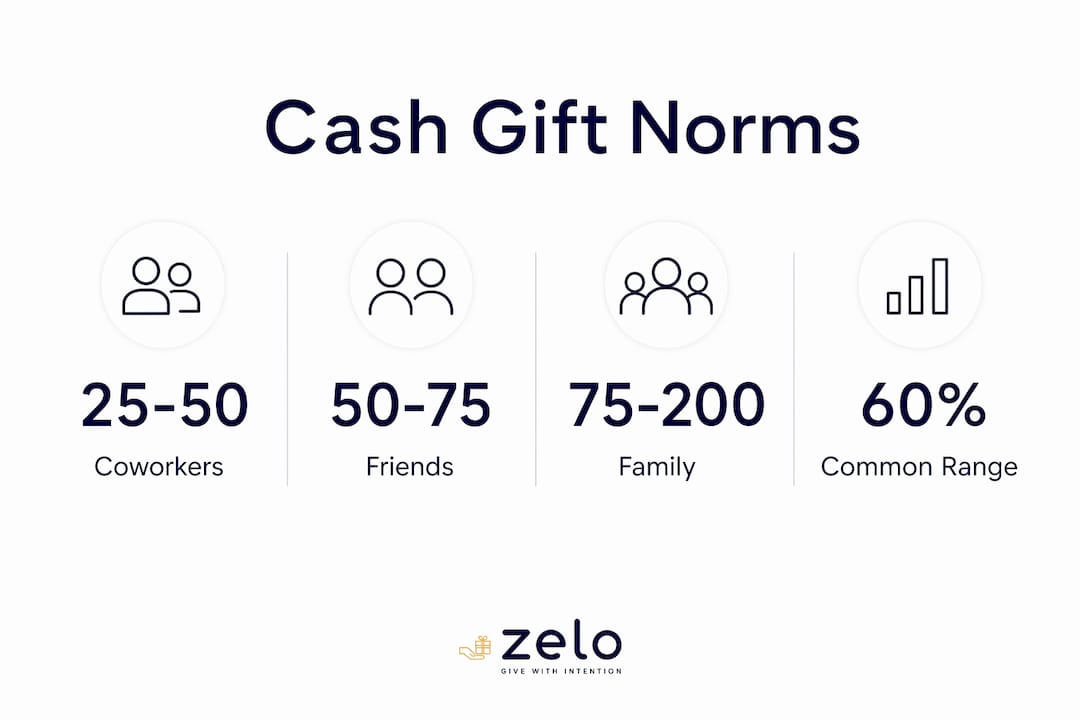
About 60% of baby shower gifts fall within the $25–$75 range, which means a cash contribution of $50 sits squarely in the mainstream. Guests who feel uncertain about the right amount can use that benchmark as a starting point and adjust based on their own budget and relationship with the parents.
Etiquette for presenting cash gifts matters as much as the amount. A card with a handwritten note explaining the intent of the gift, such as “toward your diaper fund,” adds warmth that a plain envelope lacks. Group gifting, where several guests pool money toward a single large item, is increasingly common among coworkers and friend groups. It keeps individual costs reasonable while delivering a more meaningful contribution.
Pro Tip: If you are contributing to a shared cash fund online, add a short personal message during checkout. Most modern cash registry platforms include a message field, and parents read every one.
Combining a small physical gift with a cash contribution is another approach worth considering. A thoughtful book, a personalized keepsake, or a practical item like a swaddle blanket alongside a cash envelope gives the gift a tangible, celebratory feel while still providing financial flexibility.
How parents can request money gifts without awkwardness
The way a cash gift request is presented determines whether guests receive it warmly or feel put off. Requesting cash directly on invitations is generally considered poor etiquette and can make the event feel transactional. The better approach uses registries and word of mouth to communicate preferences naturally.
Expectant parents have several tactful options:
- Create a named cash fund on a registry. A “diaper fund,” “childcare fund,” or “nursery fund” communicates a specific purpose without asking for money outright.
- Use word of mouth through the host. The shower host can mention cash fund options when guests ask what the parents need. This keeps the request off the invitation entirely.
- Add a brief note to the registry page. A sentence explaining why the fund exists, such as “We are saving toward a year of diapers,” gives guests context and encourages participation.
- Balance the registry. A registry split of roughly 70% physical gifts to 30% cash funds accommodates guests who prefer to give something tangible while still making cash contributions easy and visible.
“The way cash gift requests are presented determines social acceptance, not the request itself. A specific, story-driven fund request reads as thoughtful planning, not greed. Parents who explain the ‘why’ behind a cash fund consistently receive more generous and enthusiastic contributions.”
Personalizing the request with a short story makes a significant difference. Linking a cash fund to a specific goal, such as “We want to cover our first three months of diaper costs,” turns the ask into a shared mission that guests feel good about supporting.
Creative ways guests can give money at a baby shower
Cash gifts do not have to feel impersonal. Thoughtful presentation elevates a monetary contribution into a memorable part of the celebration.
- Themed cash envelopes. Specialty stationery stores and online shops sell envelopes designed for baby showers. A well-chosen envelope with a handwritten note makes the gift feel considered.
- Money trees. A decorative display where guests attach cash or checks to a small tree or branch is a festive, visual way to present contributions collectively.
- Card boxes with a cash slot. Many shower venues set out a decorated card box. Guests can place cash inside a card and drop it in, keeping the presentation tidy and celebratory.
- Pairing cash with a small personal gift. A children’s book, a personalized ornament, or a practical item like a pacifier clip alongside a cash contribution gives the gift a personal touch.
- Contributing through a cash registry platform. Modern baby shower cash gift platforms let guests contribute online before or after the event, which is especially useful for out-of-town friends and family.
Physical gifts still account for about 62% of baby shower presents, so cash contributions stand out as a deliberate and generous choice. Guests who contribute to a named fund online and also bring a small physical gift to the shower often make the strongest impression.
Pro Tip: For group gifts, designate one person to collect contributions and present a single card or envelope on behalf of the group. This approach feels more ceremonial and gives the collective gift more weight at the shower.
Younger parents and guests increasingly favor hybrid and cash gifting options, reflecting a broader shift toward practicality in celebration culture. Platforms that support personalized cash funds make it easy for guests to contribute meaningfully, regardless of geography or budget.
Key Takeaways
Cash gifting at baby showers works best when it is specific, purposeful, and presented with the same care as any physical gift.
| Point | Details |
|---|---|
| Cash covers real costs | Diapers, childcare, and nursery items are ongoing expenses that cash funds address directly. |
| Typical amounts are clear | Most guests give $25–$75; close family typically contributes $75–$200. |
| Framing drives acceptance | Named funds like “diaper fund” or “nursery fund” make cash requests feel warm, not transactional. |
| Balance the registry | A 70/30 split of physical to cash gifts accommodates all guest preferences. |
| Presentation matters | Themed envelopes, personal notes, and group gifting strategies make cash contributions feel celebratory. |
Cash gifts and the shift I have watched happen
The conversation around cash gifts at baby showers has changed more in the past five years than in the previous two decades. When I started paying attention to gifting trends, cash at a baby shower was still considered slightly awkward, something you only did if you truly could not think of anything else. That perception has reversed almost entirely.
What drove the shift is not just practicality, though the cost of raising a child in 2026 makes practicality impossible to ignore. The bigger change is transparency. Parents are more comfortable being honest about what they actually need, and guests are more comfortable asking. That openness benefits everyone.
The one thing I would push back on is the idea that cash gifts are inherently less personal. A contribution to a “night-out fund” for new parents who have not slept in weeks is one of the most thoughtful gifts imaginable. The emotional weight of a gift comes from the intention behind it, not the form it takes.
My advice to expectant parents: name your funds specifically, share a brief story about why each one matters, and express genuine gratitude. My advice to guests: read the registry, contribute to a named fund if one exists, and add a personal note. The combination of specificity and warmth is what makes cash gifting feel like a real celebration of the family being built.
— Rodrigo
How Getzelo makes baby shower cash gifting personal
Setting up a cash fund for a baby shower used to mean awkward conversations or generic payment links with no context. Getzelo changes that by letting expectant parents create a personalized registry with named funds, personal stories, and a beautiful event page that guests actually enjoy visiting.

Each fund on a Getzelo page can carry its own name and description, so a “diaper fund” feels different from a “nursery finishing fund.” Guests contribute through a secure checkout in minutes, and parents receive the funds directly. For anyone planning a modern baby shower registry, Getzelo removes the friction from cash gifting and replaces it with something that feels genuinely celebratory.
FAQ
Is it rude to ask for cash at a baby shower?
Asking for cash is not rude when done tactfully. Using a named fund on a registry or communicating preferences through the host, rather than on the invitation itself, is the socially accepted approach.
How much cash should you give at a baby shower?
Most guests give between $25 and $75, with close family typically contributing $75–$200. Your relationship with the parents and your personal budget are the two most relevant factors.
What is a baby shower cash fund?
A baby shower cash fund is a designated pool of monetary contributions tied to a specific purpose, such as diapers, childcare, or nursery supplies. Parents set it up through a registry platform, and guests contribute directly to the named goal.
How do you make a cash gift feel personal?
Adding a handwritten note, contributing to a named fund with a specific purpose, or pairing cash with a small physical gift all add a personal dimension. Linking the contribution to a specific story or goal increases the emotional connection for both the giver and the recipient.
Can guests contribute to a cash fund before the baby shower?
Yes. Modern cash registry platforms allow guests to contribute online at any time before or after the event. This is especially useful for out-of-town guests who cannot attend in person but still want to support the new parents.
Recommended
Enjoyed the article? Share it!